
Seeing a $200 million price tag on a blockbuster might make you imagine a studio vault filled with gold coins. Industry data reveals a much different reality, where fortunes actually drain through thousands of tiny holes—from daily catering for 500 crew members to hourly stunt helicopter rentals. Recognizing this massive “leaky bucket” problem is the first step in using movie budgeting software to reduce film production costs.
Successful producers prevent financial disasters by relying on a “Single Source of Truth.” By trading scattered spreadsheets for one central digital hub, everyone views the exact same numbers. Without this shared visibility, isolated departments accidentally overspend on everyday supplies, causing minor budget leaks to sink the entire film. Modern movie budgeting software acts as a financial GPS, rerouting dollars instantly if an unpredictable rainstorm cancels a crucial day of filming.
Mastering this hidden back-office strategy ultimately allows directors to afford one extra epic explosion or secure an A-list actor. Catching costly mistakes early guarantees that every saved dollar stays exactly where it belongs: right on the big screen.

Why Manual Spreadsheets Sink Modern Movie Sets: The $10,000 'Human Error' Tax
Think of a film budget like a grocery list for 500 people, where prices constantly change while you stand in the aisle. When producers use basic grids to manage this chaos, every specific cost—known as a line item—becomes a potential landmine. A simple typo in the catering column can accidentally erase the funds meant for the stunt department.
The debate of movie budgeting software vs manual spreadsheets usually ends when productions commit three expensive spreadsheet sins:
- Version confusion: Without proper “version control” to track changes centrally, ten crew members end up saving ten different, conflicting files.
- Broken formulas: One accidental keystroke silently destroys the math connecting transportation costs to the final total.
- Data entry lag: Typing paper receipts twice means crucial financial updates are always days late.
Instead of risking bankruptcy on bad math, modern budget planning software relies on standardized film budget templates for efficiency. Think of these as master blueprints pre-loaded with every conceivable expense category. They ensure that easily forgotten but essential costs, like city filming permits or equipment insurance, are mathematically locked in before anyone steps onto the set.
Catching these “human errors” early means millions stay exactly where they belong: in the explosive visual effects on your screen. Once everyone securely looks at the exact same numbers, the crew stops playing catch-up, establishing a foundation for real-time tracking that prevents budget leaks.
The 'GPS for Money': How Real-Time Tracking Stops Budget Leaks Before They Happen
Imagine driving cross-country, only realizing you took a wrong turn three days later. That is how producers feel waiting on outdated accounting reports to track their spending. By implementing film production cost tracking automation, that blind drive transforms into a precise financial GPS. Just as a navigation app reroutes around sudden traffic, this software instantly alerts producers when a rainstorm forces an extra shoot day, adjusting the math before the crew even packs up.
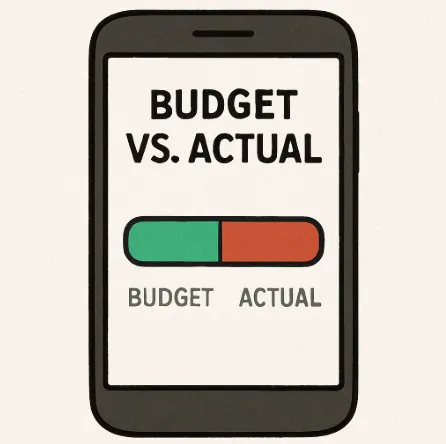
Every morning, producers review a “Daily Hot Sheet”—a digital summary showing exactly what was spent yesterday versus the original plan. Instead of digging through a box of receipts to guess if they can afford another stunt car, directors check this single screen to make instant go/no-go decisions. Seeing these figures instantly means catching financial leaks in hours, not weeks.
Even minor purchases drain a movie’s bank account if left unmonitored. When assistants buy emergency coffee or props, they rely on petty cash—a small fund of physical money for immediate expenses. Utilizing digital petty cash management for movie sets stops the mystery disappearance of these funds. Crew members simply photograph their receipts with a smartphone, instantly logging small purchases so nothing falls through the cracks.
Securing the budget from tiny leaks ensures plenty is left over for screen-shattering special effects. Because real-time expense reporting for independent films provides total visibility over every dollar, producers stop panicking about math. Furthermore, with daily spending finally under control, producers can focus on stretching those dollars further by maximizing tax incentives and optimizing cash flow through movie budgeting software.
Finding 'Hidden Coupons': How Software Maximizes Film Tax Incentives and Optimize Cash Flow
When grocery shopping, a rewards app automatically applies hidden coupons you might have missed. Producers do the exact same thing on a massive scale. By managing film tax incentives digitally, modern platforms act like smart receipt scanners. Many states offer cash rebates for filming locally, but proving it requires perfect records. Instead of humans combing through thick ledgers, software automatically “tags” qualifying purchases, ensuring productions claim every government discount available.
Beyond catching state rebates, technology also decodes the hidden costs of employing a massive crew. When hiring a camera operator, productions aren’t just paying an hourly wage; they must also pay “fringes”—the mandatory extra costs like union pensions and payroll taxes. Figuring out how to calculate film crew payroll fringes manually invites accidental overspending. The best production accounting software for cost control automates this, calculating exact fringe percentages instantly so budgets never run dry.
Keeping these hidden numbers accurate is essential for optimizing production cash flow management. If a movie’s bank account drains before the next studio check arrives, producers risk needing high-interest emergency loans just to keep the lights on. Therefore, to keep cash flowing safely, smart software continuously tracks three specific types of hidden savings:
- State tax rebates automatically flagged on local purchases.
- Accurate labor fringes that prevent surprise union penalties.
- Bulk vendor discounts applied across multiple filming locations.
Maximizing these financial advantages ensures every available cent ends up right where it belongs: on the screen. Additionally, the smartest movie budgeting software cannot stop a sudden storm from destroying an expensive set. When unpredictable disasters strike, producers need a safe way to test survival strategies and protect their contingency funds.
The 'What If' Machine: Protecting Your Contingency Fund Through Scenario Planning
Imagine trying to plan an elaborate outdoor wedding, only to have a sudden hurricane wash away the venue overnight. When the unexpected strikes a movie set, producers rely on a safety net called a contingency fund—a reserve of money, usually about 10% of the total budget, kept specifically for disasters. However, guessing how fast that safety net will drain during a crisis is a dangerous game.
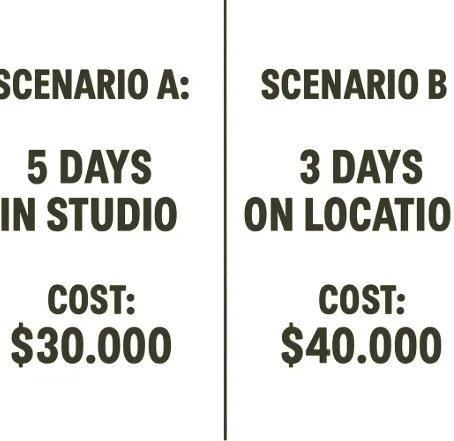
Instead of crossing their fingers, smart filmmakers use modern accounting software as a virtual “What If” machine to explore alternate realities. If a storm floods a real-world location, producers can instantly test scenario planning for film budget contingencies. They might digitally compare “Move the shoot to an indoor soundstage” against “Wait out the storm for three days,” instantly seeing which choice keeps the production afloat.
This rapid decision-making works by seamlessly integrating scheduling with production budgeting tools. When the digital calendar changes, the daily budget updates automatically, ensuring producers aren’t paying a hundred crew members just to stand around a catering tent. Catching these idle-crew expenses early is the secret to identifying budget leaks in film production before they silently drain the bank account.
Ultimately, seeing these financial ripple effects in real-time demonstrates exactly how movie budgeting software improves financial forecasting, allowing creators to predict their exact bank balance months before the final scene wraps. By protecting that emergency reserve, they guarantee the project reaches the finish line, turning back-office wizardry into on-screen spectacles.
From Spreadsheets to Spectacles: Why Smarter Budgeting Means Better Movies
Tracking millions of dollars on a chaotic set isn’t just about accounting—it’s about protecting the magic. By streamlining film production chart of accounts, a messy stack of receipts becomes a clear digital roadmap. Every dollar saved on hidden inefficiencies is another dollar spent on breathtaking CGI or top-tier actors.
If you’re a student filmmaker ready to test drive movie budgeting software, use this simple checklist to evaluate your options:
- Compatibility: Does it sync easily with your existing screenwriting tools?
- Real-time capability: Can it act as a “GPS for money” when schedules suddenly change?
- Template availability: Does it offer built-in industry layouts to save you time?
Start by inputting costs for a simple short film to see immediate results. Moreover, you can view movie budgeting software not as a boring ledger, but as your ultimate creative partner—handling the background chaos so your vision shines on screen.
Simplify Film Budgeting and Production Management with Studiovity
Managing production costs becomes significantly easier when your entire filmmaking workflow lives inside one connected platform. Studiovity helps filmmakers streamline budgeting, scheduling, script breakdowns, call sheets, shot lists, and production collaboration without relying on disconnected spreadsheets. By combining AI-powered pre-production tools with real-time production planning, Studiovity allows producers and directors to track expenses, reduce costly delays, and make smarter financial decisions throughout every stage of filmmaking.
Whether you’re creating an indie short film, commercial project, documentary, or feature production, Studiovity helps teams stay organized, improve cost visibility, and maximize every production dollar. Instead of spending hours fixing manual budgeting errors, filmmakers can focus on what truly matters — bringing cinematic stories to life efficiently and creatively.