
Behind every ten-second explosion in your favorite blockbuster lies a mountain of hidden labor. How AI Storyboard and Script Breakdown Are Transforming Filmmaking is changing the way creators handle this challenge. Before a single camera rolls, filmmakers enter pre-production, the planning phase that builds the foundation of every movie. Traditionally, crews spent months with highlighters and sketchpads while mapping props, actors, and camera angles.
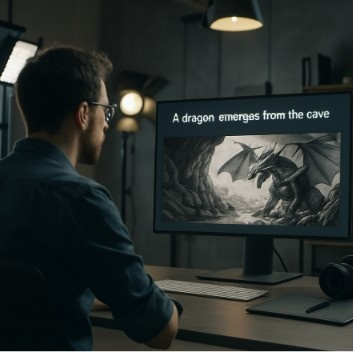
Making sense of a 120-page screenplay can feel overwhelming. Industry veterans often compare a manual sci-fi breakdown to organizing a giant grocery list of costumes, props, and visual effects. Today, however, generative AI for pre-visualization workflows acts as a creative assistant. Instead of drawing hundreds of storyboard panels by hand, directors can type a sentence and instantly generate cinematic visuals. As a result, filmmakers save weeks of effort and reduce production costs with AI-powered tools.
This technological shift also changes how stories come to life. Rather than replacing humans, AI in filmmaking works as a powerful production tool. These systems read scripts, organize details, and create visual blueprints before production begins. Consequently, filmmakers can see their vision long before the cameras roll.
Why Every Great Movie Starts with a "Grocery List" and How AI Writes It for You
Imagine reading a 100-page screenplay and listing every chair, coffee cup, and jacket mentioned in the story. In Hollywood, this demanding task is known as a script breakdown. Traditionally, crew members used stacks of highlighters while scanning scripts for every filming requirement. Missing a single detail could stop an expensive production.
How AI Storyboard and Script Breakdown Are Transforming Filmmaking becomes clear when software takes over this process. To understand how AI script analysis speeds up pre-production, start with the slugline. A slugline is the bold scene heading, such as “INT. DINER – NIGHT,” that defines location and time. While humans spend hours organizing these scenes, AI tools instantly build a structured production outline.
The real breakthrough happens inside the action lines. Through semantic parsing, AI understands the meaning behind sentences instead of focusing on isolated words. Large language models for screenplay analysis can identify whether a character mentions a prop or physically uses it. This accuracy supports automated character and prop extraction from scripts while organizing four key elements:
- Characters: Every speaking role, stunt double, and background extra.
- Locations: Physical settings grouped for efficient scheduling.
- Props: Important objects actors interact with during scenes.
- Special Effects: Action-heavy moments flagged for stunt or VFX teams.
This automation reduces human error and helps productions avoid costly mistakes. As a result, filmmakers can move faster from script analysis to cinematic storyboarding.
Visualizing the Impossible: Turning Script Lines into Cinematic Storyboards in Seconds
Once the paperwork is complete, directors face another challenge: transforming words into visuals. In the past, artists spent weeks sketching camera angles by hand. Today, How AI Storyboard and Script Breakdown Are Transforming Filmmaking can be seen in the speed of AI storyboarding. Tasks that once required several weeks can now happen within hours.
This leap in efficiency comes from diffusion models. These systems study millions of images to understand lighting, shadows, and cinematic framing. When filmmakers use generative AI for pre-visualization workflows, the software creates detailed storyboard panels in seconds. Therefore, the crew can review the movie visually before spending money on production.
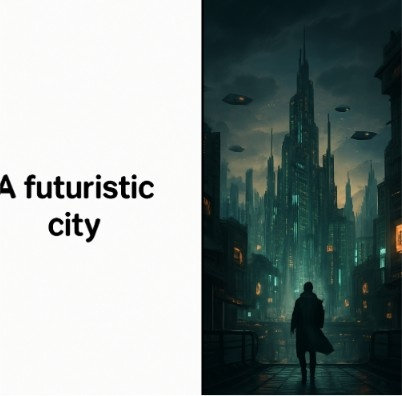
Guiding the AI requires effective prompting. Directors no longer type simple phrases like “car chase.” Instead, they provide cinematic details such as “a sleek black sports car drifting across neon-lit pavement at midnight.” By refining prompts, filmmakers improve creative direction through AI image generation and quickly experiment with new moods, lighting, or weather conditions.
This instant iteration also accelerates creativity. If a sequence feels weak, creators can generate fresh camera angles immediately rather than waiting days for revised sketches. However, handling hundreds of generated visuals introduces another challenge: maintaining continuity across scenes. Fortunately, AI-powered continuity systems now solve problems that once caused expensive production errors.
The Digital Memory: How AI Solves the Continuity Errors That Ruin Good Movies
Movies are rarely filmed in chronological order. An actor may shoot the emotional finale on Tuesday and the opening scene on Friday. This production style creates continuity problems, such as costumes or props changing between shots. How AI Storyboard and Script Breakdown Are Transforming Filmmaking becomes even more valuable through AI-driven continuity tracking.
Modern systems use semantic scene parsing to understand the logic of each environment. Instead of simply scanning for keywords, the AI understands relationships between props, costumes, and visual details.
When productions generate hundreds of storyboard panels, maintaining visual consistency becomes essential for real-time collaboration in AI-driven film planning. These systems act as digital memory banks by preserving important visual elements in three ways:
- Character features: Maintaining identical facial structures and eye colors.
- Costume details: Tracking wardrobe damage or visual changes between scenes.
- Lighting consistency: Matching shadows and atmosphere across every camera angle.
Preventing continuity mistakes saves productions from expensive reshoots. Consequently, directors can focus more on storytelling and performances. This level of automation once belonged only to major studios. Today, however, independent creators also benefit from AI-powered filmmaking tools.
Democratizing Hollywood: How Independent Filmmakers are Slashing Pre-Production Costs
Independent filmmaking once required painful compromises. Many creators rewrote ambitious ideas because production costs exceeded their budgets. Today, How AI Storyboard and Script Breakdown Are Transforming Filmmaking is helping indie filmmakers protect their creative vision.
Instead of hiring large teams of concept artists, smaller crews can now visualize entire productions in a single afternoon. This efficiency allows more budget to appear on screen rather than disappear during months of manual planning.
AI also connects directly with virtual production. In this process, actors perform in front of massive LED screens that display digital environments instead of real-world locations. By implementing AI in independent film development, filmmakers can design and test these backgrounds before production begins.
For example, a director can experiment with the lighting of an alien planet from a laptop at home. Consequently, the crew arrives on set with a complete visual blueprint and avoids expensive guesswork.
The gap between independent creators and major studios continues to shrink. Finding the best AI storyboard generators for independent filmmakers is not only about faster illustrations. It is also about reclaiming creative control. Since AI handles repetitive planning tasks, storytellers gain more freedom to focus on narrative quality and cinematic execution.

Your First AI-Powered Pre-Production: A Step-by-Step Workflow for Modern Creators
Imagine finishing a screenplay for a bank-heist thriller. Traditionally, the next step involved weeks of paperwork and scheduling. Today, How AI Storyboard and Script Breakdown Are Transforming Filmmaking provides a much faster workflow.
When comparing AI-powered scheduling with manual breakdowns, the biggest advantage is the immediate shift from logistics to creativity. Instead of counting every getaway vehicle and ski mask manually, filmmakers can rely on automated analysis.
A modern AI-assisted workflow generally follows four stages:
- Script Upload and Analysis: The AI reads the screenplay and studies the story structure.
- Element Extraction: The software identifies actors, props, locations, and production requirements.
- Scene Prompting: Directors guide the AI to generate hero shots and cinematic visuals.
- Layout and Export: Teams organize storyboard panels and export them for crew collaboration or editing workflows.
Perfect results rarely appear after the first attempt. Human creativity still guides the process. If the AI generates a futuristic getaway car for a 1970s crime story, directors can revise the prompts and adjust the visual style.
This collaborative workflow proves that AI functions as a creative assistant rather than a replacement. By handling repetitive planning tasks, the technology allows filmmakers to focus on emotion, pacing, and storytelling.
The Director’s New Power Tool: Why AI Enhances Rather Than Replaces Creative Vision
You no longer have to look at a blockbuster movie and wonder how filmmakers manage the massive logistical puzzles behind it. By integrating ai in filmmaking, creators are officially outsourcing the tedious “grocery lists” of script breakdowns and the heavy lifting of visual planning to a tireless digital assistant.
This shift clearly defines the boundary between automation and imagination. An algorithm can instantly tally the props needed for a scene, but it takes a human director to decide how that scene should make the audience feel. By enhancing creative direction through AI image generation and enabling real-time collaboration in AI-driven film planning, these tools act as powerful collaborators rather than creative replacements. AI handles the paperwork, giving creators more space to elevate their narratives.
The next time you watch a visually stunning film, you will see the magic differently. You now understand the modern tools that bring those complex moments to life. Look past the special effects and recognize that behind the screen, creators finally have the freedom to spend less time managing logistics and more time perfecting their art. The future of entertainment is brighter because human imagination finally has a tool that removes logistical barriers.
Simplify AI-Powered Filmmaking with Studiovity
As AI continues transforming modern filmmaking, Studiovity gives creators a complete platform to manage every stage of pre-production in one place. From screenplay writing and AI-powered script breakdowns to storyboarding, shot listing, scheduling, budgeting, and call sheets, Studiovity helps filmmakers turn ideas into production-ready plans faster than ever. Whether you are an independent creator or a professional production team, Studiovity streamlines complex workflows, reduces planning time, and keeps your entire crew aligned with smart AI-driven tools built for modern filmmaking.