In the bustling world of creative projects, organization drives success. What is a Call Sheet Everything You Need to Know starts with understanding its role as a vital tool for seamless production.
A call sheet does more than list a schedule; it acts as a roadmap for the day. It ensures everyone understands their role and responsibilities. As a result, teams stay aligned and productive.
For graphic designers, understanding call sheets improves project management skills. It also helps align team efforts and strengthens client communication.
This guide explores What is a Call Sheet Everything You Need to Know. From purpose to creation, everything is covered. So, dive in and discover how call sheets can elevate your creative projects.
What is a Call Sheet?
A call sheet is a document used in film, TV, and creative projects. It details the daily schedule and logistics for everyone involved. Therefore, each team member clearly knows tasks and timings.
At its core, a call sheet works as a communication tool. It keeps the entire team informed and aligned. Consequently, workflows become smoother and confusion reduces.
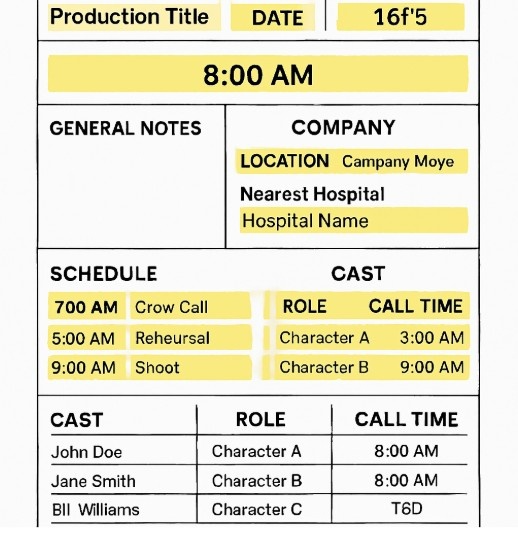
Typically, a call sheet includes essential information. This covers the project title, date, and location details. It also lists call times and contact information for key personnel.
Moreover, call sheets often include additional details. These may include weather forecasts and special instructions. Hence, all important information stays in one place.
Why Are Call Sheets Important in Creative Projects?
Call sheets play a key role in organizing creative projects. They ensure smooth execution by clearly sharing critical details. As a result, miscommunication reduces significantly.
Their importance lies in efficiency. By outlining tasks and schedules, they streamline production. Therefore, downtime decreases and projects stay on track.
A detailed call sheet also improves collaboration. It lists roles, responsibilities, and expectations. This transparency builds accountability and trust. Key elements include:
Team contact information
Scheduled call times
Location and travel details
In creative work, consistency and communication matter. Call sheets provide both. Furthermore, they help meet deadlines and improve overall project quality.
Key Components of a Call Sheet
A call sheet includes more than a simple schedule. It combines essential details into one structured document. Understanding its components improves organization.
First, the header sets the context. It includes the project title and date. This immediately defines the scope.
Next, contact information becomes crucial. This section lists phone numbers and emails of key team members. Therefore, communication becomes faster.
The schedule forms the backbone. It outlines call times and locations. Hence, confusion stays minimal and punctuality improves.
Logistics also matter. Directions to locations help avoid delays. Additionally, parking details can support smooth execution.
Weather forecasts are often included as well. They help teams plan clothing and equipment. Common elements include:
Project title and date
Contact list
Call times and locations
Moreover, special notes provide extra clarity. These may include wardrobe requirements or safety instructions. Other elements include:
Weather conditions
Transportation details
Safety instructions
Each component aligns the team and improves workflow efficiency.
Understanding Call Sheet Format and Structure
Understanding the format simplifies planning. A call sheet follows a structured layout for clarity.
It begins with a header that includes the project name and date. This anchors the document.
The body remains logically organized. It includes sections like contact lists and schedules. For example:
Header: Project title and date
Crew and talent details
Scene schedules and locations
Supporting details such as weather updates and notes add value. Therefore, team members stay fully prepared.
Today, digital formats are widely used. They allow real-time updates and quick sharing. As a result, communication improves instantly.
A structured call sheet remains essential. It streamlines communication and enhances project management.
How to Create a Call Sheet: Step-by-Step Guide
Creating a call sheet starts with gathering key details. First, collect project specifics such as date and location. This sets the foundation.
Next, list everyone involved. Include crew, talent, and roles. Ensure all contact details remain accurate.
Then, build a timeline for the day. Outline scenes and shooting times. This keeps everything organized.
Include logistical details that may affect the schedule. For instance, weather forecasts help avoid disruptions.
Add weather forecasts
Include safety instructions or special notes
Finally, choose a suitable format. Whether digital or printed, ensure easy access. Also, share it before the production day begins.
A well-planned call sheet enhances collaboration and efficiency.
Call Sheet Templates and Tools
Templates simplify the process. They provide structure and ensure no detail is missed. Designers can customize them based on project needs.
Digital tools offer advanced features. These include real-time updates and easy sharing. Therefore, teams stay connected.
Popular tools include:
Adobe Creative Suite for customization
StudioBinder for call sheet management
Google Sheets for collaboration
Choosing the right tool depends on your workflow. Explore options to find the best fit.
Best Practices for Using Call Sheets
Clarity remains essential for effective call sheets. Information should stay easy to read. This reduces confusion.
Regular updates also matter. They help teams adapt quickly to changes. Therefore, communication stays accurate.
Feedback improves usability. Teams can suggest changes based on experience. As a result, call sheets become more efficient.
Keep information clear and concise
Update regularly
Use feedback for improvement
These practices ensure efficiency and professionalism.
Common Call Sheet Terms and Abbreviations
Call sheets often use short terms for quick communication. Understanding them improves workflow.
For example, “ETA” means estimated time of arrival. “DOOD” refers to days out of days. These simplify scheduling.
Common abbreviations include:
C/U: Close-Up
INT/EXT: Interior/Exterior
BG: Background
N/A: Not Applicable
TBD: To Be Decided
Knowing these terms improves coordination and clarity.
Call Sheets for Graphic Designers: Practical Tips
Graphic designers can use call sheets to streamline projects. They improve coordination and ensure timely delivery.
Custom call sheets help align design tasks with project goals. Therefore, teams stay focused.
Practical tips include:
Use templates focused on design tasks
Schedule regular updates
Share with stakeholders
Using call sheets boosts efficiency and client satisfaction.
Frequently Asked Questions About Call Sheets
Many professionals ask about What is a Call Sheet Everything You Need to Know and its benefits. A common question is what details should be included. Essential elements include schedules, contacts, and locations.
Another question relates to timing. Call sheets should be shared the evening before the workday.
FAQs include:
What is the main purpose of a call sheet?
How do call sheets improve project management?
Can call sheets be digital?
Understanding these answers simplifies the process and improves usage.
Conclusion: Elevate Your Projects with Effective Call Sheets
Understanding What is a Call Sheet Everything You Need to Know helps improve project efficiency. Call sheets clarify schedules and responsibilities.
They also streamline communication and reduce errors. Therefore, teams perform better and projects stay on track.
By applying best practices, you can maximize their value. Ultimately, call sheets help your creative projects succeed with precision and ease.
Simplify Your Call Sheets with Studiovity
If you now understand What is a Call Sheet Everything You Need to Know, the next step is using the right tool to create and manage it effortlessly. Studiovity helps you generate professional call sheets in minutes, while also handling script breakdowns, schedules, and team coordination in one place. As a result, your entire production stays organized without manual effort. Whether you are a filmmaker, producer, or creative professional, Studiovity ensures accuracy, speed, and collaboration at every stage. Try it today and turn your planning into a smooth, stress-free production workflow.
Script breakdown elements are the production requirements hidden inside every scene: the characters, background actors, props, set dressing, wardrobe, makeup, locations, vehicles, animals, stunts, effects