
How to Use AI for Film Scheduling and Shooting Schedule Automation
Imagine trying to solve a 1,000-piece jigsaw puzzle where the pieces constantly shift in the wind. This mirrors traditional film planning, where a single weather delay or scheduling conflict often forces you to rebuild your entire calendar from scratch.
Today, AI in film scheduling is transforming this challenge into a manageable process. Modern technology works like an intern who never sleeps, constantly recalculating and optimizing production plans. By acting as a “GPS for production,” AI-driven scheduling instantly identifies the most efficient path for your shoot. This is the secret of how to reduce film production costs with AI: letting algorithms handle the complex logic.
By understanding these pillars of production, filmmakers can trade weeks of frustration for a streamlined workflow that puts creativity first. Mastering AI in film scheduling helps production teams automate complex planning tasks while maintaining full creative control without technical headaches.
The Hidden Cost of Manual Stripboards and Why Humans Struggle with 1,000 Variables
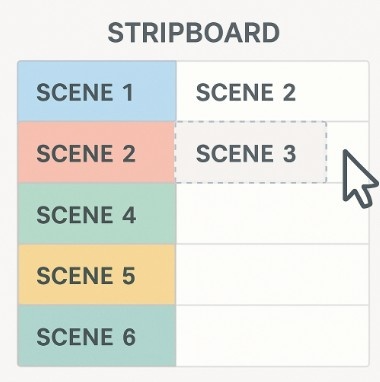
Even a modest short film involves hundreds of moving parts that must align perfectly. Traditionally, producers organized these parts using a physical “stripboard”—literally a board with movable paper strips where each strip represents a scene. If you move one strip to Tuesday, you must mentally check whether the location is available, if the lighting conditions match, and whether the actors are free.
This manual process is where costly mistakes often happen. One small oversight—like scheduling a scene on a day when the lead actor is unavailable—can cause major production delays.
This is exactly where AI in film scheduling becomes valuable. AI-powered project management tools replace static stripboards with dynamic, intelligent scheduling systems. When you drag and drop a scene in a digital interface, the software instantly updates the “Day Out of Days” (DooD). While the name sounds unusual, a DooD simply visualizes which cast members work on which days.
AI acts like a tireless assistant, immediately alerting producers if a schedule change creates conflicts or breaks union rules.
The efficiency gains of automated film production stripboards are stark when compared to traditional methods:
- Breakdown Time: Manual takes days; AI takes minutes.
- Error Rate: Humans frequently miss details; AI flags every conflict.
- Revision Speed: Manual requires a total re-draw; AI updates instantly.
Before the software can build this optimized schedule, however, it first needs to read and understand the screenplay.
Automated Script Breakdowns: From 100-Page PDF to Tagged Data in Seconds
Uploading a PDF script might seem simple, but it is the foundation of modern production planning. AI script breakdown software scans the screenplay structure and identifies “sluglines”—the scene headings such as INT. DINER – DAY that define where and when each scene occurs.
Through AI in film scheduling, these headings allow the system to automatically divide the screenplay into individual scenes called “strips,” effectively creating the framework for the shooting schedule without manual input.
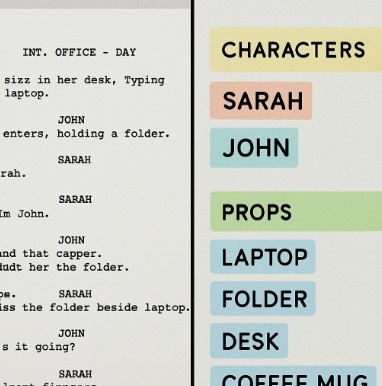
Once scenes are separated, the software performs entity extraction. This process works like digital highlighting. Instead of a line producer manually marking the script with colored markers, AI scans the dialogue and action lines to identify production elements.
For example, the system can recognize:
- A 1969 Mustang as a vehicle requiring transportation logistics
- A specific park location as a location needing permits and parking arrangements
- A character name as part of the cast list
For independent filmmakers, this automation dramatically reduces administrative work. Instead of spending hours tagging every prop, actor, and location manually, AI in film scheduling tools generate a first draft instantly. Producers can then review and adjust the tags to ensure accuracy.
With every scene element properly tagged, the production now has a structured dataset. The next challenge is determining the most efficient order to shoot those scenes.
AI-Driven Optimization: Solving the Actor vs. Location Puzzle
Having a list of tagged scenes is useful, but arranging them into a practical shooting calendar is where budgets are often won or lost. Traditionally, producers shuffled strips on a scheduling board, solving a complex puzzle where every change affected multiple variables.
This is where AI in film scheduling fundamentally changes the workflow.
Instead of testing schedules one at a time, AI algorithms simulate thousands of potential combinations in seconds to determine the most efficient shooting plan. Similar to how navigation apps calculate the fastest route, the system evaluates many constraints simultaneously.
Key optimization factors include:
- Location Clustering: Grouping scenes by location to minimize expensive company moves.
- Actor Availability: Scheduling actors efficiently to reduce unnecessary shooting days.
- Daylight Requirements: Placing exterior scenes during optimal lighting conditions.
- Equipment Rentals: Grouping scenes that require specialized gear into the same timeframe.
By analyzing these variables together, AI in film scheduling can often reduce production time by several days. Less time spent moving equipment or waiting on cast means more time dedicated to actual filmmaking.
However, even the best plan must adapt when unexpected events occur.
Real-Time Adaptability: Recalculating Schedules and Call Sheets
In traditional scheduling systems, changing one scene could unravel the entire plan. Producers often had to manually rebuild large sections of the schedule whenever a location changed or a script revision occurred.
With AI in film scheduling, the schedule behaves more like a dynamic system than a static document.
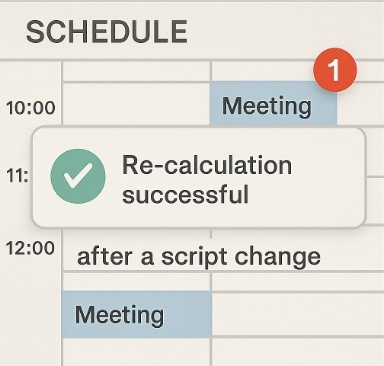
When a new script draft is uploaded, the software immediately detects scene changes and suggests adjustments to the existing schedule. This prevents hours of manual reorganization and significantly reduces human error.
AI also automates one of the most critical daily production documents: the call sheet.
Modern systems generate call sheets directly from the live production schedule. If a call time shifts or a scene moves to another day, every crew member’s report automatically updates.
This agility is one of the biggest advantages of AI in film scheduling. Instead of scrambling to repair a broken plan, producers can simply recalculate and continue production with minimal disruption.
Your Action Plan for an AI-Powered Production
Production logistics no longer have to slow down creativity. By adopting modern scheduling tools, filmmakers can transform their shooting schedule from a fragile plan into a flexible roadmap that adapts to real-world challenges.
Instead of spending days recalculating schedules manually, AI in film scheduling allows production teams to solve logistical problems in minutes.
Getting started is simple:
- Choose a cloud-based film scheduling platform.
- Upload your screenplay for automatic script breakdown.
- Review the generated shooting timeline.
- Adjust scenes to match creative and logistical priorities.
AI scheduling tools are not here to replace filmmakers—they simply handle the complex calculations. With that burden removed, producers and directors can focus their energy where it matters most: crafting a compelling story.
Simplify Film Scheduling with Studiovity
If you want to experience the real benefits of AI in film scheduling, platforms like Studiovity bring all these capabilities into one place. Studiovity combines AI-powered script breakdown, intelligent shooting schedules, automated stripboards, and instant call sheet generation within a single cloud-based production platform. Instead of juggling multiple tools, filmmakers can upload their script, automatically tag production elements, generate optimized schedules, and adapt quickly to changes during production. Whether you’re an independent filmmaker or managing a large production team, Studiovity helps streamline planning, reduce scheduling errors, and turn complex logistics into an efficient workflow so you can focus more on storytelling and less on administrative work.