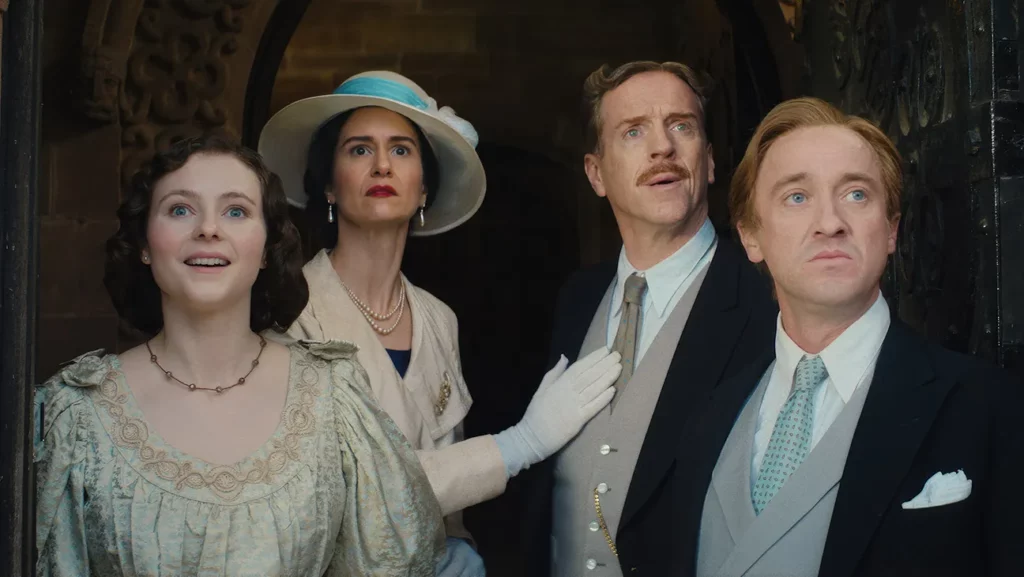
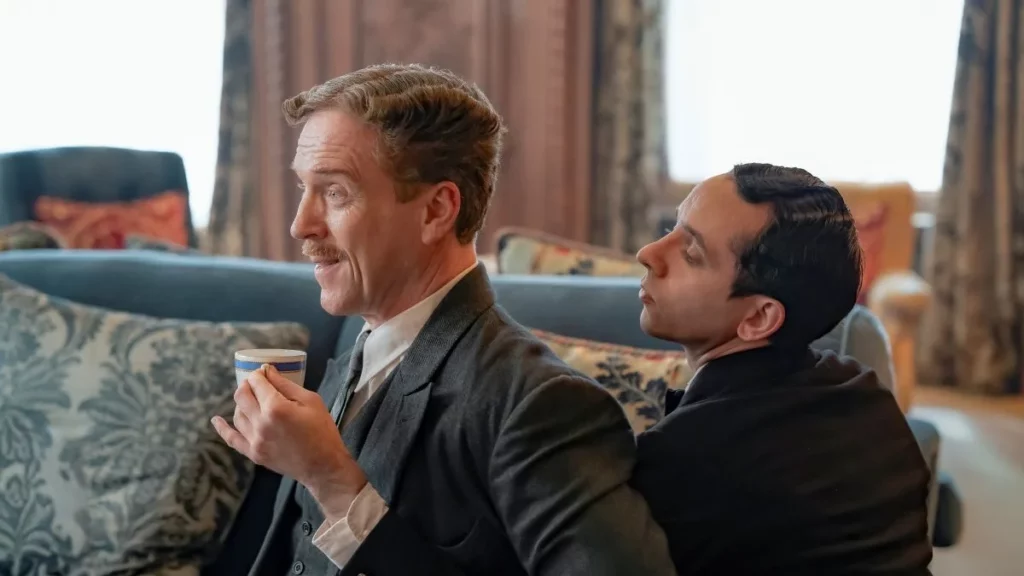
The resurgence of the spoof genre has arrived, and it is wearing a tuxedo. Our Fackham Hall review 2025 is not merely a critique of jokes; rather, it is ananalysis of the precision engineering required to pull off a period comedy of this magnitude. Directed by Jim O’Hanlon and penned by Jimmy Carr, this film manages to balance the grandeur of Downton Abbey with the anarchic rhythm of Airplane!. For directors and producers, the film serves as a masterclass in managing high-stakes tone alongside a sprawling ensemble cast. Furthermore, it demonstrates that technical rigor is the secret ingredient to successful farce.
The foundation of any successful production is, undeniably, the screenplay. In the case of Fackham Hall, the writing team—including Jimmy Carr and the Dawson Brothers—faced a unique challenge. They had to construct a legitimate murder mystery while simultaneously undermining it with slapstick. Consequently, the script breakdown for this project would have been immense. Every page is dense with visual gags, dialogue cues, and specific prop requirements.
For a line producer, this density translates to a complex scheduling puzzle. The narrative moves rapidly between “Upstairs” aristocrats and “Downstairs” staff. Therefore, maintaining continuity across these two distinct worlds requires a robust script breakdown software. The sheer volume of props—from lethal silverware to malfunctioning manor bells—would require meticulous tagging to ensure the art department stays ahead of the camera.
Managing the Ensemble: A Scheduling Feat
One of the most striking aspects of our Fackham Hall review 2025 is the cast list. Managing a roster that includes Damian Lewis, Thomasin McKenzie, and Tom Felton is a logistical heavy lift. Ensemble comedies are notoriously difficult to schedule. You are not just managing actors; you are managing their availability windows, makeup times for period precision, and the massive number of extras required for ballroom scenes.
To execute this, the assistant director team likely relied on advanced scheduling tools to create a stripboard that minimized downtime. For instance, shooting out the “Downstairs” scenes in blocks would allow the production to release the high-profile “Upstairs” talent, thereby optimizing the budget. Additionally, automated daybreaks would be essential to keep the shoot days legal and efficient amidst the chaos of a comedy set.
Production Design on a Budget
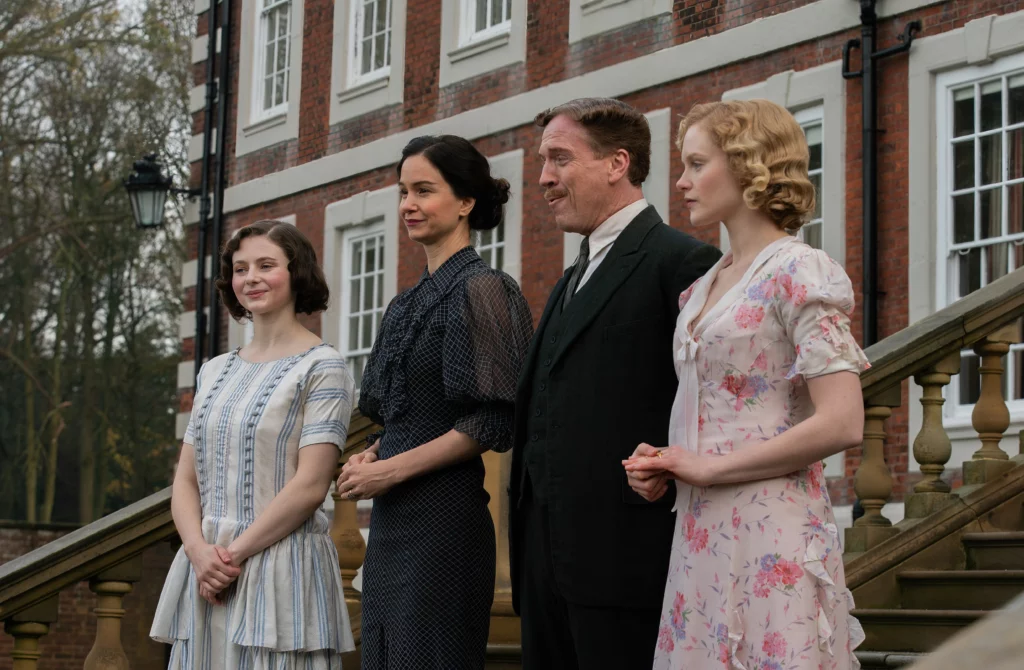
Period pieces are expensive. However, Fackham Hall proves that you can achieve high production value through smart resource allocation. The film was primarily shot at Knowsley Hall, utilizing existing architecture to save on set construction. This is a crucial lesson for indie producers: find a location that does the heavy lifting for you.
Nevertheless, the budgeting software for this film would still show significant line items for costumes and art direction. Spoofs require props that function as jokes—breakaway furniture, specific period-inaccurate items for comedic effect—which adds a layer of complexity to the art budget. Tracking these expenses in real-time is vital to prevent overspending on gags that might be cut in the edit.
Visualizing the Joke: Storyboards and Shot Lists
Comedy lives and dies in the edit, but it is born in the shot list. Director Jim O’Hanlon had to visualize complex physical comedy sequences before arriving on set. Unlike a drama, where coverage can be flexible, a visual gag requires specific framing. If the camera angle is off by an inch, the joke fails.
Consequently, pre-production visualization was likely paramount. Using tools like AI storyboarding allows directors to test angles and timing without wasting expensive set hours. In Fackham Hall, the visual gags often occur in the background of serious dialogue. Planning these dual layers of action requires a detailed shot list that communicates clearly to the DP and the camera operators.
The Verdict for Filmmakers
In conclusion, our Fackham Hall review 2025 finds the film to be a triumph of logistical planning as much as comedic timing. It reminds us that the funniest moments on screen are often the result of the most serious preparation off-screen. From the intricate script breakdown to the complex scheduling of A-list talent, the production team executed a high-wire act with precision.
For those inspired to build their own production, remember that organization is your safety net. Whether you are shooting a spoof or a drama, the right tools ensure that the only chaos on your set is the kind you captured on purpose.
Traditional motion capture asks for three things most creators don’t have: a suit covered in reflective markers, a calibrated multi-camera volume, and a technician to