
Everyone has a brilliant movie idea, yet few possess an actual plan. According to seasoned veterans, filmmaking is 10% art and 90% organization. Most stories quietly die in the “logistical middle”—the daunting mountain of planning required between finishing a script and starting video production. For newcomers entering film studies, this chaotic gap routinely kills ambitious indie projects before cameras ever roll. Therefore, students need the ultimate film education tool to navigate this challenging transition successfully.
Think of a movie as a massive banquet. The script is your creative recipe, but production management—organizing every required ingredient and chef—is how you actually serve the meal. Because it acts as an automated digital brain, Studiovity handles this prep work, safely bridging the gap between imagination and reality.
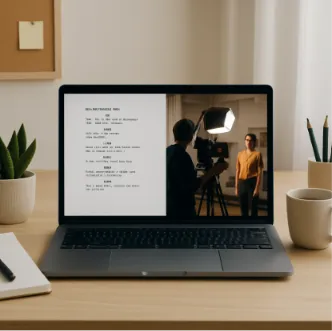
Writing for Collaboration: Why Studiovity Bridges the Gap Between Creative and Crew
Everyone knows what a movie script looks like, but those specific margins actually act as the architectural blueprints for your crew. Meeting industry-standard screenwriting formatting requirements often feels like learning a frustrating new language. However, Studiovity handles this layout automatically, letting you focus entirely on building your characters instead of fighting with your spacebar.
The biggest threat to a growing story is usually “Version Hell.” Emailing “Script_Final_v4.pdf” back and forth creates massive confusion for everyone involved. When comparing Studiovity vs Final Draft for beginners, Studiovity’s modern cloud-based approach immediately stands out as the ultimate film education tool. For instance, it provides real-time script collaboration for remote film teams, meaning co-writers can type inside the exact same document simultaneously without accidentally saving over each other’s hard work.
Additionally, this instant connection lets directors leave notes directly on the page, keeping the whole creative team on one continuously updated master draft. With your perfectly formatted, securely saved blueprint finally locked in, you are ready to plan the physical shoot and face the next crucial production step: the automatic script breakdown.
The Automatic Breakdown: Why You Will Never Manually Count Costumes Again
Imagine preparing a massive holiday banquet. Before cooking, you must scan the recipe to list every single ingredient needed. In filmmaking, this prep work is called a “Script Breakdown“—the process of reading a script to identify every physical item required to shoot a scene. Consequently, educators exploring how to teach screenwriting with digital tools frequently recommend the ultimate film education tool to replace traditional highlighting of paper pages with colored markers just to count hats and cars.
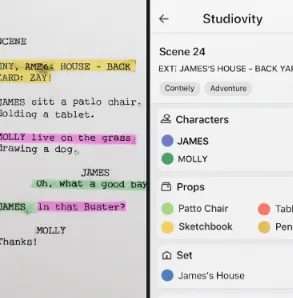
Fortunately, Studiovity acts as a digital assistant that reads your blueprint for you. Instead of hours of manual reading, it provides a seamless step-by-step guide to digital script breakdown by automatically “tagging” (digitally highlighting) crucial elements in your story. In seconds, the software generates comprehensive lists across these essential categories:
Characters
Props
Costumes
Locations
Turning a creative story into an organized checklist eliminates the human error that leads to costly forgotten props on filming day. Centralizing script breakdowns and production schedules inside one cloud-based system makes Studiovity the ultimate film education tool for managing changes because your physical lists update immediately when scripts change. Now that you know exactly what you need to film, it is time to figure out when to film it using automated stripboards.
Mastering the 'Living Puzzle': How Automated Stripboards Save Your Production Schedule
Learning how to organize a film project from script to shoot requires accepting one reality: movies are rarely filmed chronologically. If your story visits a coffee shop on page one and page ninety, you shoot both scenes on the same day to optimize sequences and save travel costs. The industry visualizes this timeline using “stripboards“—a chart where every scene becomes a movable colored strip. Today, automated production stripboards for student directors replace cardboard with a drag-and-drop digital interface, proving why it is the ultimate film education tool.
Building this schedule is like assembling a “Living Puzzle.” Even perfect plans can shatter on set. When streamlining student film project workflows, cloud-based scheduling lets you adapt instantly when reality hits. With just one click, you can rearrange your entire shoot if you face sudden obstacles:
Unexpected weather changes, like sudden rain
Unplanned actor illnesses or scheduling conflicts
Last-minute loss of a filming location
Rearranging these pieces digitally ensures your production keeps moving forward without chaos. Once your daily schedule is locked, the next step is clearly communicating that plan to your team through essential production documents.
The Professional Edge: Why Call Sheets and Storyboards Complete the Education
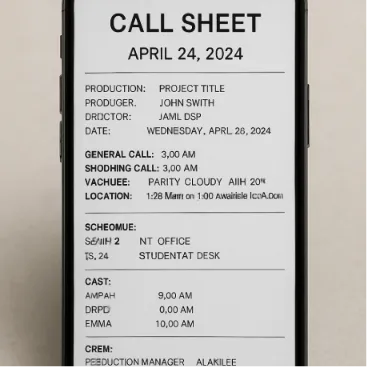
Knowing your schedule is only half the battle; the real magic happens when your crew knows where to be at 4:00 AM. The professional secret is the “call sheet“—a daily document telling everyone exactly what to do. Instead of texting twenty people individually, you generate this itinerary with one click. This highlights why you should use collaborative film software in film school, especially when utilizing the ultimate film education tool to eliminate morning chaos entirely. Embracing this film curriculum digital transformation means students stop acting like stressed administrators and start acting like true directors.
Once everyone arrives on location, the focus shifts from logistics back to art. Communicating your vision requires more than just waving your hands; it takes visual blueprints. Therefore, using an integrated storyboard and shot list creator allows your camera team to see exact angles before touching a lens. Rather than digging for files in a panic, centralized data keeps the visual plan right at your fingertips. Mastering these final communication tools leads directly to executing a professional pre-production strategy.
Your 4-Step Action Plan to Professional Film Management
You no longer have to let logistics crush your creative spark. An end-to-end screenwriting and pre-production platform serves as the ultimate film education tool, bridging the gap from amateur dreamer to professional filmmaker. Reclaim your time for storytelling by executing this simple workflow:
Import Script
Run Breakdown
Build Stripboard
- Send Call Sheets
Mastering these steps eliminates on-set chaos, transforming your vision into a practical, functional shooting schedule. By adopting comprehensive pre-production workflows, you build the organizational foundation necessary to grant yourself the creative freedom to finally yell, “Action!”
https://blog.studiovity.com/filmmaking-for-students-learn-filmmaking-the-industry-way/