
Good dialogue rarely says exactly what a character means. People dodge, joke, change the subject and talk about the dishes when they are really talking about the marriage. That gap between the words and the meaning is subtext, and it is what makes a scene feel alive instead of explained.
This guide shows how to write subtext in dialogue: what it is, why on-the-nose lines fall flat, practical techniques you can use today, and a simple rewrite pass to find the lines that say too much.
Here is a short Studiovity video on getting unstuck with your script, including help with reworking lines:
What Subtext in Dialogue Really Means
Subtext is the meaning underneath the spoken line. The text is what a character says. The subtext is what they want, fear or feel but will not say out loud.
Audiences love subtext because it lets them do some of the work. When a viewer figures out that a polite question is really an accusation, they are leaning in. When a character simply announces their feelings, there is nothing left to discover.
Why On-the-Nose Dialogue Falls Flat
On-the-nose dialogue is when characters state their emotions, motives or backstory directly. It usually looks like this:
                    MEERA
          I am angry because you forgot my
          birthday, and it makes me feel like
          you do not care about me anymore.
Every word is clear, and none of it is interesting. Real people protect themselves. They hint, deflect and test the other person first. Compare:
                    MEERA
          The cake was nice. I bought it
          myself.
The second version carries the same hurt, plus pride and a little sarcasm, in eight words. The actor has something to play and the audience has something to read.
Start With What Each Character Wants
You cannot write subtext without knowing the want under the scene. Before you draft a dialogue scene, answer three questions for each character:
- What do they want from the other person right now?
- Why can they not just ask for it? Pride, fear, status, politeness or danger.
- What will they talk about instead?
The answer to the third question becomes your surface text. A son who wants his father’s approval might talk about the car engine. A detective who suspects a witness might ask about her garden. The want drives the scene; the surface topic hides it.
Techniques for Writing Subtext in Dialogue
Talk Around the Real Subject
Let characters discuss something small that stands in for something big. A couple arguing about who left the lights on can be an argument about who does more in the relationship. Keep the real subject unspoken and let the small topic carry the heat.
Answer a Different Question
When one character asks a direct question and the other answers something else, the audience notices the dodge. That evasion tells us more than a confession would.
                    ARJUN
          Did you call her back?

                    KABIR
          Traffic was terrible today.
Let Action Contradict the Words
A character says “I am fine” while scrubbing a clean plate for the third time. The action line tells the truth the dialogue hides. Pair calm words with tense behaviour, or warm words with a cold gesture, and the contrast creates subtext without a single extra line.
Use Status and Politeness
Formal language between people who should be close signals distance. Over-politeness can be a weapon. Shifts in how characters address each other, from first names to titles or the reverse, can mark a change in the relationship.
Trust Silence and Short Lines
Not every question needs an answer. A pause, a one-word reply or a line left unfinished can land harder than a speech. Write the beat in the action line and let it breathe.
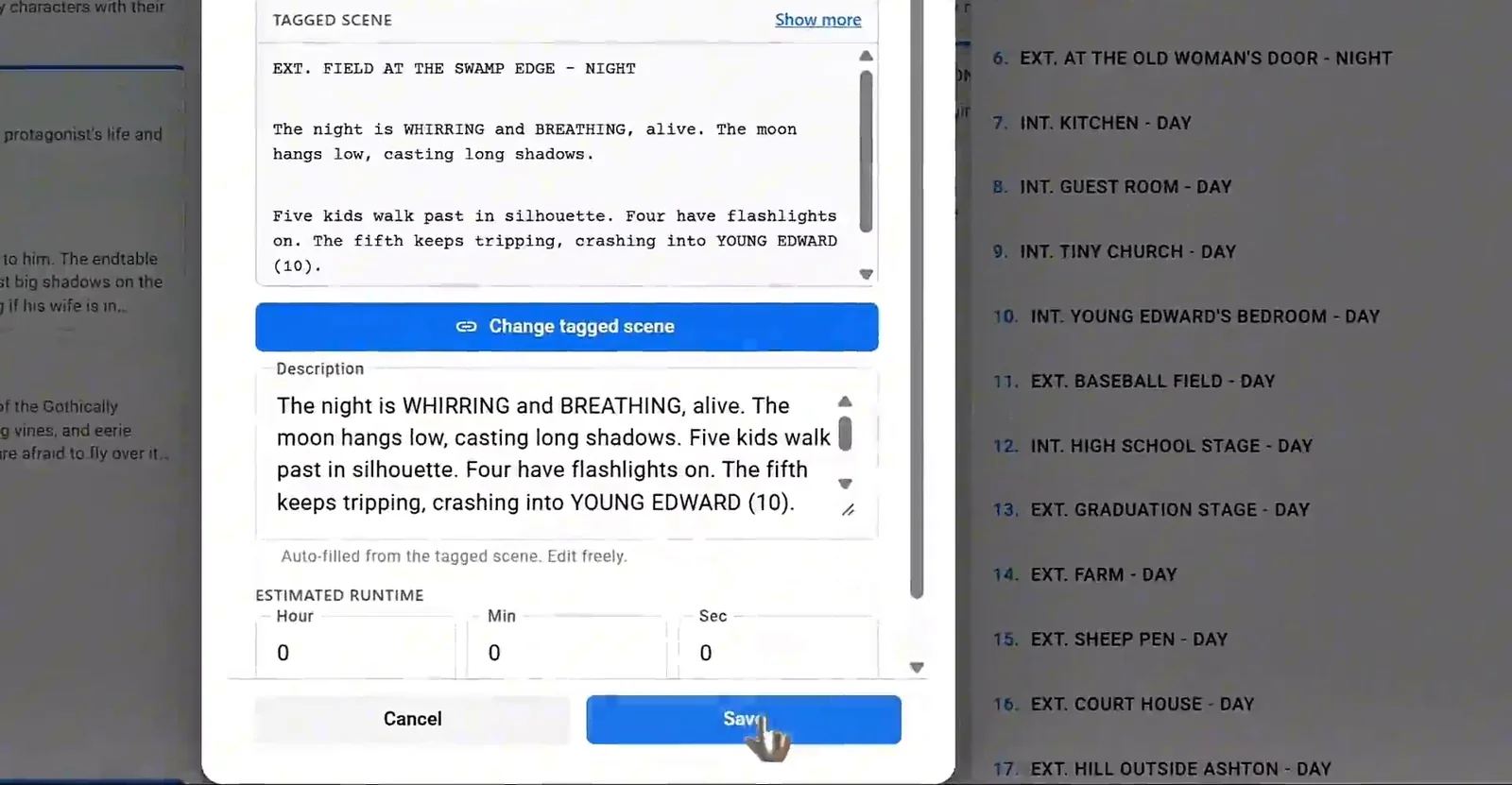
If you want to rehearse these techniques on a real scene, open it in the Studiovity screenwriting software and rewrite one exchange three ways: once on the nose, once with a dodge and once with action that contradicts the words.
A Rewrite Pass to Find Missing Subtext
Once a draft is done, run a focused pass on dialogue only. In the Studiovity screenplay editor you can jump scene by scene and work through this checklist:
- Highlight every line that names an emotion. Words like angry, scared, jealous or love inside dialogue are red flags. Ask whether behaviour could show it instead.
- Find lines that explain backstory to someone who already knows it. Characters rarely tell each other facts they both share.
- Look for the longest speeches. Can the key line survive alone while the rest becomes action or silence?
- Read the scene aloud. If it sounds like a therapy session or a news report, the subtext is missing.
- Check the ending of the exchange. The last line should carry the most weight, not summarise what we already felt.
Be careful not to overcorrect. If every line is coded, the audience gets lost. Key plot information still needs to be clear. A good rule is that the facts can be stated, but the feelings should be shown.
Subtext and Parentheticals
Writers sometimes try to force subtext with parentheticals such as (sarcastic) or (hiding her pain). If the line needs a label to be understood, the line usually needs a rewrite. Our guide on how to write parentheticals in a screenplay explains when a short direction helps and when it gets in the way. For broader dialogue habits, see how to write great dialogue.
FAQ
Is subtext only for drama?
No. Comedy depends on it too. Characters who refuse to admit an obvious truth, or who talk past each other, create some of the best laughs.
Can a character ever say exactly what they feel?
Yes, and it can be powerful, especially at a climax. A direct line hits harder when the character has hidden their feelings for most of the story.
How do I know if my subtext is too hidden?
Ask a reader to tell you what each character wanted in the scene. If they cannot, add one clearer signal through action, a reaction or a single honest line.
Write Scenes With Layers in Studiovity
Subtext turns ordinary exchanges into scenes people remember. Know what each character wants, let them talk around it and use action to reveal the truth. Draft and rework your dialogue in Studiovity, where correct screenplay format and AI rewrite tools keep you focused on what your characters are not saying.