
Strong pre-production is the difference between a student film that feels planned and one that feels rescued at the last minute. For film schools, the challenge is not simply teaching students what a shot list, schedule, or call sheet is. The bigger opportunity is helping them understand how each document connects to creative decisions, crew communication, time management, and production reality.
The most effective approach is practical, repeatable, and tool-based. Instead of treating pre-production as paperwork before the real filmmaking begins, modern film production classes can make it the foundation of every creative choice. How Film Schools Can Teach Pre-Production remains a vital mission for modern educators, and institutions achieve this by introducing professional workflows early. Here are eleven ways film schools can make pre-production training more useful, more professional, and more engaging for students.
1. Teach pre-production as one connected workflow
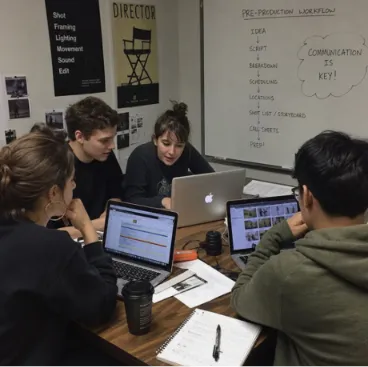
Many students first encounter pre-production as separate assignments: write a script, make a storyboard, create a schedule, submit a budget. That structure is easy to grade, but it can make the process feel disconnected.
A stronger method is to teach pre-production as a chain of decisions:
Script
Script breakdown
Shot list
Storyboard
Production calendar
Call sheet
Department tasks
Final production packet
When students see how one step feeds the next, they stop treating pre-production as busywork. They understand that a prop in the script affects the breakdown, the breakdown affects the schedule, the schedule affects the budget, and the budget affects what can actually be filmed. How Film Schools Can Teach Pre-Production successfully depends on linking these stages seamlessly.
This is also where real-world tools matter. Studiovity’s education offering is built around bringing professional filmmaking workflows into classrooms, including screenwriting, breakdowns, scheduling, call sheets, budgeting, production calendars, task management, and crew management inside one production suite.
2. Start every project with a production-ready script
Effective film schools pre-production training should begin before the first production document is created. If a script is unclear, incomplete, or formatted inconsistently, every later step becomes harder.
Instructors can improve outcomes by requiring students to revise scripts through a production lens. Before moving into breakdowns, students should ask:
Are locations clearly identified?
Are characters named consistently?
Are props, wardrobe, vehicles, and special requirements visible in the scene action?
Are day and night scenes clearly marked?
Are complex scenes written in a way the crew can interpret?
A useful classroom exercise is to ask students to exchange scripts and identify anything that would confuse an assistant director, producer, cinematographer, or production designer. How Film Schools Can Teach Pre-Production effectively starts with writing clear, shootable material.
3. Make script breakdowns a core graded skill
Script breakdowns are one of the best ways to teach students how films are actually built. They force learners to move from imagination into logistics.
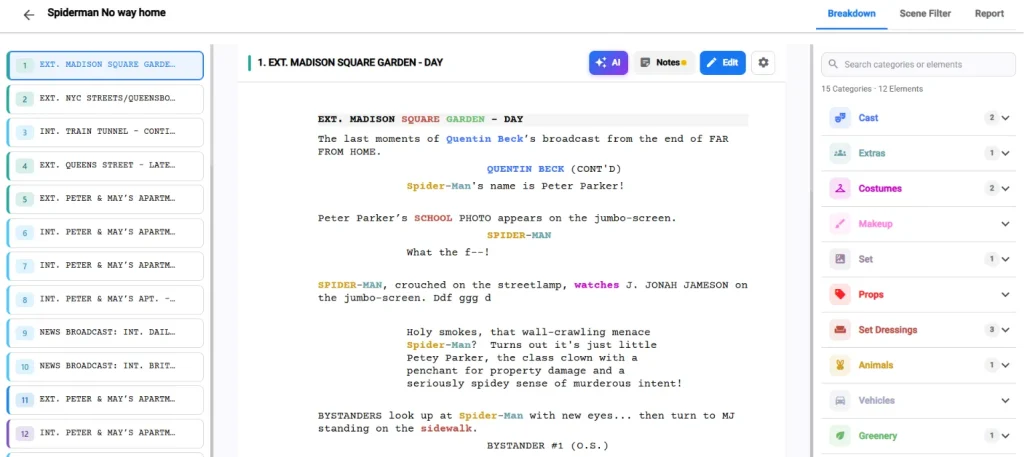
Instead of assigning breakdowns as a quick checkbox, film production classes can make them a recurring skill. Students should learn to identify and organize cast, background actors, props, wardrobe, makeup, locations, set dressing, vehicles, stunts, sound notes, visual effects, and special equipment.
A strong assignment is to have students break down the same short scene individually, then compare results in class. The discussion reveals how easily important details can be missed and how different departments read the same script through different priorities. Digital breakdown tools can also help students see the relationship between story elements and production planning. Studiovity includes AI-powered script breakdown features designed to extract elements such as characters, props, and production details from scripts.
4. Teach scheduling as creative problem-solving
Students often think scheduling is just arranging scenes in order. In reality, scheduling is a creative and logistical puzzle.
A good scheduling lesson should include constraints such as actor availability, location availability, company moves, day versus night scenes, exterior weather risk, equipment access, child actor or animal considerations, crew turnaround, and scene complexity.
Instead of giving students a blank schedule template, instructors give them a short script and a list of production limitations. Students build a shooting schedule, then defend their choices. How Film Schools Can Teach Pre-Production in this manner prepares students for the reality of production, where the best schedule protects performance, budget, crew energy, and creative quality at the same time.
5. Connect shot lists and storyboards to production limits
Shot lists and storyboards are often taught as visual exercises, but they should also be taught as planning tools. Every shot has a cost in time, equipment, setup, lighting, blocking, and crew coordination.
To make visual planning more effective, instructors can ask students to label each shot with practical notes:
Camera placement and lens intention
Movement and estimated setup complexity
Lighting needs and sound concerns
Required props or set dressing and continuity risks
A storyboard should not only show what the scene might look like. It should help the director, cinematographer, assistant director, and producer understand what the scene will require.
6. Build budgeting into every creative conversation
Budgeting should not be isolated in one producing class. Every director, writer, cinematographer, and editor benefits from understanding how creative choices affect cost.
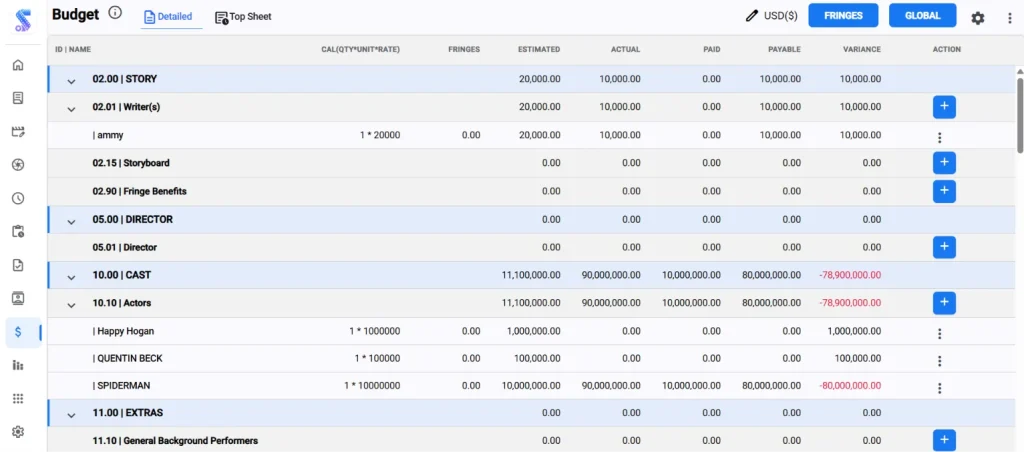
Film schools can make budgeting more practical by integrating it into project development. For example, after students create a shot list and schedule, instructors ask them to identify the budget impact of their choices regarding locations, transportation, meals, insurance, permits, rentals, and contingencies.
The point is not to discourage ambition. It is to teach students how to make ambitious work responsibly. How Film Schools Can Teach Pre-Production financial discipline ensures that creativity survives tight constraints.
7. Use approval workflows like a real production office
In many student productions, documents are submitted once and forgotten. In the industry, pre-production documents evolve through review, revision, and approval.
Film schools can create more professional habits by building approval workflows into assignments. For example, the instructor approves the script before breakdown begins, the producer approves the breakdown before scheduling begins, and department heads approve final needs before production day.
This creates accountability and shows students that filmmaking is collaborative by design. How Film Schools Can Teach Pre-Production accountability prepares students for professional film sets. Studiovity’s education page emphasizes a centralized classroom workspace where instructors can review student scripts, approve shot lists, and teach scheduling using production management tools, with features such as centralized project overviews and collaborative grading.
8. Grade collaboration, not just final documents
A polished production packet is valuable, but it does not always show how the team worked together. Since pre-production is a collaborative process, grading should reflect collaboration.
Instructors evaluate students on timely updates, clear task ownership, constructive feedback, document version control, responsiveness to department needs, meeting preparedness, and problem-solving under constraints.
This approach helps students understand that professionalism is visible before the camera rolls. A student who communicates clearly, updates documents on time, and supports other departments is practicing real production behavior.
9. Run pre-production labs before shoot days
Pre-production improves when students practice it under guided conditions. Instead of assigning all planning work as homework, schools can create lab sessions where students build production documents with instructor feedback in real time.
A practical pre-production lab includes reviewing the script, completing the breakdown, building the shot list, creating a schedule, identifying budget risks, and preparing crew tasks. How Film Schools Can Teach Pre-Production speed and prioritization during these labs helps instructors identify gaps before production begins. For larger programs, labs scale by grouping students into production teams and assigning rotating roles.
10. Prepare students for mobile and hybrid production workflows
Today’s students often plan, revise, and communicate across laptops, phones, tablets, and shared online spaces. Pre-production training should reflect that reality.
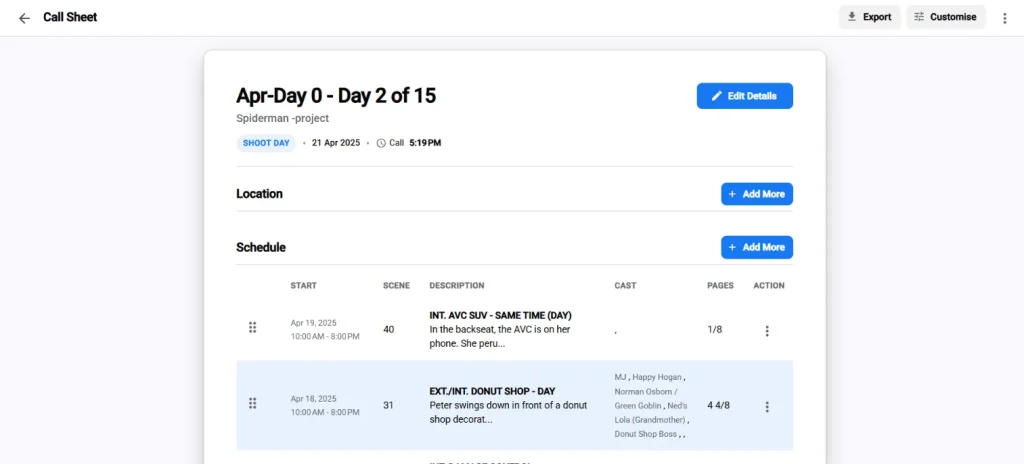
A modern classroom workflow should help students learn how to access production documents from multiple devices, keep scripts and schedules updated, share call sheets quickly, track changes without losing information, work when internet access is limited, and communicate updates to cast and crew clearly.
This is especially useful for student productions, where teams work across campus, at home, on location, or during limited equipment windows. Studiovity highlights syncing scripts, schedules, and call sheets across devices, along with offline work and real-time collaboration.
11. Choose tools that scale across the whole program
One of the biggest challenges for film schools is consistency. If every class uses different templates, apps, folders, and naming systems, students spend too much time figuring out process and not enough time learning production thinking.
Better production training programs use a shared workflow across courses. Intro students learn basic scripts and shot lists. Intermediate students add breakdowns, schedules, and budgets. Advanced students manage full production calendars, call sheets, departments, and team tasks.
For institutions evaluating software, scalability matters. How Film Schools Can Teach Pre-Production efficiently across entire degree programs often relies on dedicated institutional packages. Studiovity’s education program describes robust support for students, educators, institutes, and workshops, offering special education discounts, multiple projects, and institute-level seat options. The page notes that education access extends up to 100 projects and up to 150 seats, depending on the plan and eligibility.
Bring professional pre-production into the classroom
Film schools can teach pre-production more effectively by making it practical, collaborative, and connected from script to set. When students learn on structured workflows, they gain more than technical knowledge. They build the habits of professional filmmakers: planning ahead, communicating clearly, protecting creative intent, and respecting the realities of production.
For schools, universities, workshops, and educators looking to modernize film schools pre-production training, Studiovity for Education offers a way to bring screenwriting and film production management tools into the classroom with education-focused access for students and faculty. Explore the Studiovity Education Program to see how your classes can move from scattered paperwork to a unified pre-production workflow.