
Simple Callsheet Downloadable Free Production Call Sheets
You’ve spent weeks refining your script, but on the morning of the shoot, your phone buzzes with a text from your lead actor asking for the address. Meanwhile, your camera operator is calling to ask where to park. This frantic start highlights the real difference between a chaotic home movie and a professional production, which is why Free Production Call Sheets become essential from day one.
If you have ever wondered what is a call sheet in filmmaking, think of it as a daily itinerary that acts as a single source of truth for the entire team. It is more than just paperwork; it is a signal that tells the crew you value their time and safety. Successful directors know that streamlining film production communication is the quickest way to boost morale and establish authority on set.
Your primary goal is getting everyone to the same place at the same time without the stress. Using a professional template eliminates morning confusion and allows you to focus entirely on creativity. One document ensures you finish the day on schedule.
What Exactly is a Callsheet?
A callsheet acts as your daily battle plan, ensuring everyone from the talent to the camera operator knows exactly where to be and when. It eliminates the logistical questions that distract you from directing, keeping the focus entirely on creativity.
Think of this document like a flight itinerary for your filming day. Just as an airline ticket tells you the departure gate and boarding time, a callsheet organizes the critical logistics so nobody misses the flight. It centralizes the location, weather, and schedule into a single PDF or image that lives on everyone’s phone, ensuring the whole team is literally on the same page.
Three key terms form the backbone of this schedule. Your “General Call” is the standard start time for the crew to arrive and begin setting up, while specific “Call Times” tell actors exactly when they are needed on set. Finally, the day ends at “Wrap,” the official signal that filming is finished and equipment can be packed away.
Mastering these basics transforms a group of friends with cameras into a functioning film crew. With the terminology clear, identifying the specific data points required to build the schedule is the next step.
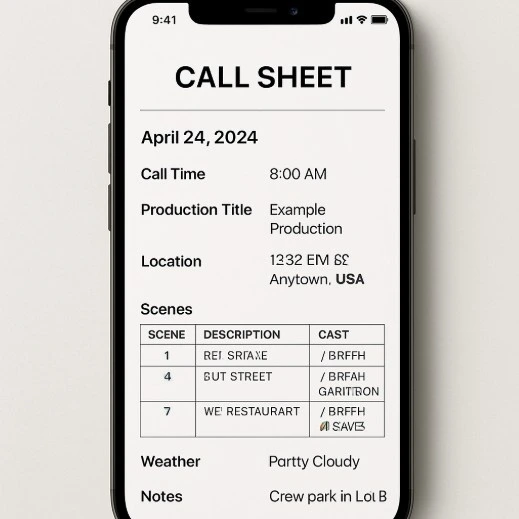
The Core Essentials: 5 Elements Every Professional Callsheet Must Include
A pretty template is useless if the data inside doesn’t answer the crew’s questions. You might be tempted to download a complex printable film production call sheet pdf, but before worrying about the formatting, focus on the information that actually prevents disasters. If the team is still asking for details while you are trying to set up a shot, the sheet has failed its primary purpose.
Logistics define your creative limits. For instance, including weather forecasts in production schedules isn’t just about checking for rain; it establishes your “hard stop” for the day. If you are shooting outdoors, the sunset time tells your team exactly when they lose their light. Similarly, providing a location address is insufficient without defining “Basecamp”—the specific spot where everyone parks and meets before moving the gear to the actual set.
To ensure your production runs safely and efficiently, every sheet needs these essential elements:
- Date & Weather: Includes temperature highs/lows and sunrise/sunset times.
- Location & Parking: The shooting address plus specific parking instructions (Basecamp).
- General Call Time: The moment the crew must be on-site and ready to work.
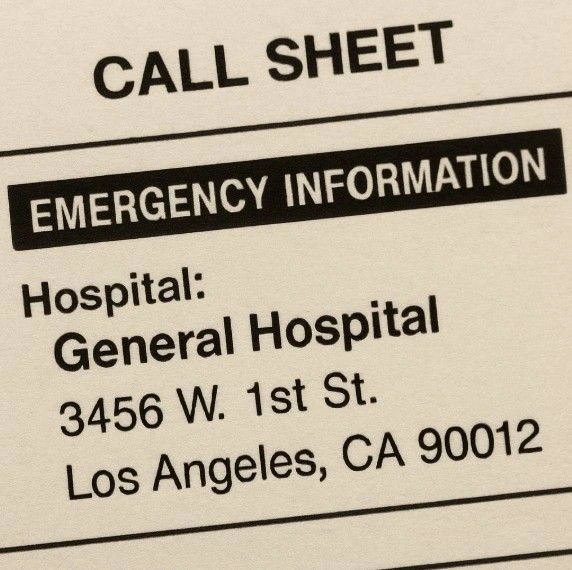
- Nearest Hospital: A non-negotiable safety requirement for emergencies.
- Daily Schedule: A broad timeline of which scenes are being shot.
Including the nearest hospital might feel like overkill for a small interview shoot, but it is the hallmark of a responsible director who values their team’s safety. It transforms your project from a casual favor into a professional operation. Once these static details are locked in, mapping out the movement of the day itself is the priority.
Mastering the Schedule: How to Plan Your Shoot Day Without Burning Out
Filming a script in chronological order is rarely efficient. Instead, successful creators use “Block Shooting”—grouping all kitchen scenes together before moving to the living room. This prevents you from wasting hours re-lighting the same space multiple times. By managing crew call times efficiently through this method, you respect your team’s energy and prioritize difficult shots while everyone is still fresh.
Changing locations entirely requires a specific timeline entry called a “Company Move.” New directors often underestimate this, assuming a ten-minute drive equates to a ten-minute break in filming. In reality, packing gear, traveling, parking, and unloading often consumes an hour. Failing to account for this transition is the primary reason independent shoots fall behind schedule, forcing rushed performances at the end of the day.
Your timeline must also rigidly protect the crew’s lunch break. Unlike production reports that look backward at what happened, the call sheet is your forward-looking promise that the team will eat on time. Scheduling a designated meal break six hours after the general call time keeps morale high and prevents safety lapses caused by fatigue.
Creating a schedule is ultimately an exercise in realistic pessimism. You must assume every setup takes longer than expected and build buffers into your blocks. With a schedule that respects human limits, the final step is ensuring the plan includes vital resources for when things go wrong.
The Safety First Approach: Including Emergency Contacts and Hospital Info
Even on a low-key shoot in your backyard, accidents can happen—a light stand tips over or someone trips on a cable. This is where the bottom section of your document becomes the most important tool on set. Most templates include a dedicated box for the nearest hospital emergency contact information, and filling this out before you arrive prevents panic during a crisis. You never want to be stuck wasting precious minutes googling directions with shaky hands while an injured crew member waits.
Writing down just a phone number isn’t enough when you need an ambulance. Your sheet must list the full physical address of the closest emergency room—specifically one with 24-hour access, not an urgent care clinic that closes at 5 PM. Whether you rely on a digital app or a printable film production call sheet pdf, having this data clearly visible ensures that any crew member can take charge if you are the one incapacitated.
Start your day with a quick “safety meeting”—basically a two-minute chat pointing out exits and this hospital info—to put everyone at ease. Making safety a visible priority builds trust, allowing your actors to focus entirely on their performance.
Digital vs. Paper: Choosing the Best Free Call Sheet Format for Your Needs
Most creators start with a simple spreadsheet because it is accessible and free. While the debate of call sheet software vs excel templates can get heated in professional circles, a clean Google Sheet is usually sufficient for small productions. The main challenge you will face as your team grows is “version control”—ensuring that your sound recordist isn’t looking at an old draft while the director is looking at the new one.
Delivery determines if your crew stays on the same page physically and digitally.
- Cloud-Based (Live Links): Allows for instant updates if the schedule shifts, but requires mobile friendly call sheets for film crews and a strong cell signal on location.
- PDF/Paper: The safest bet. It works offline in dead zones and prevents accidental edits, ensuring the schedule doesn’t mysteriously change because someone tapped the wrong cell on their phone.
To balance flexibility with security, draft your plan in the cloud but export it as a “locked” PDF for final distribution. This method creates a single source of truth that everyone can reference safely. Many creators rely on Free Production Call Sheets designed for this hybrid workflow to keep everything consistent. With the format selected, the focus shifts to the information inside those empty boxes.
Step-by-Step: How to Fill Out Your First Production Call Sheet
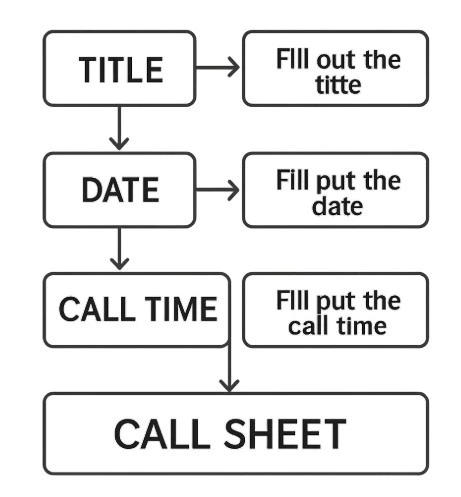
Staring at a blank template is intimidating, so start with the headline. Fill in the production title, date, and general crew call time to set the day’s anchor. This header acts like an email subject line, telling everyone instantly what project they are on and when the clock starts ticking.
Next, populate the contact block, which functions as your set’s safety net. Rather than just copying names from your phone, group people by department so anyone can find the right person instantly. Organizing cast and crew contact lists effectively prevents the panic of searching through text messages when a microphone battery dies or an actor gets lost finding the location.
The most critical column to customize is the individual call time. While beginner guides often suggest one start time for everyone, professionals stagger arrivals to respect people’s energy. If your camera team needs an hour to build lights, bring them in at 8:00 AM and the talent at 9:00 AM so nobody is waiting around unnecessarily.
This scheduling strategy applies differently to on-screen talent. Actors usually require time for wardrobe or makeup, so their call time marks the start of prep, not the moment you yell “action.” Good call sheet examples clearly distinguish between arrival and shooting time to manage these expectations.
Once every box is filled and the timeline makes sense, you need a strategy to get this document into the right hands before the shoot begins. Using Free Production Call Sheets at this stage ensures consistency across every department.
Distribution Secrets: When and How to Send Your Callsheet to the Crew
Sending the schedule late turns a professional tool into a source of anxiety. Aim to distribute the sheet at least 12 hours before the start time, giving your team enough rest and prep time. Early distribution ensures that no one is scrambling to find the address at midnight, setting a tone of respect before the gear is even loaded.
Email is professional, but you must pair it with a “Confirmation Loop” to guarantee visibility. Require every crew member to reply with a simple “received” or a thumbs-up in a group chat. This active acknowledgment confirms that the sound recordist knows their arrival time and eliminates the excuse that the message went to spam.
Accessibility is vital for streamlining film production communication. Always export your document as a PDF rather than a Word file to ensure the formatting remains readable on a smartphone screen. Since most of your crew will check details while parking, a locked-in layout guarantees that critical info remains clear on any device.
From Planning to Production: Your Action Plan for a Stress-Free Shoot
You’ve graduated from the anxiety of chaotic shoot days where everyone asks for the address five times. By mastering the basics of logistics, you now have the power to run a set that feels calm and professional, regardless of your budget. This shift from reactive to proactive doesn’t just save time; it earns you the immediate respect of your cast and crew before the cameras even roll.
It is time to treat your creativity with the organization it deserves. Grab a clean call sheet template and fill it out for your next project. When the logistics are securely on paper, your mind is finally free to focus on directing, acting, and capturing the perfect shot. Free Production Call Sheets make this transition seamless, helping you move from planning to execution with confidence.
Why Studiovity is the Smart Choice for Free Production Call Sheets
When your production demands both creativity and control, Studiovity brings everything together in one seamless workflow. Instead of juggling spreadsheets, PDFs, and endless message threads, you can generate, customize, and share Free Production Call Sheets instantly within a single platform. From automated scheduling and real-time updates to integrated script breakdowns and team collaboration, Studiovity ensures your entire crew stays aligned without confusion. It is not just about creating a callsheet—it is about transforming how your production operates, so you spend less time managing logistics and more time bringing your story to life.