
We all see the red carpet’s glamour, but behind every movie lies a hidden mountain of paperwork. Learning to direct used to mean hauling heavy printed scripts and making frantic phone calls. According to industry educators, this administrative chaos steals crucial time from actual creativity. Therefore, programs are embracing a digital transformation in film schools by moving entire sets into the cloud. Consequently, modern platforms like Studiovity have emerged as the premier Film Production Software for Film Institutes to solve these workflow bottlenecks.
This shift makes Studiovity for Film Institutes: The Future of Filmmaking Education a reality. Think of this platform as a “Digital Campus,” replacing messy production binders with a shared digital notebook that updates instantly. As a result, collaboration tools are now as essential to classrooms as cameras. By handling the logistics, Studiovity lets student directors focus on telling great stories rather than tracking down lost schedules.

Why Collaborative Screenwriting is the New Standard for Student Filmmakers
Naming digital files used to be a nightmare: “Final_Script_v4_FINAL_ReallyFinal.pdf.” For years, learning to write a movie meant emailing messy drafts back and forth, hoping nobody accidentally deleted a crucial scene. However, schools are replacing this chaos with a centralized workspace today. By embracing collaborative screenwriting for student filmmakers, creative teams can now write in the exact same document simultaneously, no matter where they live.
Furthermore, stepping into this modern workflow allows young creators to experience how a remote Hollywood writers’ room actually operates. Recognized as valuable scriptwriting software for educational institutions, Studiovity removes technical hurdles so students can focus purely on character and plot. Because it operates as an all-in-one Film Production Software for Film Institutes, this cloud-based approach delivers three distinct benefits:
Real-time updates: Every keystroke syncs instantly across devices, preventing conflicting versions of the story.
Automated formatting: The software handles the industry’s strict margin and spacing rules without manual tab-keying.
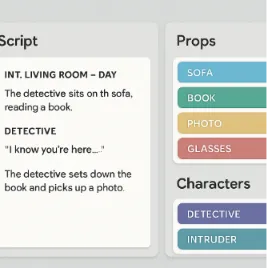
Integrated tagging: Students can highlight vital props, actors, and locations directly within the text.
Ultimately, these tools ensure that brilliant ideas aren’t lost in bureaucratic clutter. Once the final dialogue is polished, automated script breakdowns seamlessly turn stories into actionable production plans.
How Automated Script Breakdowns Turn Stories into Production Plans
Audiences only see the magic on screen, unaware that a finished script is actually a complex instruction manual. Before filming begins, students perform a “Script Breakdown“—a demanding process of reading every page to manually tally every prop, actor, and location needed. Think of it as creating a massive shopping list using only a storybook as your guide.
Fortunately, automating this chore is where modern technology truly shines. By serving as an integrated script-to-screen platform for schools, Studiovity instantly identifies physical requirements directly within the text. This automated tagging converts a creative story into a logistical checklist in minutes rather than days, significantly streamlining film school pre-production workflows. Indeed, implementing dedicated Film Production Software for Film Institutes makes this entire transition effortless.
Spotting these roadblocks during the writing phase ensures a student won’t accidentally plan a scene requiring an expensive helicopter they simply cannot afford. Moreover, mastering digital script breaking early gives aspiring directors more time to focus on art over paperwork. With the logistical heavy lifting solved, educators can seamlessly evaluate choices directly on the page, paving the way for real-time feedback that modernizes mentorship in the digital era. Therefore, using specialized Film Production Software for Film Institutes becomes a game-changer for the classroom.
Real-Time Feedback: Modernizing Mentorship in the Digital Era
Waiting days for an instructor to return a red-inked paper is a thing of the past. Today, digital mentorship transforms how educators guide their classes by allowing them to leave real-time feedback on student screenplays exactly where creative choices happen. Functioning as a collaborative workspace, teachers can scale their involvement and oversee multiple projects simultaneously without increasing physical classroom hours. This immediate collaboration perfectly mirrors the flow of professional studio notes and revisions, preparing aspiring creatives for industry realities before they even graduate.
Beyond just writing notes, progress analytics give teachers a reliable bird’s-eye view of every production’s overall health. Modernizing film school curriculums with technology means giving instructors practical tools that lighten their workload. Consequently, Studiovity provides this vital oversight through a comprehensive Film Production Software for Film Institutes:
Timeline comments to pinpoint specific scene issues instantly
Progress tracking to catch scheduling delays early
Project permissions to manage student crew roles safely
Grading integration for seamless academic evaluations
By turning daily mentorship into measurable data, administrators can confidently begin future-proofing the institute with scalable tech for modern curriculums.
Future-Proofing the Institute: Scalable Tech for Modern Curriculums
Buying dozens of separate software subscriptions drains school budgets and frustrates students. By adopting Integrated Production Management—an air traffic control dashboard keeping writers, directors, and producers in the same cockpit—schools centralize everything into one cost-effective system. This professional production management for film institutes helps administrators comfortably scale their programs, welcoming more students without adding exhausting extra paperwork. Because of these advantages, adopting specialized Film Production Software for Film Institutes reduces overall administrative strain.
Beyond immediate financial savings, this unified approach gives graduates a massive head start. Instead of showing disorganized paper binders to employers, students graduate with streamlined digital portfolios that prove their practical organizational skills. Meanwhile, mastering these industry-standard tools ensures future filmmakers walk onto real sets completely prepared for the beautiful chaos of production. Because of this preparation, utilizing Film Production Software for Film Institutes serves as the perfect starting point for a modern filmmaking career.
Conclusion: Your Roadmap to a Modern Filmmaking Career
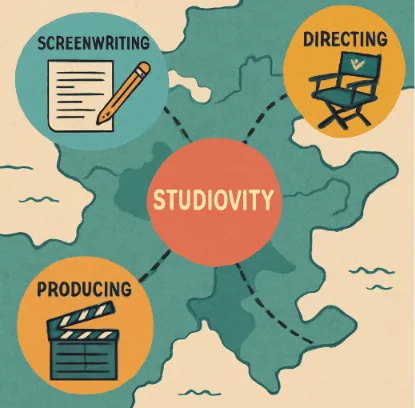
Mastering the hidden logistics of filmmaking turns a daunting dream into a manageable reality. Creating movie magic requires a robust digital infrastructure to handle the heavy administrative lifting. To build a competitive edge as a tech-fluent creator, students can adopt a simple three-step approach: utilize the platform, collaborate seamlessly with peers, and export professional-grade production plans.
These modern tools perfectly bridge the gap between film education and industry standards. Technology makes the complex business of art accessible, allowing students to focus purely on storytelling rather than paperwork. By embracing digital workflows and reliable Film Production Software for Film Institutes, film institutes ensure their students are fully equipped to bring their cinematic visions to life.