
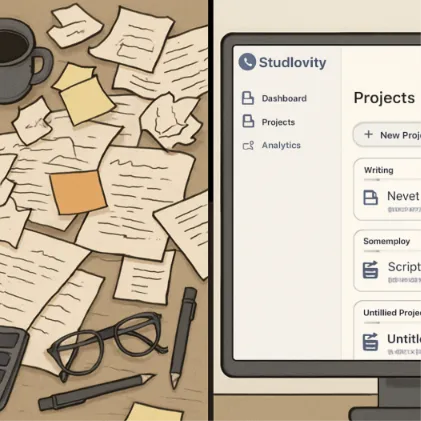
Have you ever tried organizing a weekend trip for ten friends? Now imagine coordinating fifty crew members, three gear trucks, and fading daylight. According to experienced producers, this logistical chaos creates a “Creative-Logistical Gap”—the massive leap from an artistic storyboard to real-world execution that causes countless projects to stall. Consequently, to bridge this gap, modern film planning software is widely utilized by efficient production teams today.
Raw talent alone rarely finishes movies because manual paperwork acts as the invisible enemy of creative project planning. Therefore, overcoming this hurdle requires a reliable digital pre-production workflow for independent filmmakers built on three core pillars: visualizing scenes, cataloging elements, and organizing schedules. Specifically, using dedicated film planning software allows creators to manage these pillars seamlessly.
Centralizing these critical assets into a “Single Source of Truth” entirely prevents devastating communication breakdowns. Hence, Studiovity automatically bridges this divide, replacing stressful film planning with seamless execution.
Turning Your Script into a Visual Map with Integrated Storyboarding
Explaining a picture in your head only to watch the other person look completely confused is deeply frustrating. On a film set, that communication gap can ruin a production before the camera even turns on, which is why the process of transforming a screenplay into a visual storyboard is a crucial first step for any project. Furthermore, choosing the right film planning software makes this entire visual transition effortless.
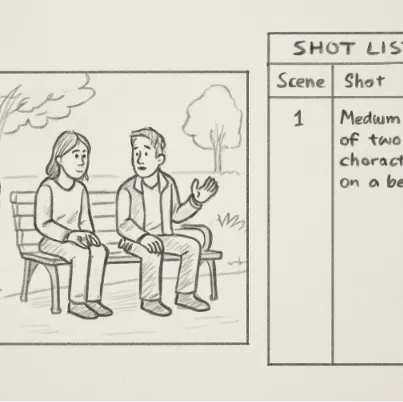
Instead of treating sketches as isolated pieces of art, Studiovity builds a functional bridge between your imagination and the actual set. Through integrated storyboarding and shot list software, you can pair a simple drawing of a park bench conversation directly with the specific camera angles—the technical “shot list”—required to film it.
Syncing these visual frames with technical camera data eliminates the stressful on-set debating that quickly burns daylight. If your camera crew already knows they need a wide-angle lens before they even unpack their trucks, you avoid hours of expensive waiting time and keep the momentum moving forward. Thus, incorporating robust film planning software into your toolkit saves both time and money.
Mastering this integrated visual workflow ensures your entire team shares the exact same creative vision. Once this dynamic guide is locked in, you must figure out what physical items you actually need to rent or buy to make it happen, leading us directly into the “Grocery List” hack: automating your script breakdown.
The 'Grocery List' Hack: Automating Your Script Breakdown
Realizing halfway through cooking that you forgot to buy eggs easily ruins a recipe. Film production suffers from this exact same problem when moving from the written page to the physical set, making a script breakdown essential. Think of this process as your ultimate “grocery list,” where you review the screenplay to identify every physical item required to shoot a scene.
Instead of relying on messy colored highlighters, Studiovity lets you master the digital “tagging” process. By simply clicking on words directly in your script, you begin organizing film production assets in one place across five essential elements:
Cast (the actors needed)
Props (objects actors touch)
Wardrobe (character clothing)
Special Effects (like rain or fog)
Vehicles (on-screen cars)
Once everything is tagged, the software handles the heavy lifting through automated scene breakdown report generation. Instantly creating these categorized lists to share with your department heads eliminates 90% of manual entry errors, ensuring the prop master never arrives at a coffee shop location empty-handed. Clearly, this is why adaptable film planning software has become completely indispensable for modern indie sets.
Discovering how to automate script breakdown and scheduling transforms a chaotic to-do list into a streamlined, reliable plan of attack. With your physical ingredients finally prepped and cataloged, you are fully prepared to build a timeline, bringing us to mastering the “Domino Effect”: scheduling that survives reality.
Mastering the 'Domino Effect': Scheduling That Survives Reality
Unexpected weather can force a complete itinerary change on any group trip. Film scheduling requires similar agility, especially because scenes are almost never filmed chronologically. Instead, directors rely on “shooting blocks”—grouping scenes together by location or actors to save thousands in rental fees and travel time.
Building a seamless video production workflow once required massive whiteboards and endless patience. Now, Studiovity film planning software tools turn this complex puzzle into an intuitive, visual experience, ensuring your entire project doesn’t collapse if one scene shifts.
What happens when reality strikes and your lead actor is stuck in traffic? Acting as a central cloud-based film crew communication platform, Studiovity lets you execute a quick three-step recovery:
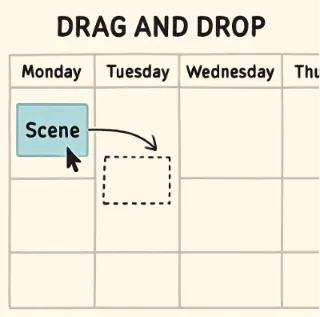
Drag the delayed scene to a later time slot on the digital calendar.
Pull forward a minor insert shot (like a close-up of a prop) that doesn’t require the actor.
Click “Sync” to instantly push the revised timeline to everyone’s devices.
This real-time syncing is a lifesaver when distributing the “call sheet“—the essential daily schedule telling your cast and crew exactly where and when to arrive. Instead of printing stacks of paper that become outdated the moment a delay happens, you can distribute digital call sheets instantly to your team’s phones.
Optimizing film production timelines with digital tools transforms the chaos of sudden changes into a manageable “domino effect,” where every connected piece automatically falls into its new place. Therefore, utilizing comprehensive film planning software ensures that your production stays on track no matter what happens. With your script broken down and your schedule disaster-proofed, you are fully prepared to navigate your roadmap from storyboard to first shot.
Your Roadmap from Storyboard to First Shot
Transitioning from a sketchbook to a live set doesn’t require a Hollywood budget; it just demands the right blueprint. Just as a contractor wouldn’t build a house without a master plan uniting the office to the field, you no longer have to rely on scattered notebooks and group chats. By improving film production efficiency through automation, you can confidently control the entire digital script to screen planning process.
Implement a professional-grade workflow regardless of budget size using this 5-step checklist for a ‘Studiovity-ready’ production launch:
Upload your script to auto-generate initial scene breakdowns.
Tag essential elements like props and cast members.
Link your visual storyboards directly to their scenes.
Drag and drop scenes into a conflict-free schedule.
Send automated digital call sheets to your entire crew.
Replacing manual film production paperwork with dedicated film planning software transforms logistical hurdles into creative freedom. When you step onto the set on Day 1, you won’t be managing chaos or answering endless scheduling questions. You will simply be directing your film, fully prepared and ready to shoot.