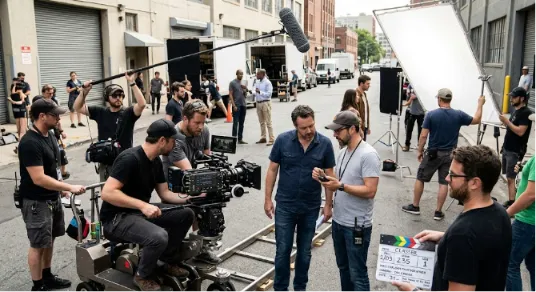
Every great film begins with a powerful idea, but it reaches the screen because a talented crew works together. While actors often receive public attention, filmmaking depends on hundreds of professionals behind the scenes. These experts manage creative, technical, and operational tasks during production. Each crew member contributes unique skills that keep the project moving from planning to the final edit. Therefore, we created this Film Crew Guide to help you understand how these teams operate. Whether you are a film student, an aspiring filmmaker, or a production company preparing for a new project, understanding filmmaking teams and crew roles helps you organize production efficiently. Moreover, knowing who does what improves communication, reduces confusion, and creates a smoother workflow throughout every stage of filmmaking. Consequently, this Film Crew Guide explains the key film crew departments, their responsibilities, and how they collaborate to transform a screenplay into a finished film.
Why Film Crew Roles Matter
A film set operates like a well-organized machine. Every department handles specific responsibilities while coordinating with the rest of the crew. As a result, production remains on schedule, budgets stay under control, and creative decisions become easier to execute.
When roles remain clearly defined, crew members focus on their specialties without overlapping responsibilities. Consequently, directors can concentrate on storytelling instead of managing every technical detail. Additionally, reading a comprehensive Film Crew Guide helps new filmmakers build balanced production teams based on the project’s size and budget.
The Production Department
The production department oversees planning, budgeting, scheduling, and daily operations. It ensures every department has the resources needed to complete the project successfully.
Producer
The producer leads the project from development to distribution. They secure funding, hire department heads, approve budgets, and supervise overall production. Furthermore, producers solve logistical challenges and help maintain the balance between creative goals and financial realities.
Executive Producer
Executive producers usually arrange financing or support major business decisions. Depending on the project, they may also oversee partnerships, investments, or distribution strategies.
Line Producer
The line producer manages the production budget and daily expenses. They coordinate schedules, negotiate vendor agreements, and monitor production costs throughout filming.
Production Manager
Production managers organize day-to-day logistics. They coordinate locations, transportation, permits, accommodations, equipment rentals, and crew requirements. Because of their careful planning, filming continues with fewer operational delays.
The Direction Department
The direction department transforms the screenplay into visual storytelling. This section of our Film Crew Guide highlights the leaders on set.
Director
The director shapes the film’s creative vision. They guide performances, determine camera blocking, approve shot compositions, and collaborate closely with every department. Throughout production, the director ensures every creative decision supports the story.
First Assistant Director (1st AD)
The first assistant director manages the shooting schedule and keeps production running efficiently. They coordinate departments, organize shooting days, conduct safety meetings, and maintain communication across the set. As a result, the director remains focused on creative work.
Second Assistant Director
The second assistant director prepares call sheets, coordinates background actors, and manages daily production paperwork. They also help organize communication between the production office and the filming crew.
The Camera Department
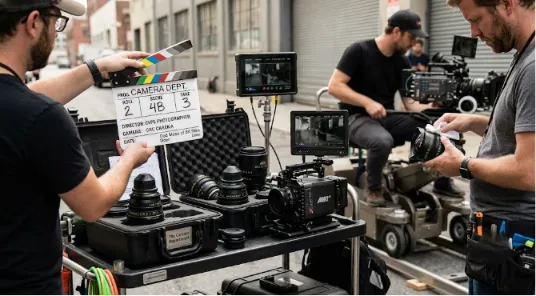
The camera department captures every visual element that appears on screen.
Director of Photography (Cinematographer)
The director of photography designs the film’s visual style. They select camera equipment, lenses, lighting approaches, and framing techniques. Additionally, they work closely with the director to create the desired mood and atmosphere.
Camera Operator
The camera operator controls camera movement during filming. They execute planned shots while maintaining composition and focus according to the director’s vision.
First Assistant Camera (Focus Puller)
The first assistant camera keeps subjects in sharp focus throughout every shot. Because modern productions often use shallow depth of field, this role demands exceptional precision.
Second Assistant Camera
The second assistant camera manages camera accessories, changes lenses, maintains camera reports, and operates the clapperboard before each take.
The Lighting Department
Lighting influences the emotional tone of every scene. Therefore, a solid Film Crew Guide must highlight these technical roles.
Gaffer
The gaffer leads the lighting crew and implements lighting plans designed by the cinematographer. They position lighting equipment, control brightness, and ensure electrical safety.
Best Boy Electric
The best boy electric supervises electricians, schedules equipment deliveries, and manages electrical logistics during production.
Lighting Technicians
Lighting technicians install, adjust, and maintain lighting fixtures throughout filming. Their work helps achieve consistent visual quality across every scene.
The Grip Department
The grip department supports camera movement and lighting equipment. Key grip professionals install camera rigs, dollies, cranes, tracks, stabilizers, and support structures. Meanwhile, grips also shape light using flags, diffusion frames, and reflectors to create the desired visual effects.
The Sound Department
High-quality audio plays an essential role in professional filmmaking.
Production Sound Mixer
The production sound mixer records dialogue and environmental audio during filming. They monitor sound quality continuously and minimize unwanted background noise.
Boom Operator
The boom operator positions microphones close to actors while keeping equipment outside the camera frame. Their precision ensures clear dialogue recording throughout every take.
The Art Department
The art department creates the film’s physical world.
Production Designer
The production designer develops the overall visual style of sets, locations, and props. They collaborate with the director to establish the film’s artistic identity.
Art Director
The art director supervises construction teams and coordinates set design according to the production designer’s vision.
Set Decorator
Set decorators furnish locations with furniture, decorations, and practical objects that match each scene.
Props Master
The props master manages all handheld items used by actors. They organize, track, repair, and prepare props before every scene.
Costume, Hair, and Makeup
Characters become believable because of thoughtful costume and appearance design. Costume designers create wardrobes that match the story’s setting, personality, and timeline. Meanwhile, hair stylists develop character-specific hairstyles. Makeup artists enhance appearances and create special effects when required. Together, these departments strengthen character development and improve visual consistency.
The Post-Production Team
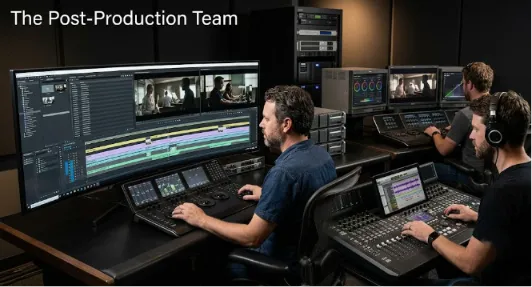
Filmmaking continues long after cameras stop recording. Therefore, post-production is a vital phase in any Film Crew Guide.
Film Editor
Editors assemble footage into a complete story. They select the strongest performances, refine pacing, and create emotional rhythm through careful editing.
Colorist
Colorists adjust brightness, contrast, and color balance to establish the film’s final visual style. Additionally, they maintain consistency across every shot.
Sound Designer
Sound designers create ambient sounds, effects, and audio transitions that enhance the viewing experience.
Composer
Composers produce original music that supports emotional storytelling and strengthens dramatic moments.
How Film Crew Departments Work Together
No department works independently. The production team develops schedules that guide every crew member. Meanwhile, the director collaborates with the cinematographer to create visual storytelling. At the same time, the art department prepares sets while costume designers finalize wardrobe selections.
Furthermore, assistant directors coordinate timing across departments. This ensures every team arrives prepared for each scene. Once filming ends, editors, sound designers, composers, and colorists complete the project during post-production. Because every department depends on the others, communication remains one of the most valuable skills on any film set.
Technology Is Changing Crew Workflows
Modern filmmaking has introduced digital tools that simplify collaboration across departments. Production software now helps teams manage scripts, scheduling, call sheets, shot lists, production calendars, and task assignments from a centralized platform. Consequently, departments stay synchronized throughout production.
Cloud-based collaboration also allows producers, directors, assistant directors, and department heads to review updates in real time. As productions become larger and more complex, these digital workflows improve efficiency while reducing administrative work. Although technology continues to evolve, the importance of skilled professionals remains unchanged.
Final Thoughts
Every successful film depends on teamwork. While audiences experience the finished story, countless professionals contribute behind the scenes to bring that vision to life. From producers and directors to camera operators, sound engineers, editors, and production designers, every role supports the filmmaking process.
Utilizing a clear Film Crew Guide helps aspiring filmmakers build stronger productions, communicate effectively, and appreciate the collaboration behind every project. Whether you are creating an independent short film or managing a large-scale production, assembling the right crew remains one of the most important decisions you will make. Consequently, this final Film Crew Guide reminder emphasizes that when every department works together with clear responsibilities and efficient coordination, creative ideas transform into memorable cinematic experiences.