
Back-to-back shooting days demand more than copying yesterday’s call sheet and changing the date. When your crew, cast, locations, equipment, and schedule roll from one shoot day into the next, every detail on the production call sheet has to protect time, reduce confusion, and keep the production moving safely. For teams using Studiovity as a film pre-production platform, the goal is to turn a complex daily shooting schedule into a clear, reliable plan that everyone can follow.
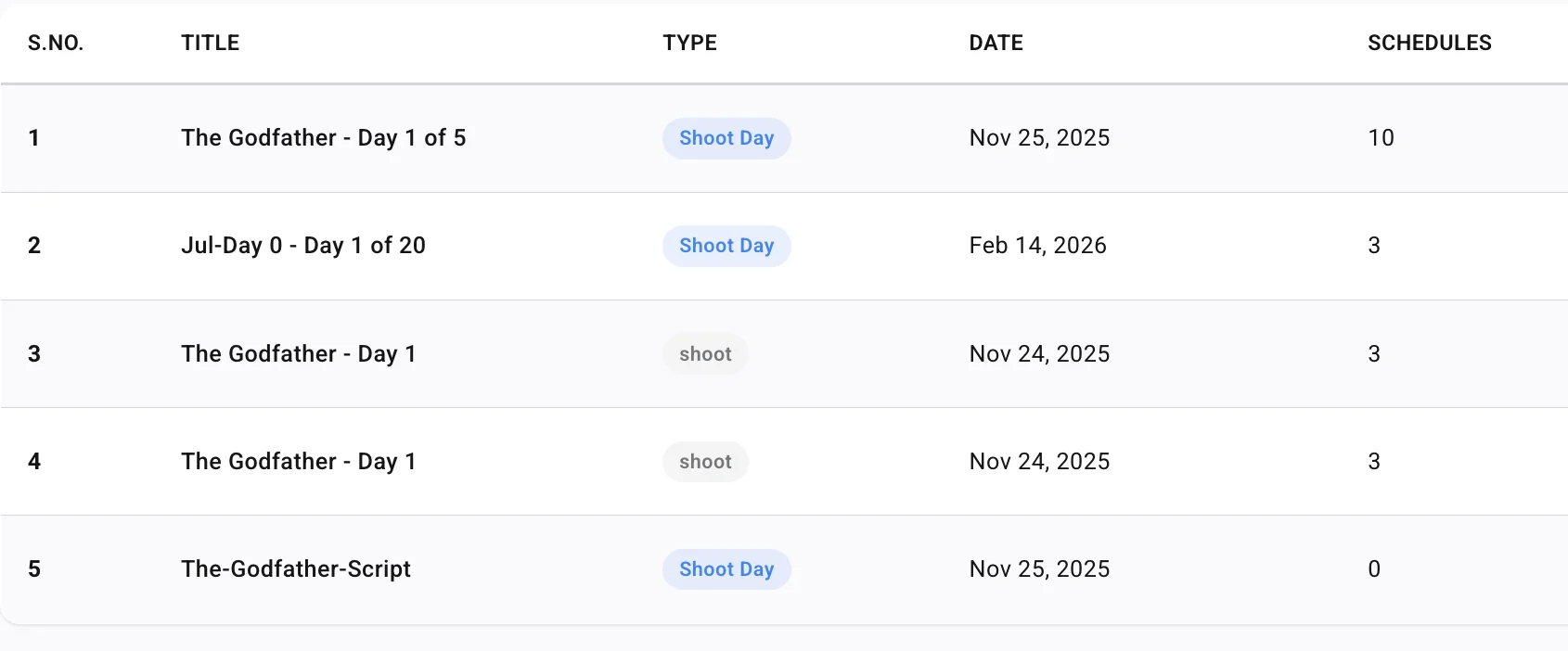
A strong call sheet does not just tell people when to arrive. It connects the day’s creative goals with the practical realities of company moves, turnaround, weather, meal breaks, parking, department prep, and wrap expectations. That matters even more when the next shooting day depends on how smoothly the current one ends.
Why do back-to-back shooting days need a different call sheet strategy?
Back-to-back shooting days need a different call sheet strategy because the production is not planning one isolated day; it is managing a chain of connected decisions. A late wrap, missing prop, delayed company move, or unclear department call time can affect the next morning before anyone has even received coffee. The call sheet should therefore be built as part of a larger scheduling system, not as a standalone document.
On a single shoot day, the production call sheet mainly answers, "Where do I need to be, when, and what are we shooting?" On consecutive days, it also needs to answer, "What carries over from yesterday, what changes today, and what must be protected for tomorrow?" That shift affects how you organize information, how early you distribute updates, and how carefully you review dependencies across the schedule.
Back-to-back shoots can be efficient because the crew is already in rhythm, departments stay engaged, and equipment is often already staged. But they can also create fatigue, communication gaps, and avoidable mistakes. A thoughtful call sheet format helps the assistant director team and production office keep everyone aligned without overloading the page.
Start with the full production schedule, not the blank call sheet
The best call sheets begin before the call sheet is drafted. For back-to-back shooting days, start by reviewing the full production schedule, stripboard, scene order, location plan, and department notes. This helps you identify what each day requires and what must be carried forward from one day to the next.
If you prepare Day 2 without checking how Day 1 ends, you risk creating a schedule that looks clean on paper but fails in practice. For example, a night exterior followed by an early morning interior may create a turnaround issue. A location that wraps late may delay equipment loading. A special prop used at the end of one day may need reset, repair, or continuity checks before the next day begins. A night exterior that runs long is a common example; see how to prepare a night shoot call sheet when the next morning still has to work.
This is where production schedule tools become valuable. A platform like Studiovity call sheet software helps production teams organize the moving parts of pre-production so call sheets can reflect the real schedule instead of a disconnected spreadsheet. When your scenes, locations, cast, crew, and timing are connected, it is easier to spot conflicts before they become expensive delays.
Before drafting, review:
- Scene order across both days: Confirm whether any scene depends on footage, wardrobe, props, or set dressing from the previous day.
- Location continuity: Check whether the same location is being used again, reset, wrapped, or moved.
- Cast availability: Make sure call times and release expectations match actor availability and turnaround needs.
- Department workload: Consider whether camera, art, wardrobe, makeup, sound, and transport have enough time to prep.
- Travel and parking: Look for company moves, unit moves, crew parking changes, or basecamp adjustments.
- Weather-sensitive work: Identify exterior scenes, stunts, vehicles, animals, or equipment that may need contingency planning.
- Meal and rest periods: Protect meal timing and rest windows so the next shooting day starts with a functional crew.
The call sheet is the final visible document, but it should be the result of a disciplined planning process.
Build each production call sheet around the actual shooting day
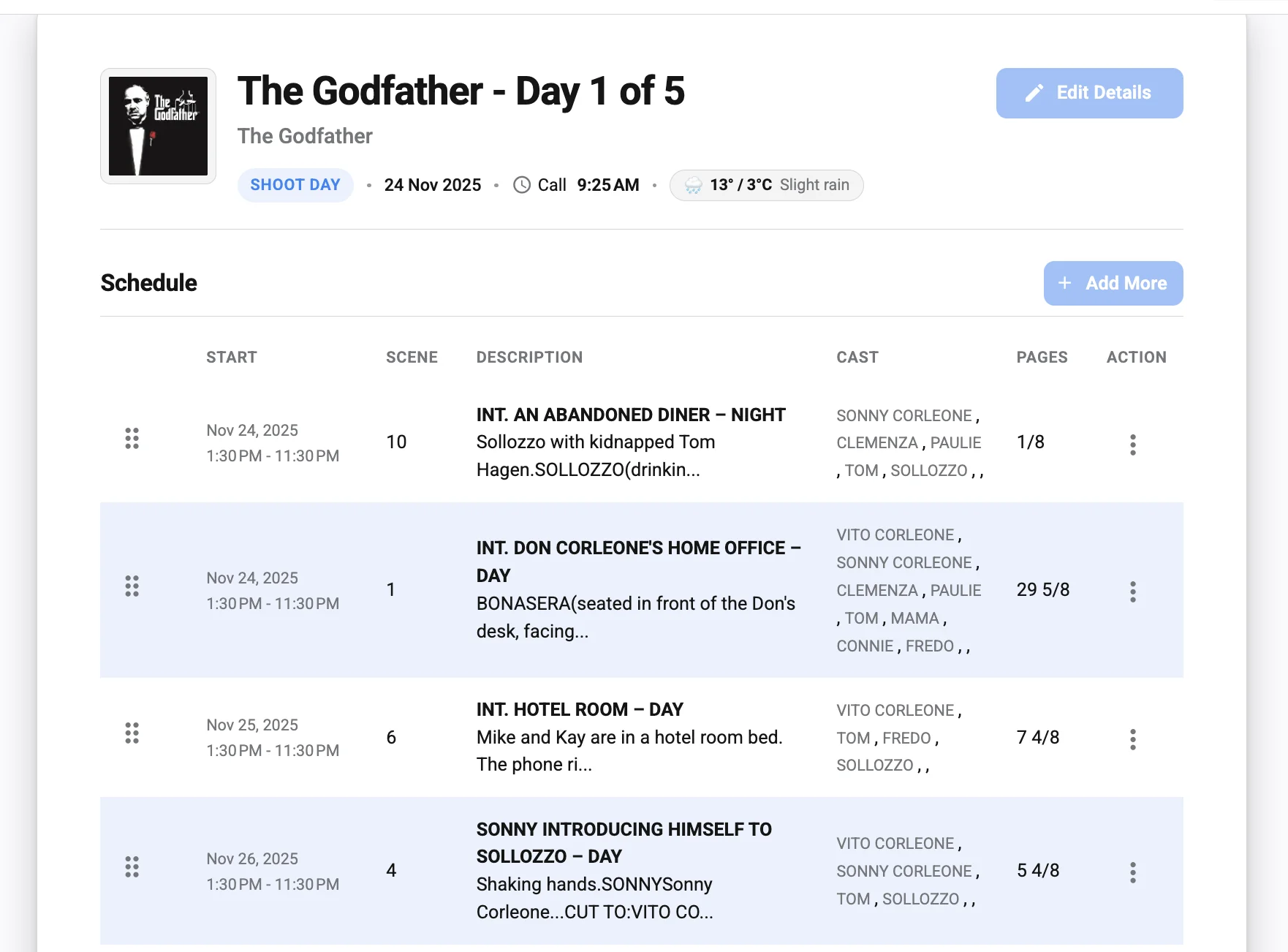
Every shooting day has its own rhythm. One day may be heavy on dialogue, another may involve action, multiple locations, background performers, or a complicated lighting setup. A good production call sheet should reflect the character of that specific day instead of using a rigid template that treats every day the same.
Start with the fundamentals: production title, shoot date, day number, general crew call, location, weather, sunrise and sunset, nearest hospital, key contacts, and parking instructions. Then move into the specific details that shape the day’s work. For back-to-back schedules, clarity is more important than density. The sheet should contain everything necessary, but not bury the most important information in clutter.
A practical call sheet format for consecutive shooting days usually includes:
- Header information Include the production name, shoot day number, date, day out of days reference if used, and version status. If the call sheet is revised, make that obvious so crew members know they are using the latest version.
- Key schedule summary Add general call, first shot target, meal break estimate, company moves, major resets, and expected wrap. These are the details most people scan first.
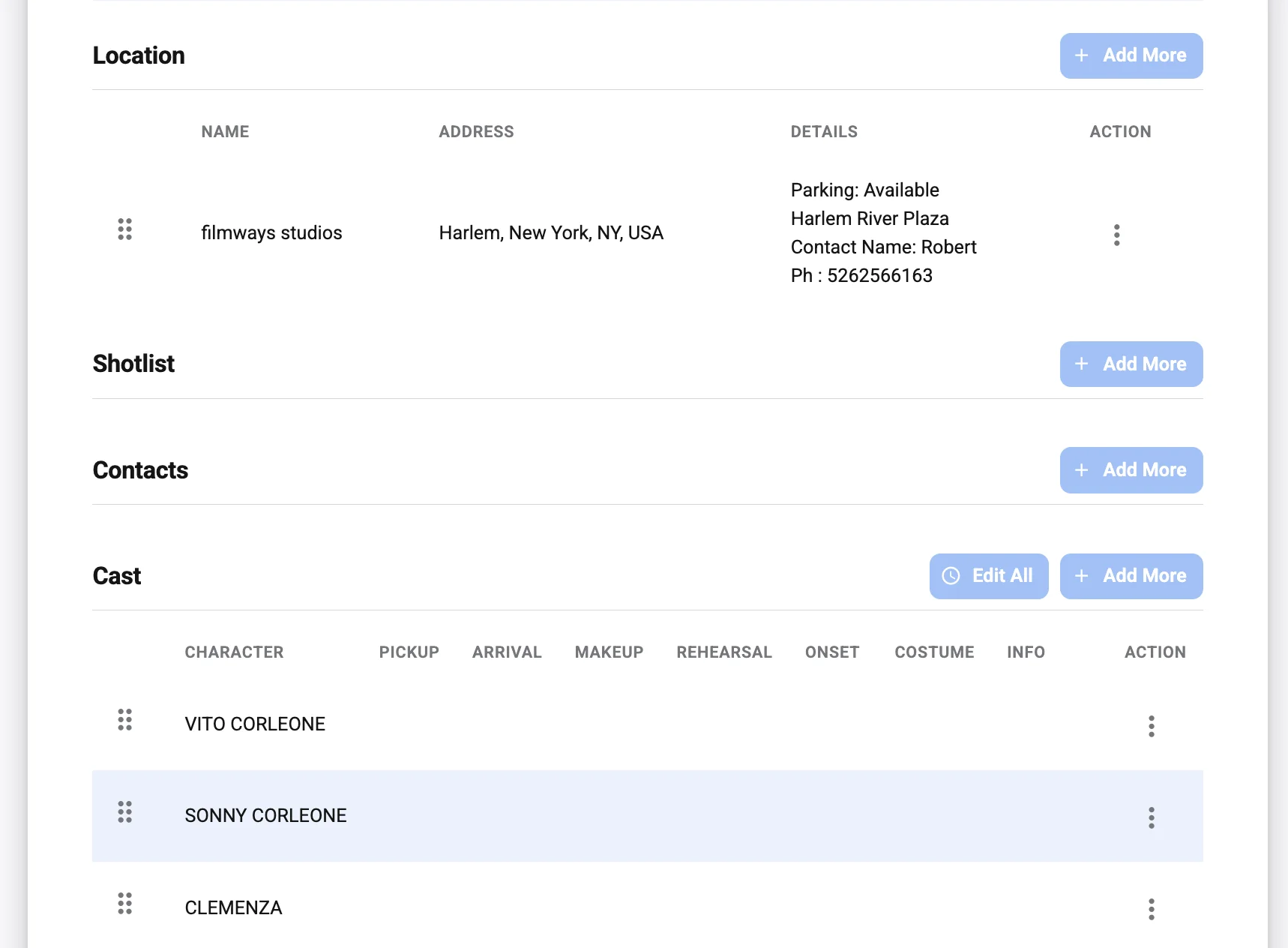
- Location and travel details Include exact location names when available, parking notes, basecamp instructions, holding areas, and access limitations. If the location changes from the previous day, highlight the change clearly.
- Scene schedule List scenes in shooting order with scene numbers, brief descriptions, page counts if applicable, cast IDs, location notes, and special requirements. Keep descriptions concise but useful.
- Cast call times Separate pickup, makeup, wardrobe, rehearsal, set call, and release notes where relevant. This avoids confusion between arrival time and camera-ready time.
- Crew and department call times Not every department needs the same call. Camera, grip, electric, art, locations, transport, makeup, wardrobe, and production may each have different prep needs.
- Special notes and safety information Include stunts, weapons, intimacy coordination, animals, drones, vehicles, minors, water work, weather exposure, or location hazards when applicable.
- Tomorrow preview For back-to-back shoots, a short preview of the next day can be useful. It should not replace the next call sheet, but it can help departments prepare.
That last item is especially helpful when used carefully. A brief "Next Day Reminder" can alert the art department about a reset, remind cast about an early call, or help transport prepare for a different parking plan. Keep it short, accurate, and clearly marked as a preview rather than final instructions.
What should change in the call sheet format from one day to the next?
The call sheet format should stay familiar enough that crew can scan it quickly, but the emphasis should change based on what is different, risky, or time-sensitive that day. Consistency helps people find information, while selective highlighting helps them notice what cannot be missed. For back-to-back shooting days, the format should make changes from the previous day easy to identify.
If Day 1 and Day 2 are similar, the biggest danger is assumption. Crew members may remember yesterday’s parking, basecamp, set entrance, meal location, or department call and assume the same details still apply. If something changes, call it out. Do not rely on people to notice a small line buried in the middle of the sheet.
Useful formatting habits include:
- Mark revisions clearly: Use a version number, issue time, or revision note when updated information goes out.
- Highlight location changes: If parking, holding, basecamp, or set entrance changes, make it prominent.
- Separate call time types: Avoid mixing general crew call, department pre-calls, cast pickup, and set-ready times.
- Use consistent scene blocks: Keep scene numbers, descriptions, cast IDs, and locations in the same order each day.
- Add carryover notes: Mention continuity items, set resets, equipment holds, or department reminders that affect the next day.
- Avoid excessive decoration: Clear hierarchy matters more than visual clutter.
Good call sheet examples usually have one thing in common: they are easy to scan under pressure. Nobody reads a call sheet like a novel at 5:00 a.m. People look for their name, call time, location, parking, scene requirements, department notes, and safety information. Your format should support that behavior.
Treat turnaround as a scheduling priority, not an afterthought
Turnaround is one of the most important considerations in back-to-back film scheduling. Even when a schedule is technically possible, it may not be wise if the crew wraps late and returns too early. Fatigue affects safety, morale, decision-making, and performance. Rest windows belong in the schedule first: see meal penalties, turnaround buffers, and day-length rules.
When preparing production call sheets, look beyond the next call time. Ask when each department is realistically wrapping, when vehicles and equipment are clear, when cast are released, and whether anyone has an early pre-call the following day. A camera department that wraps after the main unit may need additional time for media management or gear checks. Wardrobe may need time for laundry, repairs, or continuity prep. Production may still be closing paperwork after everyone else leaves.
A back-to-back schedule should protect the following:
- Crew rest: Avoid creating unnecessary early calls after late wraps.
- Transport readiness: Confirm vehicles, drivers, parking, and loading plans before the next day begins.
- Department reset time: Give art, wardrobe, makeup, props, and camera enough time to prepare.
- Communication windows: Send final call sheets early enough that people can actually read and act on them.
- Realistic first shot goals: Do not schedule an aggressive first shot if the morning requires complex setup.
This is where a daily shooting schedule must be honest. If the plan depends on everything going perfectly, it is probably fragile. Build in room for the normal friction of production: movement, questions, weather, equipment checks, and human energy.
Use a film shoot checklist before publishing the call sheet
A film shoot checklist is especially useful when shooting days are stacked together. It gives the production team a repeatable way to verify that essential details are complete before the call sheet is distributed. The checklist also reduces the risk of copying incorrect information from the previous day.
Use the checklist after the schedule is drafted but before the call sheet is released. Ideally, the assistant director, production coordinator, location manager, and relevant department heads review the details that affect them. The goal is not to slow the process down; it is to catch preventable mistakes before the entire crew receives them.
Pre-distribution call sheet checklist
- Date and shoot day number are correct and match the production schedule.
- General crew call is confirmed with the assistant director team and production office.
- Cast call times are separated from makeup, wardrobe, rehearsal, and set-ready times.
- Location details are complete, including parking, basecamp, holding, and access notes.
- Scene order matches the latest daily shooting schedule and stripboard updates.
- Department notes are current and not copied from an old version without review.
- Weather, sunrise, and sunset information are included where relevant to the shoot.
- Meal timing is realistic based on the planned first shot and work blocks.
- Safety notes are visible for stunts, vehicles, weapons, minors, animals, effects, or hazards.
- Nearest hospital and emergency contacts are listed according to the production’s requirements.
- Transportation and pickup details are confirmed for cast, crew, and equipment needs.
- Tomorrow’s implications have been reviewed, especially turnaround and carryover items.
- Revision status is clear so no one confuses an old draft with the final call sheet.
For back-to-back shooting days, add one more step: compare today’s call sheet against yesterday’s and tomorrow’s. This simple three-day view helps identify continuity gaps, location conflicts, repeated assumptions, and department overload.
Plan call times by department, not by habit
One common scheduling mistake is giving departments the same call time because it feels simpler. In reality, different departments need different lead times. A blanket call may bring some people in too early while leaving others without enough prep time.
For example, art and locations may need early access to dress a space before camera arrives. Hair, makeup, and wardrobe may need staggered cast calls to avoid bottlenecks. Camera, grip, and electric may need pre-light or rigging time depending on the setup. Production assistants may need an earlier call for signage, lockups, parking, and background flow.
A stronger approach is to build call times around work readiness:
- What must be ready before the first shot? Identify the true first-shot dependencies.
- Which departments need access first? Confirm location opening times and department entry.
- Which cast members are actually needed first? Avoid calling everyone at the same time if scenes are staggered.
- Where could bottlenecks form? Makeup chairs, wardrobe fittings, transport pickups, and parking can slow the morning.
- Who wraps later than camera? Consider end-of-day workload when planning the next call.
This kind of planning makes production call sheets more accurate and respectful of everyone’s time. It also helps keep energy available for the scenes that matter most.
Connect the call sheet to real-time production communication
A call sheet is official, but productions also run on communication. When the schedule changes, people need to know what changed and whether it affects them. Back-to-back shooting days increase the importance of version control because multiple call sheets, preliminary schedules, and department notes may be circulating at once.
If you send a revised call sheet, make the revision clear. Do not simply attach a new file with the same name and hope everyone notices. Include a short note summarizing what changed, such as updated parking, revised cast call, new weather cover plan, or adjusted meal time.
Studiovity call sheet software can support this workflow by helping teams create, manage, and share call sheets within a broader pre-production environment. Instead of treating the call sheet as a last-minute document, teams can connect it to scheduling decisions, production details, and the practical needs of the shoot day.
For smoother communication, use these habits:
- Set an internal approval deadline before the call sheet goes out.
- Confirm department-specific details with the people responsible for them.
- Send one clear final version rather than multiple informal drafts.
- Label revisions visibly if changes are made after distribution.
- Explain important changes briefly so people know what to act on.
- Avoid over-messaging for minor details that do not affect most of the crew.
The call sheet should be the source of truth, but it should not be isolated from the conversations that shape the day.
Use call sheet examples as guides, not rigid templates
Looking at call sheet examples can help new producers, assistant directors, and coordinators understand what information belongs on the page. Examples are useful for learning layout, hierarchy, and common categories. However, they should not be followed blindly.
A commercial shoot, short film, documentary, music video, and feature film may all need different levels of detail. A small interior dialogue day may need a simpler sheet than a multi-location exterior day with background performers and vehicles. Back-to-back shooting days add another layer because the call sheet must support continuity across time, not just activity within one date.
When reviewing examples, ask:
- Does this format make call times easy to find?
- Are cast, crew, and department notes separated clearly?
- Is the scene schedule readable at a glance?
- Does the sheet include location, parking, and emergency information?
- Is there space for safety notes and special requirements?
- Would this still work if the next day depends on today’s wrap?
Use templates and examples to build your baseline, then adapt the structure to the shoot. The best call sheet is not the most complicated one. It is the one that gives the right people the right information at the right time.
Prepare for changes before they happen
Back-to-back shoots rarely go exactly as planned. Weather shifts, scenes run long, locations impose new limits, equipment needs replacement, or an actor’s schedule changes. The production team cannot prevent every disruption, but it can prepare a call sheet process that absorbs change without creating chaos.
Start by identifying likely pressure points. If an exterior scene depends on light, prepare a cover set or alternate order. If a company move is tight, confirm loading and parking in advance. If a key department has a heavy reset overnight, avoid giving them unnecessary early calls. If a location is difficult to access, include detailed arrival notes rather than assuming people will figure it out.
A strong contingency mindset includes:
- Weather alternatives: Know what can move, hold, or swap if conditions change.
- Scene priority: Identify must-shoot scenes versus flexible scenes.
- Department readiness: Ask what each department needs if the order changes.
- Location flexibility: Confirm access windows, backup areas, and wrap requirements.
- Communication plan: Decide who approves changes and how updates are distributed.
This does not mean every call sheet should include every possible backup plan. Too much information can confuse people. Instead, keep the published sheet focused, while the production team maintains a clear internal plan for likely adjustments.
Keep the next day visible during wrap
The final hour of a shooting day is one of the most important moments for the next call sheet. As the crew wraps, the production team learns what actually happened: what was completed, what moved, what needs to be picked up, and what departments need extra time. This information should feed directly into the next day’s plan.
Do not wait until after wrap to discover that tomorrow’s schedule has changed. Throughout the day, track completed scenes, delays, location notes, cast release times, and department concerns. If the schedule shifts, start revising the next call sheet early enough to avoid a rushed late-night release.
During wrap, confirm:
- Which scenes were completed and which were not.
- Whether any pickup shots are needed.
- What continuity items must be preserved.
- Whether equipment is staying, moving, charging, or being returned.
- Whether wardrobe, props, or set dressing need overnight work.
- Whether cast or crew call times for tomorrow need adjustment.
- Whether location access or parking has changed.
This feedback loop is what separates reactive scheduling from professional production planning. Back-to-back days are manageable when each day informs the next.
Studiovity helps turn scheduling details into usable call sheets
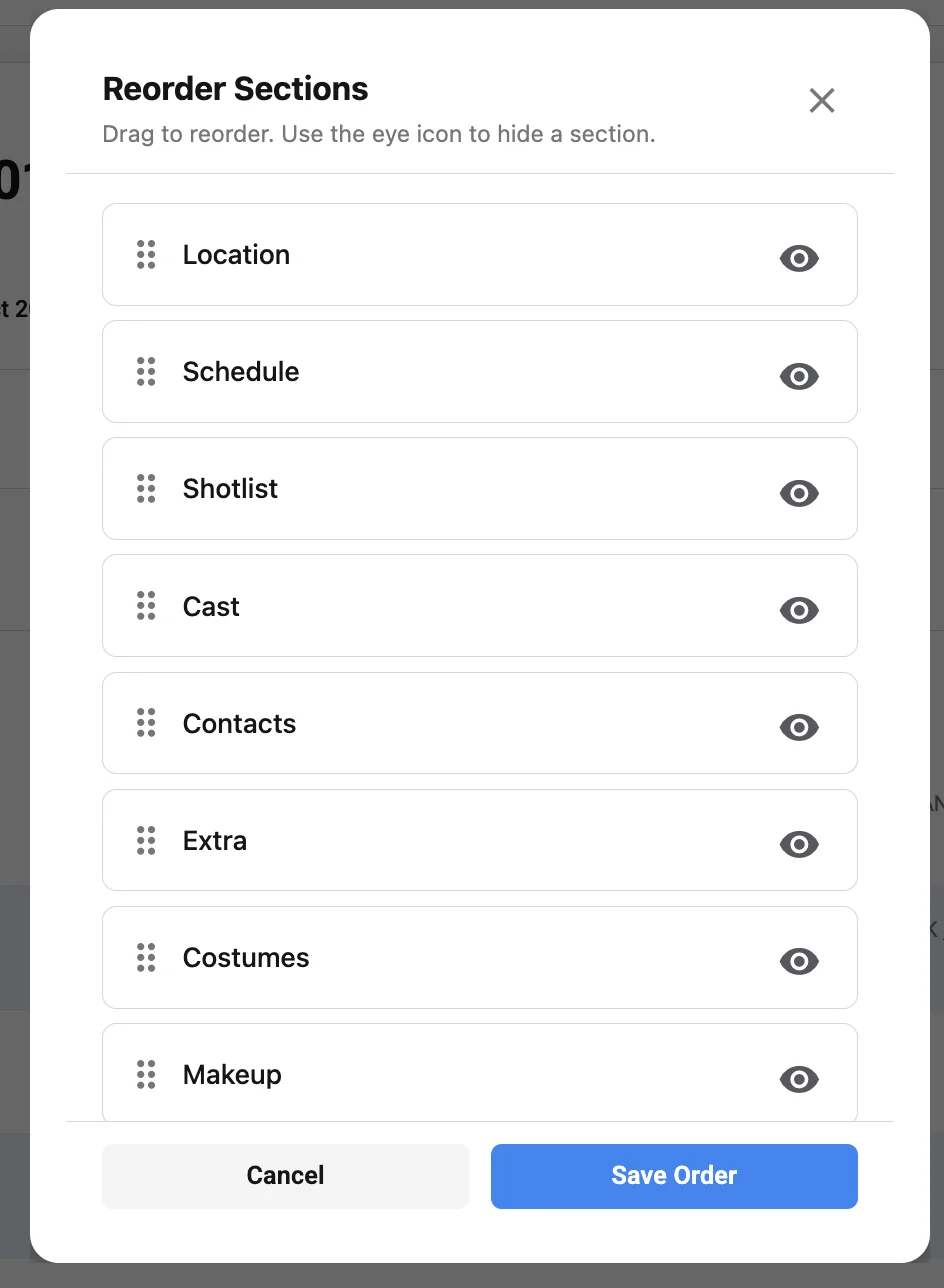
Preparing call sheets for consecutive shooting days is easier when your pre-production information is organized in one place. Studiovity is a film pre-production platform designed for teams that need practical tools for planning, scheduling, and production coordination. For call sheets, that means less time wrestling with disconnected documents and more time focusing on the shoot.
When production teams use organized production schedule tools, they can move from schedule planning to call sheet preparation with greater confidence. The team can keep scene details, timing, cast information, and production notes aligned instead of rebuilding the same information repeatedly. That is especially helpful when the schedule is changing quickly between back-to-back shooting days.
If your team is refining its call sheet workflow, exploring better production call sheets, or looking for a clearer way to manage the daily shooting schedule, Studiovity is built for that environment. It supports the kind of structured planning that helps assistant directors, producers, and coordinators communicate the day clearly.
Ready to make your next shoot day easier to manage? Explore Studiovity call sheet software and see how it can help your team create clearer, more organized call sheets for demanding production schedules.
Final takeaway
Learning How to Prepare Call Sheets for Back-to-Back Shooting Days is really about learning how to connect each shoot day to the larger production plan. The call sheet should translate the schedule into clear action: who arrives, where they go, what they prepare, what is being shot, and what details must be protected for the next day.
The most effective production teams treat call sheets as living coordination tools, not last-minute paperwork. They review the full schedule, protect turnaround, check department needs, clarify revisions, and keep tomorrow visible while managing today. With a reliable call sheet format, a practical film shoot checklist, and the right pre-production platform, back-to-back shooting days become far easier to control.