
Every successful film set depends heavily on preparation. Cameras, lights, actors, and crew members can only perform at their best when everyone knows exactly what happens next. Even a small misunderstanding can delay production, increase costs, or create safety risks. For these reasons, a comprehensive Call Sheet for Film Production is relied upon by professional crews before every single shoot.
Consequently, this document is much more than a daily schedule. It serves as the ultimate operational guide that keeps every department aligned throughout the day. From reporting times and shooting locations to emergency contacts and weather updates, it provides the vital information every crew member needs before arriving on set.
Modern productions have become larger and more complex. Multiple shooting units, tight deadlines, and remote filming locations require excellent communication. Therefore, digital alternatives have become an industry standard because they improve coordination while reducing confusion.
In this guide, you’ll learn how a proper Call Sheet for Film Production improves on-set safety, increases production efficiency, reduces costly mistakes, and helps every department work together more effectively.
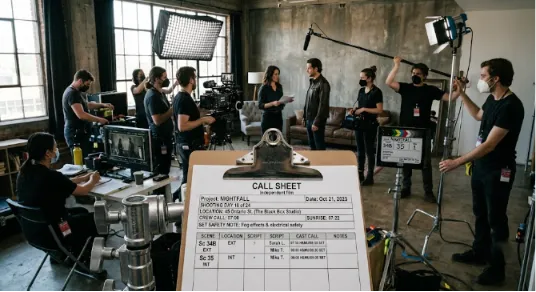
What Is a Call Sheet?
A call sheet is a production document distributed before each shooting day. It outlines the schedule, locations, crew call times, cast information, scene details, weather forecasts, parking instructions, emergency contacts, and department-specific notes.
The assistant director typically prepares this document after finalizing the shooting schedule. Once approved, it reaches the cast and crew several hours before production begins. Instead of answering dozens of individual questions, the production team shares one reliable source of information with everyone involved.
A typical Call Sheet for Film Production includes:
Production title
Shooting date
Crew and cast call times
Shooting location
Scene numbers
Weather forecast
Sunrise and sunset times
Hospital and emergency contacts
Transportation details
Department notes
Safety instructions
Every crew member refers to this document throughout the production day.
Why Safety Starts Before Anyone Arrives on Set
Safety begins long before cameras start rolling. Proper planning prevents many accidents that happen because people lack information rather than experience. Therefore, a detailed Call Sheet for Film Production prepares everyone for the day’s conditions before they even leave home.
For example, if the crew will film outdoors during extreme heat, the document can remind everyone to carry water, sunscreen, and protective clothing. Similarly, if production takes place near water, cliffs, heavy traffic, or construction zones, special safety warnings help the crew prepare accordingly.
Emergency information also becomes immediately accessible. Rather than searching for contact numbers during a crisis, everyone already knows where to find the nearest hospital, emergency coordinator, and first aid station. As a result, the production responds faster when unexpected situations arise.
Clear Communication Prevents Costly Mistakes
Film productions involve dozens or even hundreds of people working simultaneously. Lighting crews, camera operators, makeup artists, transportation teams, production assistants, and actors all follow different responsibilities. Without centralized communication, confusion spreads quickly.
Utilizing a clear Call Sheet for Film Production eliminates uncertainty by ensuring everyone receives identical information at the same time. Instead of relying on text messages or verbal updates, crew members can verify:
Where they need to report
When they should arrive
Which scenes will be filmed
Which department needs to prepare first
Who supervises specific tasks
Therefore, departments coordinate more efficiently without waiting for repeated instructions.
Efficient Scheduling Saves Production Time
Time is one of the most valuable resources in filmmaking. Every delayed hour increases production expenses through equipment rentals, crew wages, location fees, and overtime costs. Fortunately, a well-organized Call Sheet for Film Production minimizes wasted time by creating a structured workflow.
The crew knows exactly:
Which location opens first
Which actors require makeup
When equipment should arrive
Which scenes have priority
When meal breaks begin
When company moves occur
Because everyone follows the same timeline, transitions between scenes become much smoother. Even saving fifteen minutes several times during the day can significantly reduce production costs over an entire shooting schedule.
Department Coordination Becomes Much Easier
Every production department depends on the work completed by another team. The camera department cannot begin until lighting is ready. Actors cannot report until costumes and makeup finish preparation. Sound crews need quiet environments before recording dialogue.
A Call Sheet for Film Production helps every department understand the overall production timeline instead of focusing only on individual responsibilities. Consequently, departments prepare earlier and avoid unnecessary waiting. This coordination also reduces interruptions because everyone understands when their work begins and ends.
Weather Information Helps Everyone Prepare
Weather affects nearly every outdoor production. Rain changes equipment requirements. Strong winds impact lighting setups. Extreme temperatures influence crew safety. Sunrise and sunset determine available shooting hours.
Instead of discovering weather conditions upon arrival, the document provides forecasts well in advance. Crew members can pack rain gear, additional batteries, cooling equipment, or protective covers before leaving home. Production managers also gain enough time to prepare contingency plans if weather conditions become unsafe. Therefore, the entire production adapts more quickly without losing valuable shooting time.
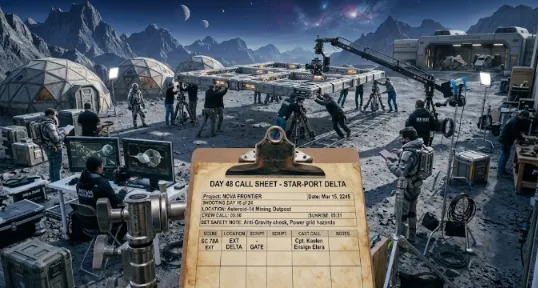
Emergency Response Becomes Faster
Unexpected situations can happen on any production, regardless of experience or budget. Medical emergencies, equipment failures, severe weather, or transportation problems require immediate action.
A professional Call Sheet for Film Production includes:
Emergency phone numbers
Local hospital address
Nearest urgent care facility
Safety officer contact
Production manager information
Police and fire department contacts
When every crew member carries this information, response times improve dramatically. Instead of searching through emails or asking multiple people for directions, the necessary details remain available throughout the day. This preparation can make a meaningful difference during emergencies.
Digital Call Sheets Improve Real-Time Collaboration
Traditional printed documents worked well for many years. However, modern productions often require instant updates. Digital workflows allow production managers to modify information whenever schedules change.
For example, if weather delays the morning shoot, the production office can update reporting times immediately. Everyone receives the latest version instead of relying on outdated printed copies.
Digital platforms also provide several advantages:
Instant notifications
Mobile accessibility
Real-time revisions
Paperless distribution
Easy acknowledgment tracking
Faster communication between departments
As productions become increasingly mobile, digital workflows continue replacing manual processes.
Better Organization Improves Crew Confidence
Film sets operate under pressure. Tight deadlines, creative decisions, and technical challenges demand constant attention. A detailed schedule reduces uncertainty.
Crew members arrive knowing exactly what the day involves.
Actors understand when makeup begins.
Drivers know transportation routes.
Equipment teams prepare the correct gear.
Production assistants know whom to support.
This level of organization builds confidence because everyone starts the day with clear expectations. Consequently, the crew spends more time producing great work instead of solving preventable problems.
How AI Is Transforming Call Sheet Management
Artificial intelligence has started changing production management by reducing repetitive administrative work. Instead of manually entering schedules, contact information, shooting locations, weather updates, and crew assignments, AI-powered production software can automate much of the process.
Modern platforms can:
Generate essential documents directly from shooting schedules
Sync cast and crew information automatically
Update weather forecasts dynamically
Notify teams about schedule changes instantly
Reduce manual data entry
Minimize human errors
Automation allows assistant directors and production managers to focus more on running the production instead of preparing paperwork. As filmmaking becomes increasingly data-driven, AI-powered software helps productions move faster while maintaining greater accuracy.
Best Practices for Creating Effective Call Sheets
A call sheet works best when it remains simple, complete, and easy to read. Production teams should always:
Double-check all call times.
Include accurate emergency contacts.
Verify location addresses.
Highlight safety notices clearly.
Share updates immediately.
Send the document well before the shooting day.
Confirm that cast and crew have received the latest version.
Small improvements in accuracy often prevent significant production delays later.
Conclusion
Every successful production depends on clear communication, detailed planning, and consistent execution. A Call Sheet for Film Production brings all three elements together into one cohesive document.
It keeps cast and crew informed, improves department coordination, strengthens on-set safety, reduces delays, and helps productions stay on schedule. More importantly, it creates a shared understanding of the day’s objectives before anyone arrives on location.
As productions continue embracing digital workflows and AI-powered production management, these tools have evolved from simple schedules into intelligent collaboration systems. Teams that use accurate, well-organized call sheets spend less time solving avoidable problems and more time creating exceptional films. Whether you’re producing an independent short film or managing a large studio production, an effective layout remains one of the simplest ways to improve safety, efficiency, and overall production success.