
You’ve finally finished your script, but now the real administrative nightmare begins. Industry data reveals that modern creators lose countless hours to “app-switching fatigue”—bouncing between word processors, messy spreadsheets, and scattered group chats. Rather than shaping the narrative, you become an overwhelmed coordinator trapped under endless paperwork. In today’s fast-paced industry, a centralized film production management software is utilized by top-tier creators to completely revolutionize this chaotic process.
Imagine discovering video production software that solves this exact chaos by acting as your digital director’s binder. Utilizing Studiovity for filmmakers introduces an all-in-one pre-production management software that brings every planning phase into one central hub. By establishing an integrated production pipeline, this tool connects your script directly to your shooting schedule. Ultimately, you stop battling messy folders and return to your true role as a creative director.
Writing Without the Friction: How Studiovity Compares to High-Priced Legacy Software
You’ve likely stared at a folder filled with files named “Script_v2,” “Script_v3_Final,” and “Script_Actually_Final.” This nightmare is a version control error, and traditional desktop programs make it worse by locking your words to a single computer. When searching for the best screenwriting software for collaborative projects, modern creators need tools that break these digital chains. Therefore, finding an all-encompassing film production management software becomes the ultimate goal.
Enter cloud-based scriptwriting. Think of it as a “Live Document”—like a group chat where everyone sees the newest changes instantly, completely eliminating version confusion. As one of the most affordable alternatives to Final Draft, Studiovity removes the friction of constantly saving and emailing attachments. Furthermore, it operates as a comprehensive film production management software to unify your team. Here is how the modern approach stacks up against legacy tools:
Accessibility: Legacy software requires a strict desktop installation, while Studiovity lives securely online to be opened anywhere.
Collaboration: Old programs force co-writers to take turns editing; Studiovity allows multiple writers to type together in real-time.
Cost: Traditional apps charge hefty upfront fees, whereas Studiovity provides budget-friendly flexibility.
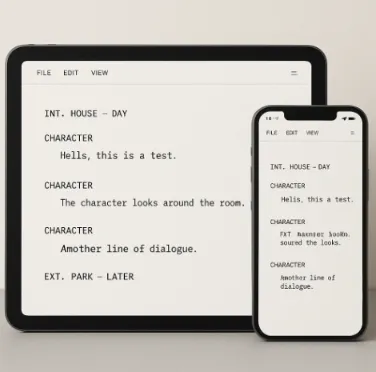
Stepping onto a busy set requires adaptability, which is why utilizing mobile-friendly screenwriting apps for filmmakers changes the game. You can easily tweak a character’s dialogue right from your phone while the actors rehearse. Once those final words are locked, the real magic begins with automated script breakdowns.
The 'X-Ray' Effect: Why Automatic Script Breakdowns Beat Manual Highlighting
Printing your screenplay and attacking it with colored highlighters to count coffee mugs is exhausting. This manual process is a script breakdown—identifying every item needed to shoot a scene. Studiovity acts like a digital X-ray instead, transforming a raw script into a production list in one click. It seamlessly handles streamlining filmmaking workflow from script to screen. This is exactly why an integrated film production management software is so vital to modern sets.
Learning how to automate script breakdowns completely eliminates this tedious busywork. Using a process called Element Tagging, the software scans your text to extract requirements automatically, reducing human error in prop and cast lists by 90%. Consequently, this automatic breakdown effortlessly identifies four essential elements:
Characters: All speaking and background roles.
Props: Physical items handled by the actors.
Locations: Settings where the action occurs.
Costumes: Wardrobe changes tied to specific scenes.
Connecting these categorized items directly to your planner helps you instantly understand the link between script elements and budget needs. Because organizing film production documents digitally is now effortless, you possess the accurate data required to coordinate your set. Once you know exactly what you need, you must figure out when you need it to keep your production running smoothly.
Scheduling for Sanity: Comparing Real-Time Call Sheets to Static PDFs
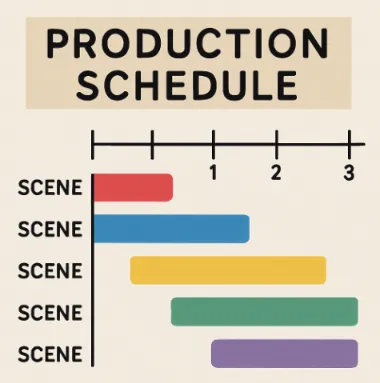
After categorized breakdowns, the next hurdle is deciding what to shoot and when. Beginners often arrange shoot days using static PDFs or spreadsheets that instantly become outdated if an actor gets sick. Instead, professionals use a stripboard—a visual puzzle where each scene is a movable strip you can effortlessly rearrange based on location or availability. Choosing a robust film production management software gives you this exact flexibility.
Adopting a “Live Document” approach completely eliminates this logistical friction. When looking at a Studiovity vs StudioBinder comparison, true dynamic scheduling ensures your timeline instantly adapts to sudden changes. If unexpected rain forces your production indoors, the software automatically shifts your connected cast and prop requirements to the new date without you needing to send a single update email.
Daily set operations rely on translating that fluid timeline into specific instructions, which is where automatic call sheet generation software truly shines. A call sheet tells your crew exactly when and where to arrive, and leveraging real-time film production scheduling tools lets you generate these professional guides in under two minutes. Ensuring everyone has the most recent schedule prevents costly delays. While upgrading to an integrated platform seems like a leap for beginners, patching together generic apps carries its own heavy price in lost time and miscommunication.
The Hidden Cost of 'Free' Tools: Why Investing in Integration Saves Your Budget
Bootstrapping a project with zero-dollar apps feels like a victory until you calculate the hours lost transferring data. While patching together generic word processors seems budget-friendly, this fragmented approach silently drains your most valuable resource: time. However, investing in a reliable film production management software prevents these errors. By acting as a professional film production management guide, Studiovity eliminates these hidden administrative penalties, drastically improving pre-production efficiency for indie films.
Centralizing your workflow also elevates how your project looks to potential investors and crew members. A major part of this professionalism stems from clear visual communication. By offering integrated storyboard and scriptwriting features, Studiovity lets you pair shot concepts directly beside the dialogue, ensuring your crew shares the exact same vision before cameras roll. For this reason, picking the right film production management software changes everything. Handing your team unified documentation instead of messy email chains instantly commands respect. When your software handles the heavy lifting, you can seamlessly shift your focus from administrator back to director.
From Administrator to Director: Your 3-Step Plan to Professional Pre-Production
You can now transition from messy folders to a professional digital hub, reclaiming valuable administrative time per project. Recognized among the top filmmaking productivity tools for directors, Studiovity handles the tedious busywork so you can actually direct. Embracing a modern film production management software is the best way to scale your workflow. Reclaim your creative energy by streamlining your pre-production process:
Import script
Run breakdown
Sync schedule
Execute your first automated script breakdown today. When the software seamlessly organizes the paperwork, your focus stays exactly where it belongs—on bringing your incredible story to the screen.