
Independent films rarely lack ambition. What they usually lack is time, paid prep days, and a full office to read the script ten times. On a low-budget shoot, the producer may also be the line producer, and the first AD may also be building the schedule. A missed prop or an uncounted extra can cost a day you cannot afford to reshoot.
That is why AI script breakdown for indie films is less about flashy automation and more about giving a small team a complete first pass. It does not replace the filmmaker who knows the script. It reduces the hours spent highlighting pages so those people can use their limited prep window on locations, favors, casting, and problems only a human can solve.
Why Script Breakdown Is Harder on a Small Production
On a well-staffed independent, a UPM, an AD team, and department heads all touch the breakdown. On a modest indie, that circle may be two or three people, often working at night after other jobs.
One person is holding too many lists
Cast, props, vehicles, wardrobe, and location notes often live in one spreadsheet, marked-up PDF, or notes app. That works until the script changes, or until art needs a clean props list and the AD needs a scene-by-scene view. When everything sits in one person’s head, a rewrite can silently break the plan.
Prep days are scarce
Low-budget productions often lock locations late and still need a shooting schedule. If the breakdown is finished only a week before cameras roll, there is no buffer for a special effect, an animal, or a child performer. Starting as soon as a draft is stable gives you time to rewrite or simplify the expensive scenes.
Favors and borrowed items still have to be tracked
Indie shoots rely on borrowed cars, locations, and wardrobe. Those items are easy to miss because they look ordinary on the page: “a red sedan,” “a neighbor’s kitchen,” “a vintage coat.” A consistent breakdown makes it obvious how many favors you need, and which days depend on them.
Watch how a first-pass AI breakdown comes together in seconds, which is often all the prep window an indie has:
What AI Script Breakdown Actually Does for a Small Crew
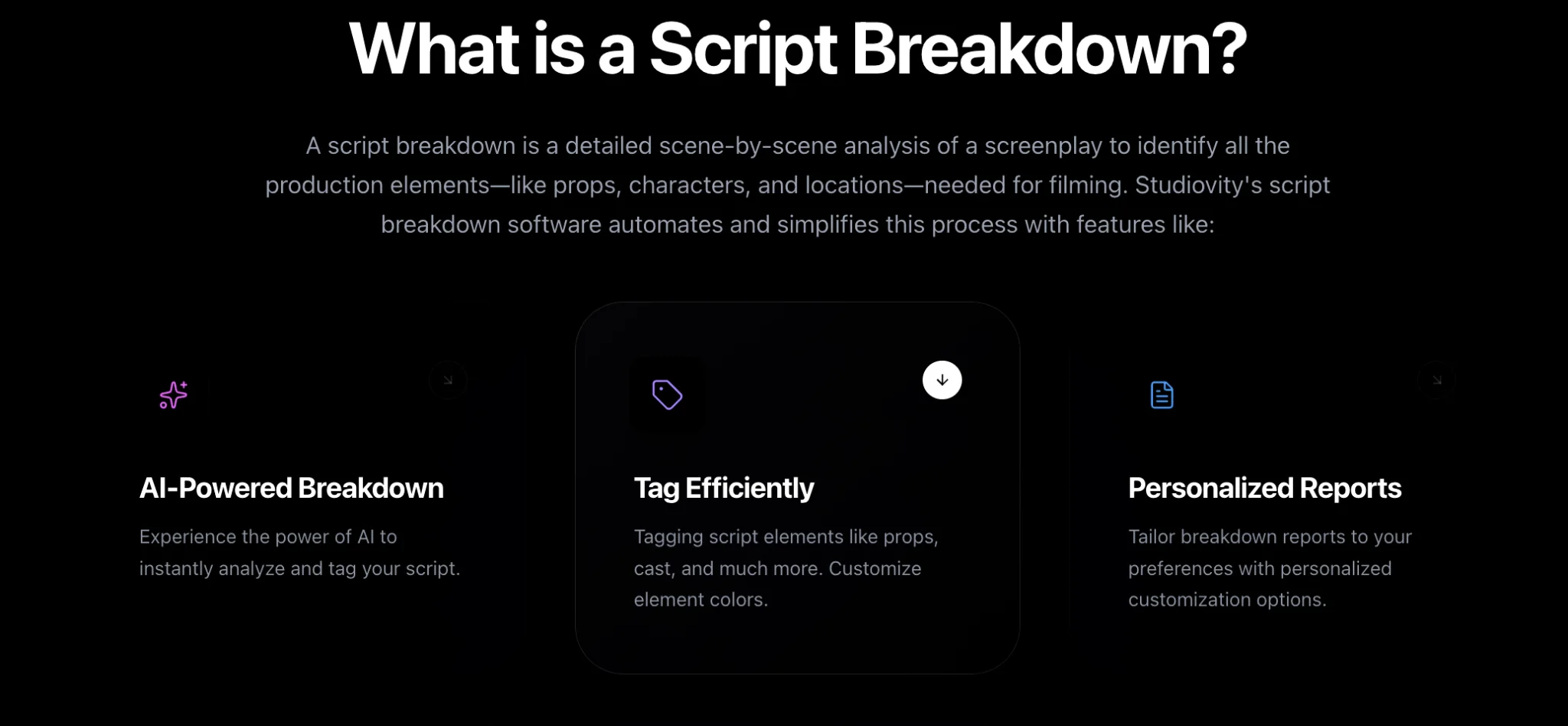
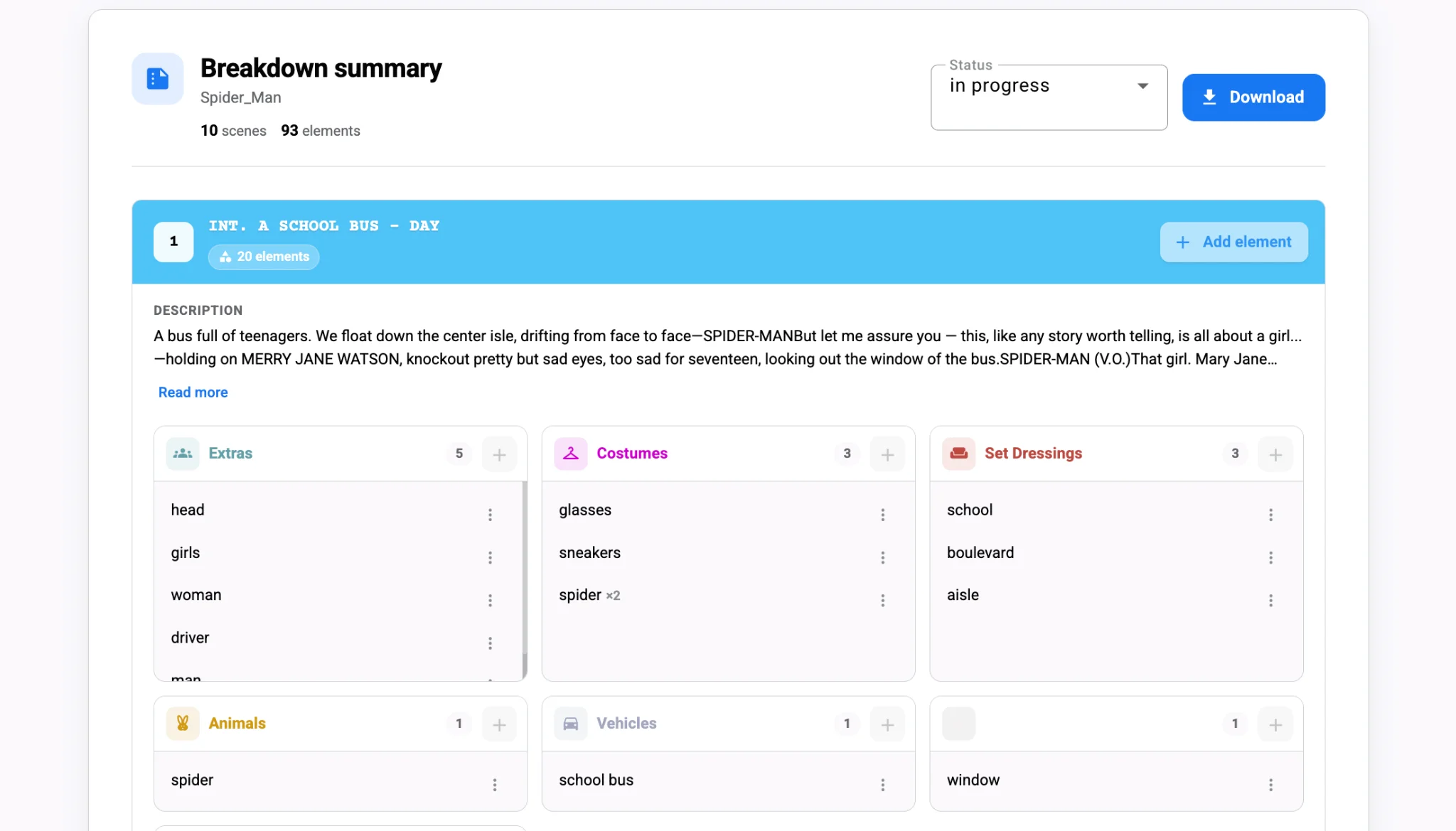
An AI script breakdown reads the screenplay and identifies production elements scene by scene: characters, extras, props, wardrobe, vehicles, animals, stunts, visual effects, and locations, plus basic scene facts such as interior or exterior and day or night. The output is a structured starting point, not a finished production bible.
For an indie team, the practical benefits are specific:
- A first pass in minutes, not a weekend. You can see tagged elements before you spend Saturday night with highlighters.
- Consistent categories. Props stay out of a general notes column, so a volunteer department head can get a clean list.
- A clearer sense of scale. Element counts reveal hidden company moves, crowd scenes, and night work before you promise them.
- Easier updates after a rewrite. Updating a breakdown is faster than re-highlighting a new draft by hand.
None of this replaces reading the script yourself. AI can miss a plant-and-payoff prop, misread a character who is described but not named, or tag a metaphor as a physical object. The value is that you are correcting a pass, not building one from a blank page.
A Lean Breakdown Workflow for Indie Producers and ADs
You do not need a full pre-production staff to use AI well. You need a short, repeatable process.
1. Choose the draft you will plan from
Use the latest locked or “stable enough” draft. If a rewrite is coming in two days, still run a breakdown now so you can see the expensive scenes, then update when new pages arrive.
2. Run the AI pass and scan the categories
Open the result in script breakdown software and walk through the major categories: cast, locations, props, wardrobe, vehicles, extras, and any stunts or effects. Which characters appear most often? How many distinct locations are there? Which scenes need extras?
3. Correct the tags that would cost money if they were wrong
Spend review time where an error would hurt. A miscategorized coffee cup is annoying. A missed picture car, child actor, weapon, night-exterior, or one-time expensive location can change the schedule and the budget. Add skipped elements, remove false tags, and merge duplicate names.
4. Share scene summaries, not just the full script
Volunteer department heads should not have to read 90 pages to find their work. Export a scene summary, or a filtered list for props, wardrobe, or vehicles, so they are not guessing from the screenplay alone.
If you want to run this process on a current draft, start a free AI script breakdown in Studiovity, correct the first-pass tags, and send the scene summary to whoever is handling art, wardrobe, or locations.
Where the Saved Hours Should Go
The point of speeding up breakdown is to free the few committed people you have for work that software cannot do:
- Location negotiations and permits. A clean list of interiors, exteriors, and night work helps you talk honestly with owners and officials.
- Casting around real lives. Scene counts per character help you group actors who have day jobs and limited availability.
- Rewriting to the budget. If the breakdown shows four vehicles, two rain scenes, and a crowd, you can still change the script – but only if you see those costs early.
- Building the first schedule and call sheets. Once elements are trustworthy, it is easier to group locations and share a call sheet volunteer crew can follow.
Mistakes Small Crews Still Make After the AI Pass
Automation does not prevent every indie problem. These misses still show up on low-budget sets.
Treating the first pass as final
If nobody reviews the tags, you may schedule a day around a prop that is not in the scene, or miss a required costume change. Assign one person – usually the producer or AD – as the owner of the breakdown, and date each reviewed version.
Ignoring ordinary items that must be sourced
A family dinner can require specific table dressing and enough plates for coverage. A “quick driving scene” can require a picture car, a tow, or insurance. Tag and review the ordinary things, not only the stunts and effects.
Not connecting the breakdown to a simple budget
Even a one-page budget benefits from element counts: locations, paid extras, vehicles, and night shoots. If the breakdown and the budget live in unrelated documents, you will discover the true cost of a scene after you have already promised it.
Forgetting continuity across a short shoot
Indies often shoot out of order in a few intense days. A wardrobe piece or prop that appears in scenes 12 and 40 may be needed on the same Saturday. A scene-by-scene summary makes those links visible before you write the shooting order.
Keeping the Breakdown in One Place
On a small film, the same person may be designing the look, buying props, and helping with set dressing. Give them a filtered list, and keep the master breakdown in one file so a script change does not live only in a text message.
Studiovity’s script breakdown software is built for this lean workflow: run an AI pass, correct tags, review a scene summary, and keep people aligned without a studio-sized process. You can compare options on Studiovity’s pricing page.
FAQ
Do I need AI script breakdown if my indie film is only 15 shooting days?
Yes, especially then. A short schedule has less room to pick up missed items, and a 15-day shoot can still include dozens of locations and costume changes. A reviewed breakdown helps you use those days on the intended scenes.
Can one person run the entire breakdown?
Yes. Many low-budget films have one producer or AD who owns the breakdown. AI helps that person get a complete first pass quickly. What you should not do is skip the human review or fail to share lists with anyone sourcing props, wardrobe, or locations.
Will AI replace my assistant director?
No. An AD still has to think about company moves, lighting, cast availability, and the reality of a location. AI script breakdown for indie films is a research and organization step that gives the AD cleaner raw material.
What if my script is still changing?
Run the breakdown on the current draft, review the expensive or complex scenes, and update when new pages come in. That is more useful than waiting for a locked script and then discovering a problem with three days of prep left.
Try Studiovity’s AI Script Breakdown Free
A low-budget film does not get a second chance at a missed company move or a forgotten picture car. Try Studiovity’s AI Script Breakdown free and start planning from a complete first pass, not a pile of highlighted pages.