
Many screenplays start strong and end strong but sag in the middle. Act two is long, and without a clear turning point halfway through, scenes start to repeat and the story drifts. The fix is usually a better midpoint.
This guide explains how to write a midpoint in a screenplay: what the midpoint does, the main types, where it falls on the page, and how to test whether yours is pulling its weight.
Here is a short Studiovity video on the art of storytelling, a good primer before you shape your story’s turning points:
What the Midpoint in a Screenplay Does
The midpoint is the major turning point that sits roughly in the middle of the script and splits act two into two halves. Before it, the protagonist is often reacting, exploring or chasing the wrong goal. After it, something has changed, and the story moves faster with higher stakes.
A strong midpoint does at least one of these jobs:
- Raises the stakes so the cost of failure becomes personal or permanent.
- Changes the goal or reveals what the protagonist truly needs.
- Shifts the character from reactive to active, so they stop running and start driving events.
- Starts a clock that creates urgency for the second half.
If you know three act structure in screenwriting, think of the midpoint as the hinge that holds the long middle act together.
Types of Midpoint
The False Victory
The protagonist seems to get what they wanted. The heist works, the couple gets together, the team wins the first round. Then the second half shows the price of that win and things start to fall apart.
The False Defeat
Everything goes wrong. The plan fails, an ally is lost or the villain gains the upper hand. The character is forced to rethink and come back with a new approach.
The Revelation
New information changes the meaning of everything before it. The mentor was lying, the case is bigger than it looked or the hero learns a truth about themselves. A revelation midpoint works well in mysteries and thrillers.
The Point of No Return
The character makes a choice they cannot undo. They commit fully to the new world, the relationship or the mission. From here, retreat is impossible.
Where the Midpoint Falls on the Page
For a feature screenplay of about 100 to 110 pages, the midpoint usually lands somewhere around pages 50 to 60. Treat that as a guide, not a law. What matters is that the story feels balanced: the first half of act two should not run much longer than the second half.
In a TV episode the same idea applies at a smaller scale. A one-hour drama often places a strong turn near the middle act break, while a half-hour comedy may turn the episode around halfway through the B story or the main plot.
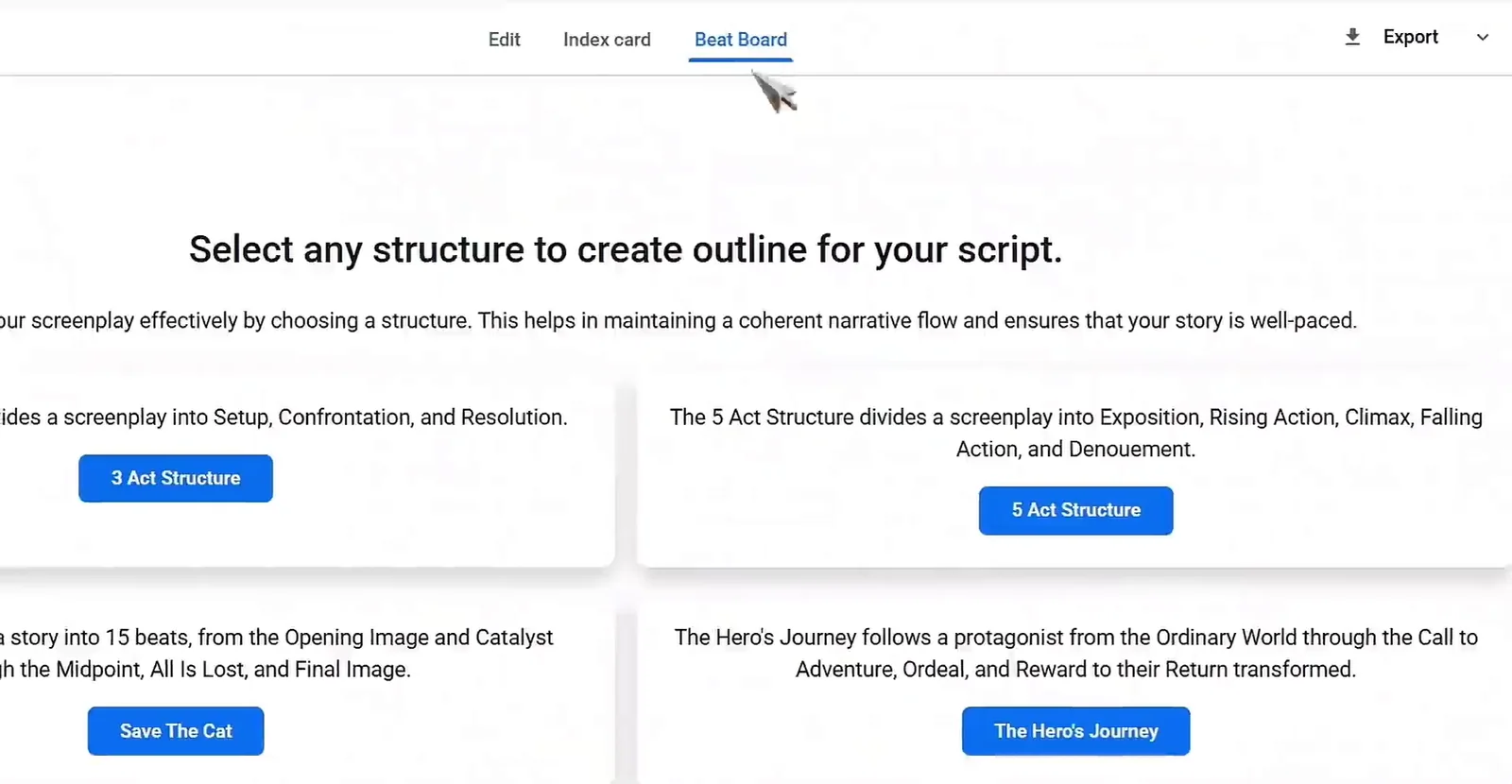
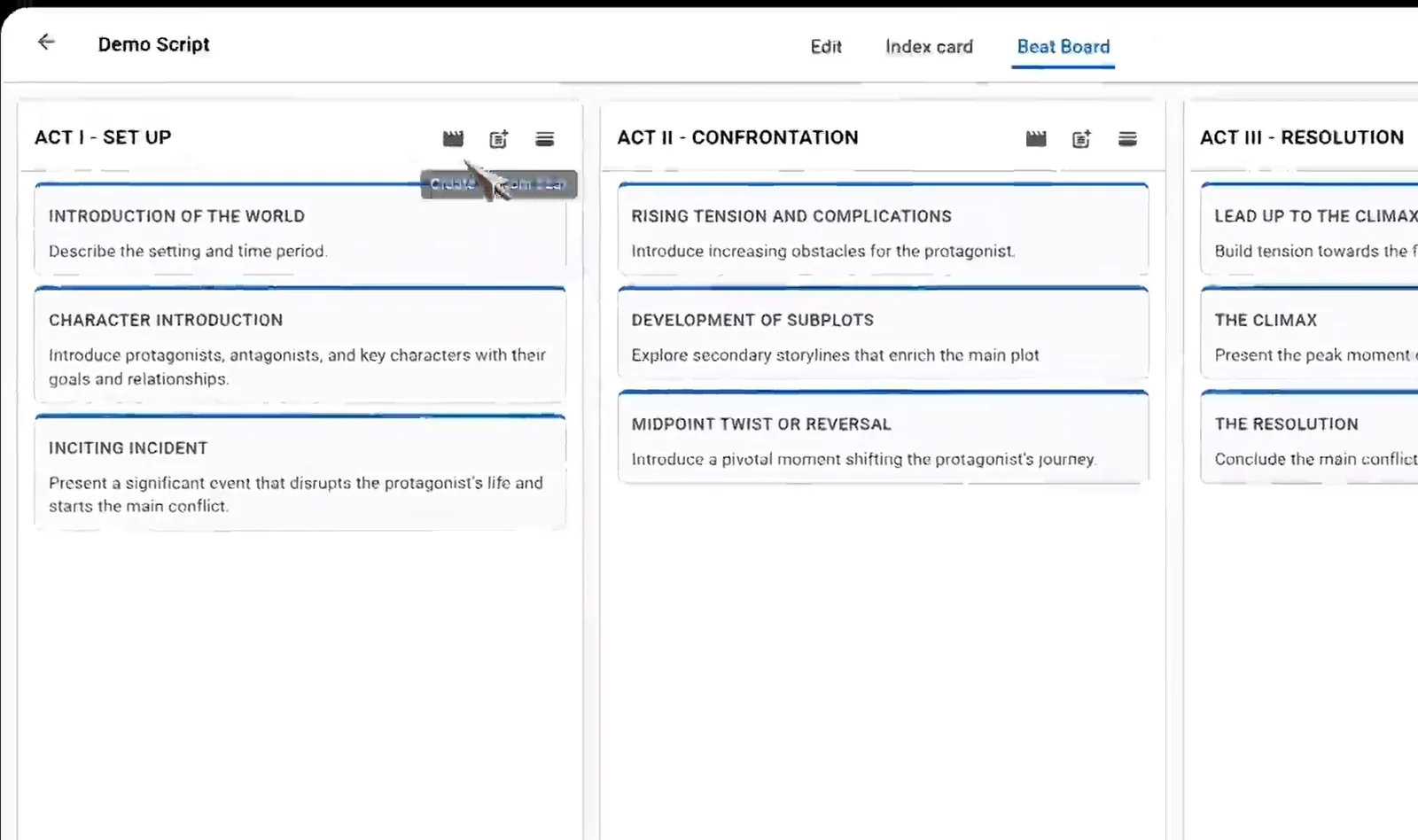
The quickest way to check placement is to lay out your scenes visually. In the Studiovity screenwriting software you can map beats across Act I, Act II and Act III on a beat board and see at a glance whether your turning point sits near the centre.
How to Write a Strong Midpoint
- Start from the ending. Your midpoint should point toward the climax. If the ending is a confrontation, the midpoint might be the moment the hero learns who the real enemy is.
- Mirror the climax. A false victory at the midpoint often sets up a real defeat before the end, and a false defeat often sets up a real victory. The midpoint and climax are in conversation.
- Make it a scene, not a line. A midpoint should be a clear dramatic event that the audience can see, not a quiet realisation buried in a speech.
- Change the protagonist’s behaviour. After the midpoint, the character should act differently. If they behave the same way in scenes 30 and 70, the midpoint did not land.
- Raise the cost. Ask what the character now stands to lose that they did not before. Put that loss on screen early in the second half.
Common Midpoint Mistakes
- A twist with no consequences. A surprise that does not change goals or stakes is just a stunt.
- The midpoint arrives too late. If nothing turns until page 75, the first half of act two will feel padded. This is a common cause of the second act slump in a screenplay.
- Too many mini midpoints. Several small turns can blur together. One clear central turn is easier for audiences to feel.
- The protagonist is a bystander. Even if the midpoint is something that happens to the hero, their reaction and next choice should drive the story forward.
Test Your Midpoint in Three Questions
Before your next draft, answer these:
- What is different about the protagonist’s goal or approach after the midpoint?
- What new risk or cost appears in the second half?
- Could you swap the first and second halves of act two without anyone noticing? If yes, the midpoint is too weak.
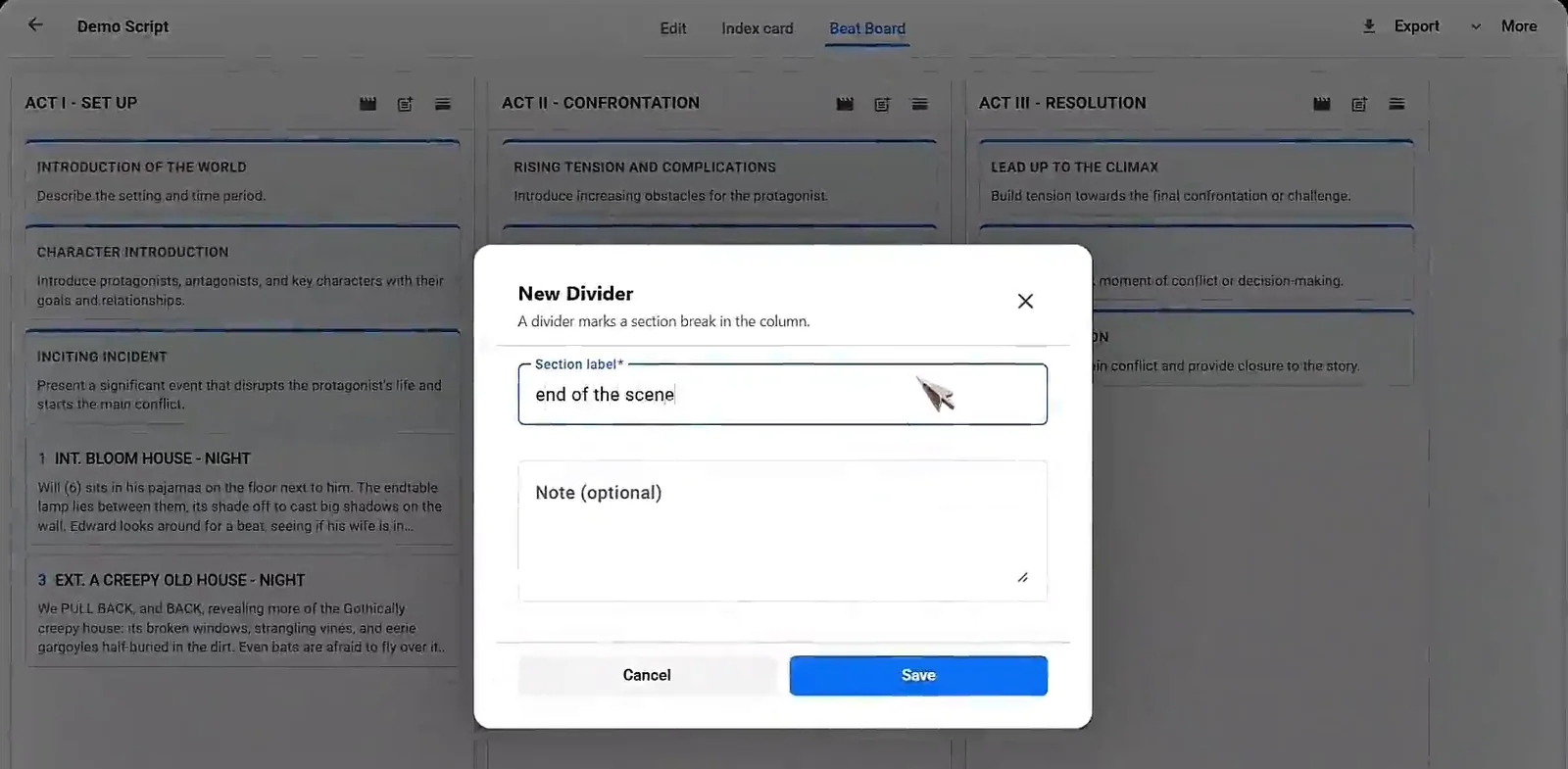
If you can answer the first two clearly and the third with a firm no, your midpoint is doing its job. Try moving the midpoint beat on your Studiovity beat board a few scenes earlier or later and read the act again to feel the difference.
FAQ
Does every screenplay need a midpoint?
Most feature scripts benefit from one, because act two is long. Some experimental or ensemble films use different shapes, but they still tend to have a central turn.
Is the midpoint the same as a plot twist?
Not always. A twist can be a midpoint, but a midpoint can also be a victory, a defeat or a commitment with no surprise at all.
Should the midpoint be exactly at the halfway page?
No. Close to the middle is enough. Story balance matters more than a page number.
Plan Your Turning Points in Studiovity
A clear midpoint gives your second act shape, urgency and direction. Pick the type that serves your ending, make it a visible event and let it change how your hero acts. Outline your acts and write your draft in Studiovity, with a beat board, index cards and screenplay editor in one place.