
Feature films and series get most of the attention when people talk about call sheets, but some of the most demanding call sheets in the industry are written for commercials and music videos. These shoots are short, expensive per hour, and crowded with people who are not regular crew: brand clients, agency creatives, artist management, stylists, choreographers and label representatives. A commercial call sheet has to serve all of them without slowing down the crew who actually make the day happen.
This guide walks through what makes commercial and music video call sheets different, which sections deserve extra attention, and how to structure the document so a one- or two-day shoot runs cleanly.
Why Commercial and Music Video Call Sheets Are Different
On a long-form project, the call sheet is one link in a long chain of days. Crew members learn the rhythm of the production, and small gaps in information get filled by habit. Commercials and music videos rarely have that luxury. Many are shot in a single day, often with a crew assembled specifically for that job. Related planning for short-form days is covered in our guide to scheduling commercials, music videos and short shoots.
Compressed schedules leave no room for confusion
When the entire spot or video is captured in one day, every setup matters. There is no “we’ll pick it up tomorrow.” The call sheet needs to show the shot order or setup order clearly, so departments can pre-light, pre-rig and prep wardrobe changes ahead of time.
More stakeholders on set
A commercial set may include the director, producer and crew alongside an agency producer, creative director, copywriter, account lead and one or more people from the brand. A music video may add the artist’s manager, a label rep, a choreographer and a glam team. Each of these groups needs to know where to be and when, but they do not all need the same level of detail.
Deliverables drive the day
Commercial shoots often have specific deliverables: a hero spot, cutdowns, stills, social verticals or behind-the-scenes content. Music videos may need performance passes, narrative scenes and alternate takes for edits. Listing these on the call sheet helps everyone understand why certain setups are prioritized.
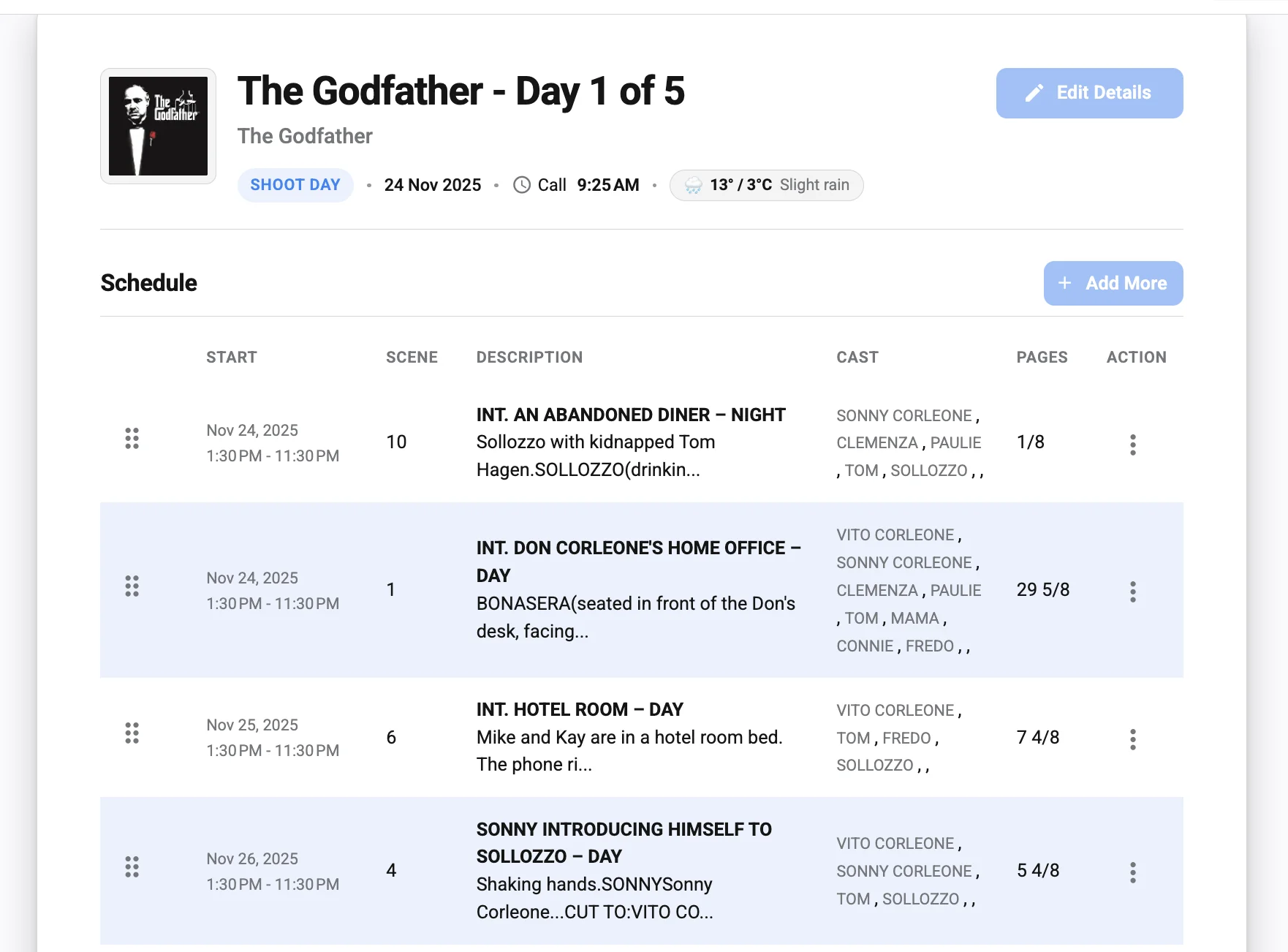
Core Sections of a Commercial Call Sheet
A strong commercial call sheet keeps the standard building blocks but adjusts the emphasis. Here are the sections worth getting right.
Header and production details
Include the production company, job name or number, client and agency names, shoot date, and the director and producer. Many commercial productions use a job number rather than a title, so make sure it is consistent with what accounting and the agency use.
General call, shooting call and wrap estimate
Crew call, shooting call and an estimated wrap time give departments the frame of the day. On commercials, the estimated wrap matters to clients and talent agents as much as to crew, since overtime affects budgets directly.
Setup or shot list summary
Instead of a scene breakdown, many commercial call sheets list setups: “Setup 1 – Kitchen wide, hero product pour,” “Setup 2 – Close-up packshot,” and so on. Include the approximate time block, the talent required, and any special equipment like a motion control rig, a tabletop setup or a car mount.
Talent and wardrobe
List each performer with their role, call time, hair and makeup time, wardrobe looks and on-set time. For music videos, note the number of looks for the artist and which setups use each look. This lets the glam and wardrobe teams plan changes around the schedule.
Client and agency section
Give the client and agency team a separate block with their own arrival time, the location of video village, and the name of the person who will look after them (often the producer or a production coordinator). This keeps client logistics from cluttering crew information.
Music Video Call Sheet Essentials
Music videos share much of the commercial structure but have unique needs that should appear on the call sheet.
Playback and audio notes
Note who is responsible for playback, which version of the track is being used, and whether timecode or a click is needed for sync. If different sections of the song are shot at different speeds, mark that on the relevant setup.
Performance versus narrative setups
Separate performance passes from narrative scenes. Crew can then see when the full band or dancers are needed and when only the lead artist or actors are required, which helps with holding areas and meal planning.
Choreography and rehearsal blocks
If there is choreography, schedule rehearsal time on the call sheet rather than assuming it will happen informally. List the choreographer, dancer call times, and any space needed for warm-ups.
Artist team contacts
Include the artist’s manager or point of contact so the producer can coordinate changes without hunting for a phone number. Keep personal contact details on a need-to-know basis.
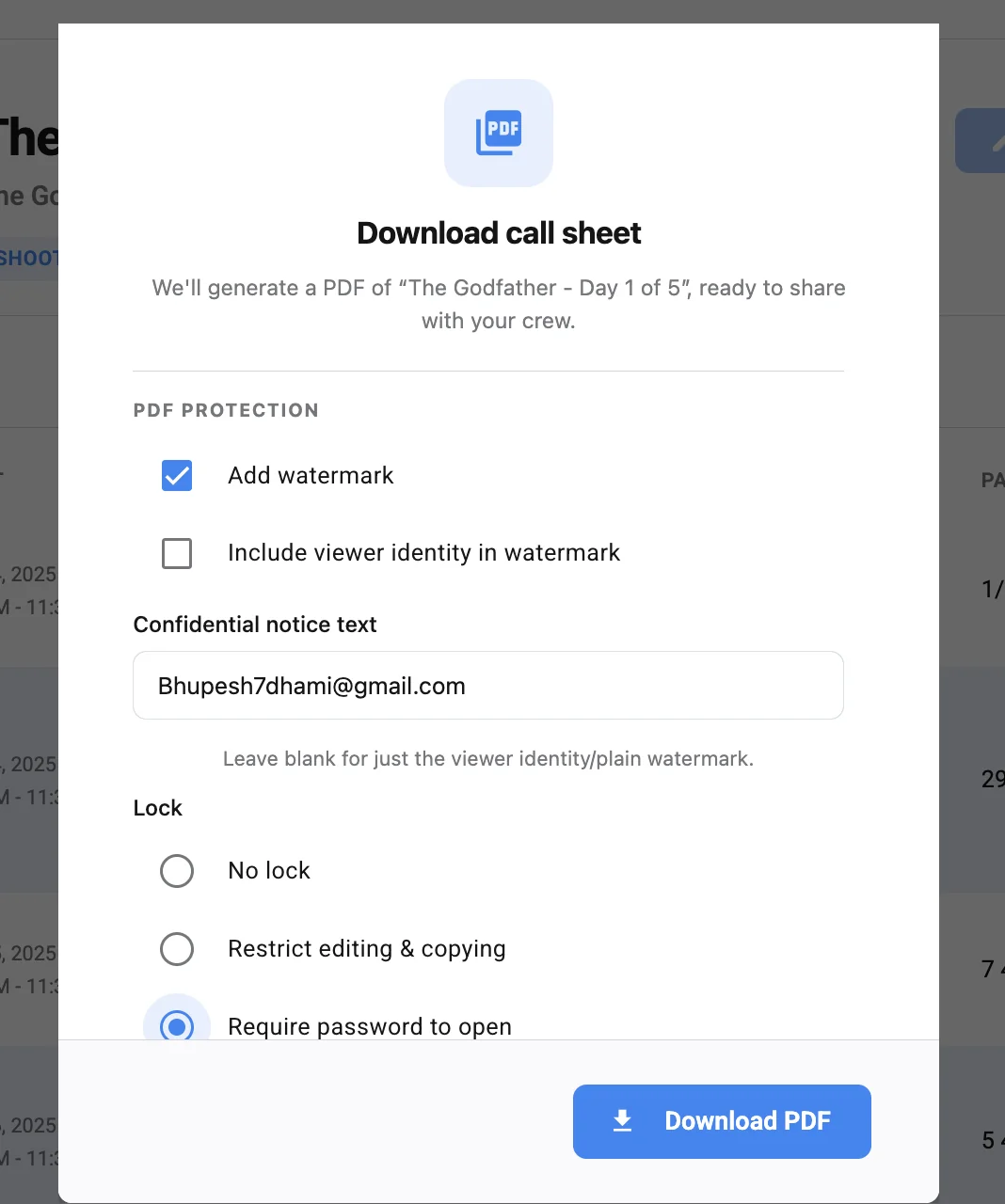
If you want to put these sections together without rebuilding a template for every job, a dedicated call sheet software for commercial and music video productions can pull schedule, cast and crew details into one document automatically.
Structuring the Call Sheet for a One-Day Shoot
On a single-day shoot, the order of information on the page affects how fast people find what they need.
Put the timeline near the top
Crew members scanning the call sheet on their phones want the call time, location and the day’s flow first. Place the general call, the setup timeline and the estimated wrap near the top of the first page.
Use time blocks, not just scene numbers
Commercial days move by setups and time blocks. Showing “9:00-10:30 Setup 1” is often more useful than a scene number alone, because many commercial scripts are only a page or two long.
Group departments clearly
List crew by department with call times. On commercials, specialty crew such as a food stylist, a product wrangler or a prop maker may only be needed for certain setups, so give them a call time that reflects that.
Keep client-facing notes clean
Clients and agency staff will read the call sheet too. Keep the tone professional and the notes clear. Internal notes about budget or problem-solving belong in production channels, not on the shared call sheet.
Handling Changes on Short-Turnaround Jobs
Commercials and music videos frequently change late: a location swaps, a look gets cut, or the client requests an extra setup. Because the prep window is short, the call sheet may go through several versions before shoot day.
Version control
Label each version clearly with a revision number or color and send it with a short summary of what changed. This avoids people working from an outdated version.
Distribution to non-crew
Make sure clients, agency staff and artist teams are on the distribution list, but consider giving them a version with only what they need. A good tool lets you control who receives which details.
Tips for Producers and Coordinators
A few habits make commercial and music video call sheets more reliable:
- Confirm deliverables before finalizing. Check that every deliverable on the client brief maps to at least one setup.
- Double-check talent agency details. Commercial talent often comes through agencies with specific booking terms. Make sure call times match what was agreed.
- List the video village location. Clients and agency teams need to know where to watch the monitor and where they can sit.
- Note product handling. If the product is a hero item, note who handles it and where backups are stored.
- Include parking and arrival instructions. Non-crew guests are more likely to get lost, so be specific.
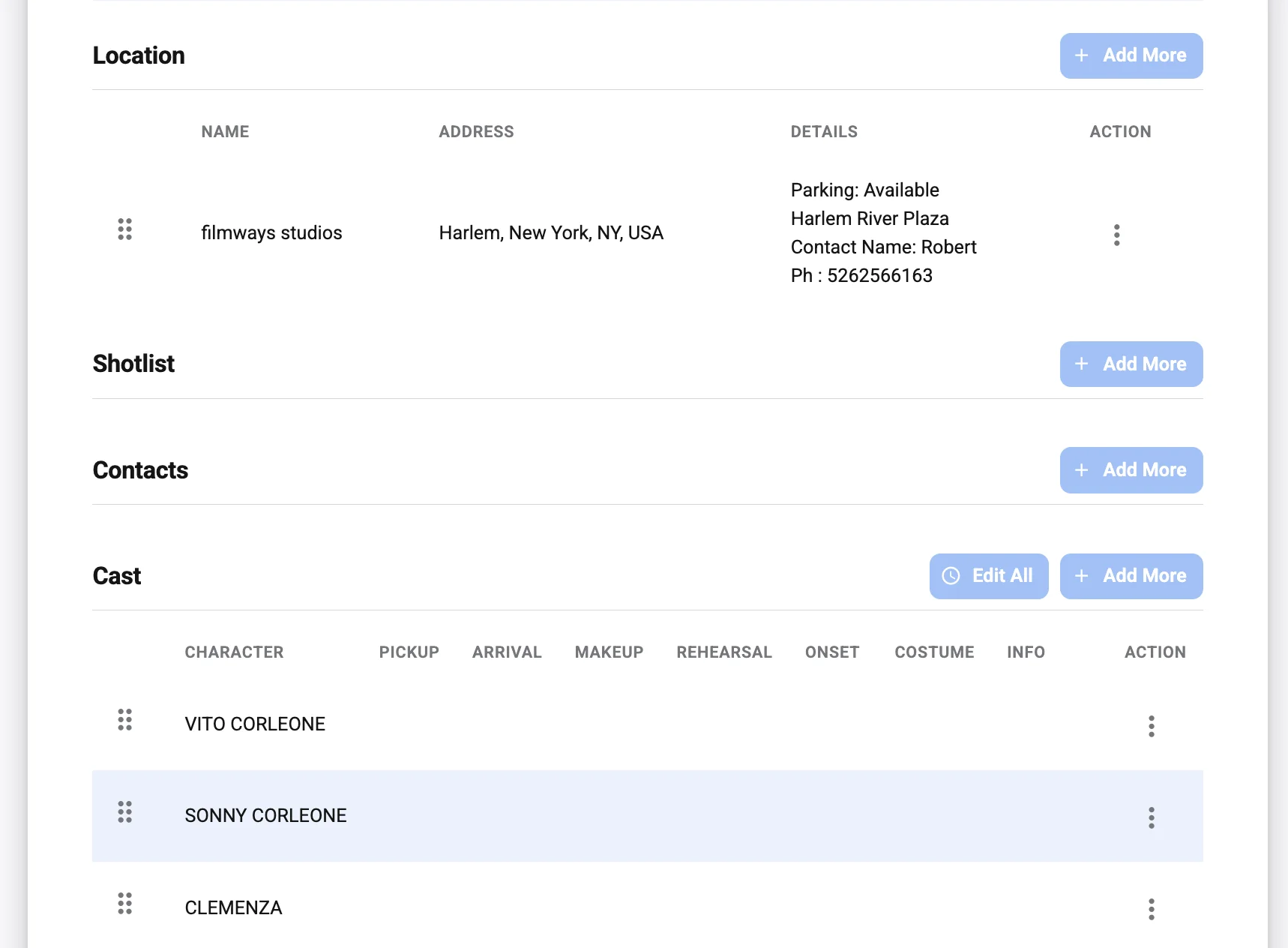
Building Commercial Call Sheets Faster
Because commercial and music video productions often run back to back for different clients, producers end up creating many call sheets in a short period. Starting from scratch each time invites inconsistencies. A template that already includes client, agency, talent, playback and deliverables sections can save hours across a busy season.
Studiovity’s call sheet software lets you generate call sheets from your schedule and contacts, customize sections for different job types, and share them with crew and clients from one place. That makes it easier to keep the structure consistent while adapting each call sheet to the brand, artist and shoot day in front of you.
Final Thoughts
A commercial call sheet or music video call sheet does more than tell people when to show up. It reflects the creative plan, the client relationship and the tight economics of a short shoot. By organizing setups clearly, giving clients and artist teams their own space, and keeping every version accurate, you help the whole day move with less friction.
For another specialized day format, compare how call sheets for TV production organize cast, crew and department notes under a different production rhythm.
If you are producing commercials or music videos regularly, it is worth investing in a repeatable process. Try Studiovity’s call sheet tool to build your next one-day shoot call sheet in less time.