
Not every screenplay is written in English, and not every production works in one language. Regional cinema, international co-productions and bilingual series are growing fast, and their scripts often mix languages within a single scene. Breakdown tools built only for English force those teams back to manual tagging, or into translating the script before prep can even start. A multilingual script breakdown keeps regional and bilingual teams in prep without forcing an English-only rewrite first.
The challenge with mixed-language scripts
Multilingual scripts create specific breakdown problems:
- Character names may be written in different scripts or transliterations across drafts.
- Props and locations may be described in a regional language while headings stay in English.
- Dialogue in one language and action lines in another can confuse simple keyword tagging.
- Departments may read in different languages, so reports must be easy to follow for everyone.
None of these are unusual. They are the daily reality for many film industries around the world.
How AI support helps
Studiovity’s AI script breakdown software offers broad language support for its AI Magic tagging, so it can analyze scripts beyond English and tag production elements automatically. You still keep manual tagging options, which matters for idioms, regional objects or culturally specific references the AI might not recognize on the first pass. If you are still setting up input tools, see how to use a native language keyboard in Studiovity while you tag.
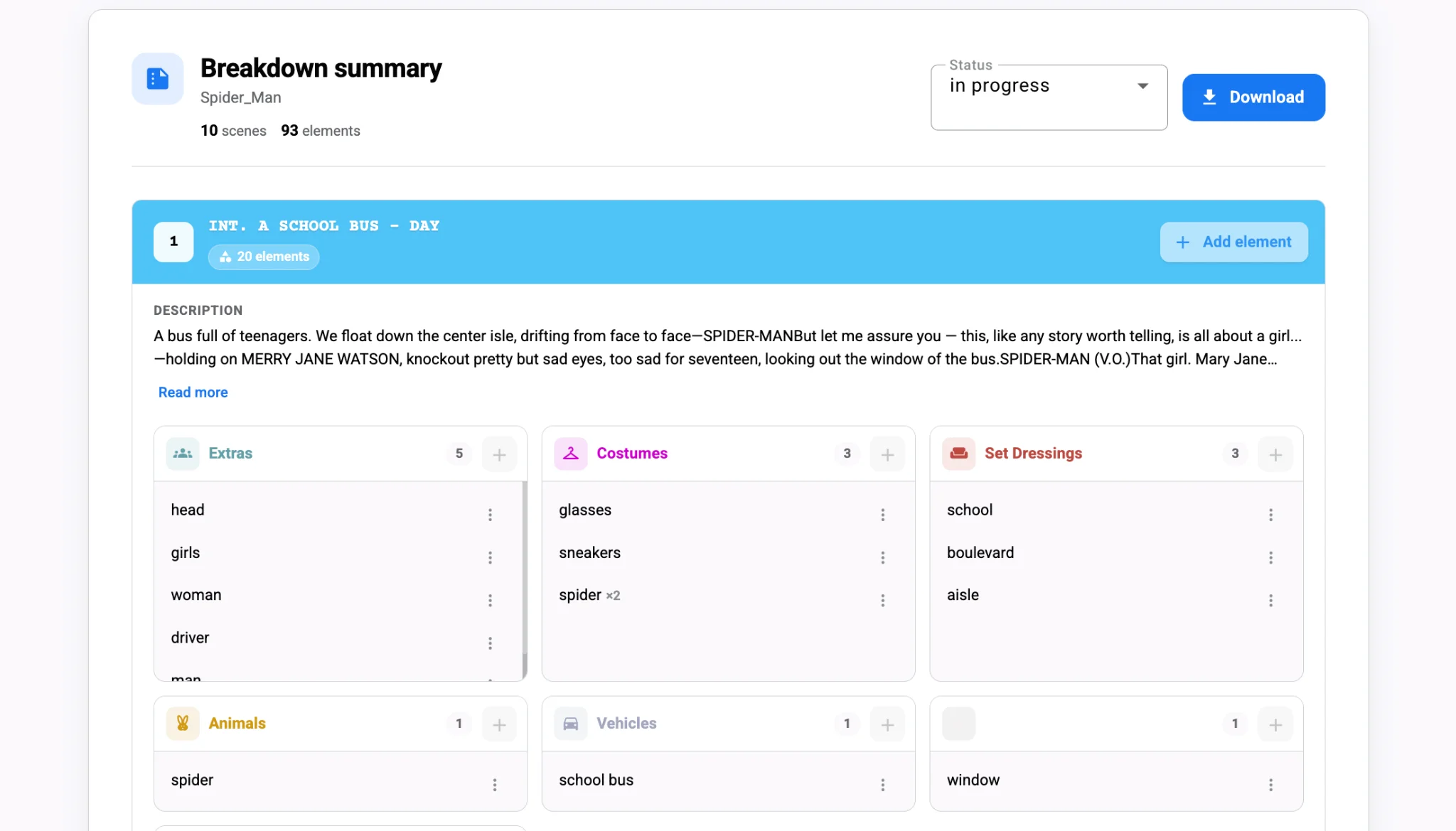
A practical approach is to let AI build the first pass, then have a bilingual AD or production coordinator review tags scene by scene. Their job is not to tag from scratch but to correct and add: a regional dish that is a prop, a festival decoration that is set dressing, a traditional garment that is wardrobe.
Standardize names early
The single most useful step is agreeing on how names will appear in the breakdown. Pick one spelling for each character and location, even if the script uses several, and merge the variants. Studiovity lets you edit and merge elements, so "Raghav," "RAGHAV" and a transliterated version can become one cast element with one ID across the schedule.
Use the same rule for locations. A market named in two languages should be a single set in the breakdown, otherwise the schedule will treat it as two places and plan a company move that does not exist.
Share reports the whole crew can read
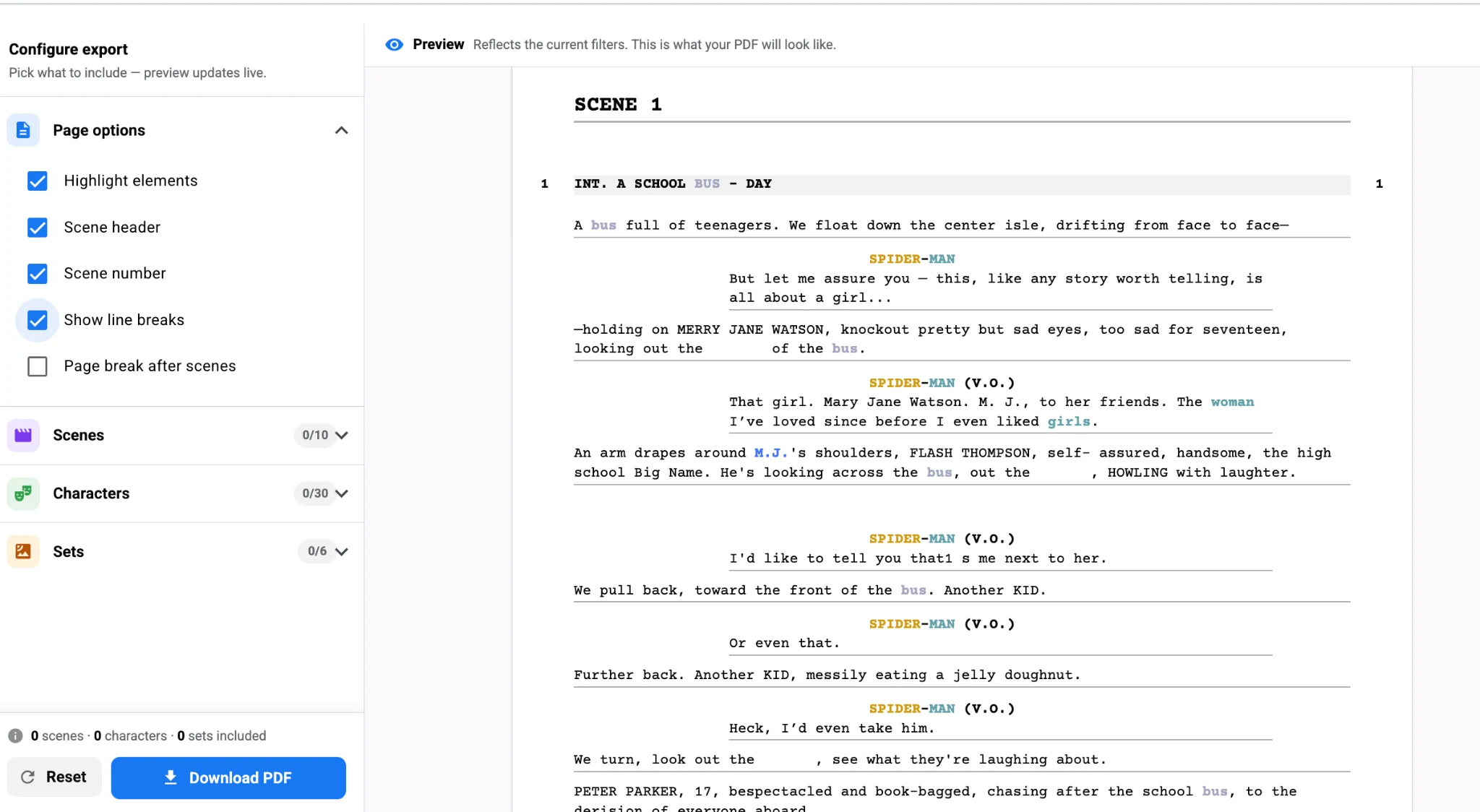
Multilingual crews need reports that are easy to scan regardless of language. Category filters, scene numbers and consistent color codes help a lot, because they let a department head find their items even when descriptions are in a language they read more slowly. Export filtered PDF or Excel reports from the breakdown tool, and let the same tags flow into the shooting schedule and call sheets. For how spoken vernacular shapes performance on screen (separate from tagging), see what vernacular language means in film.
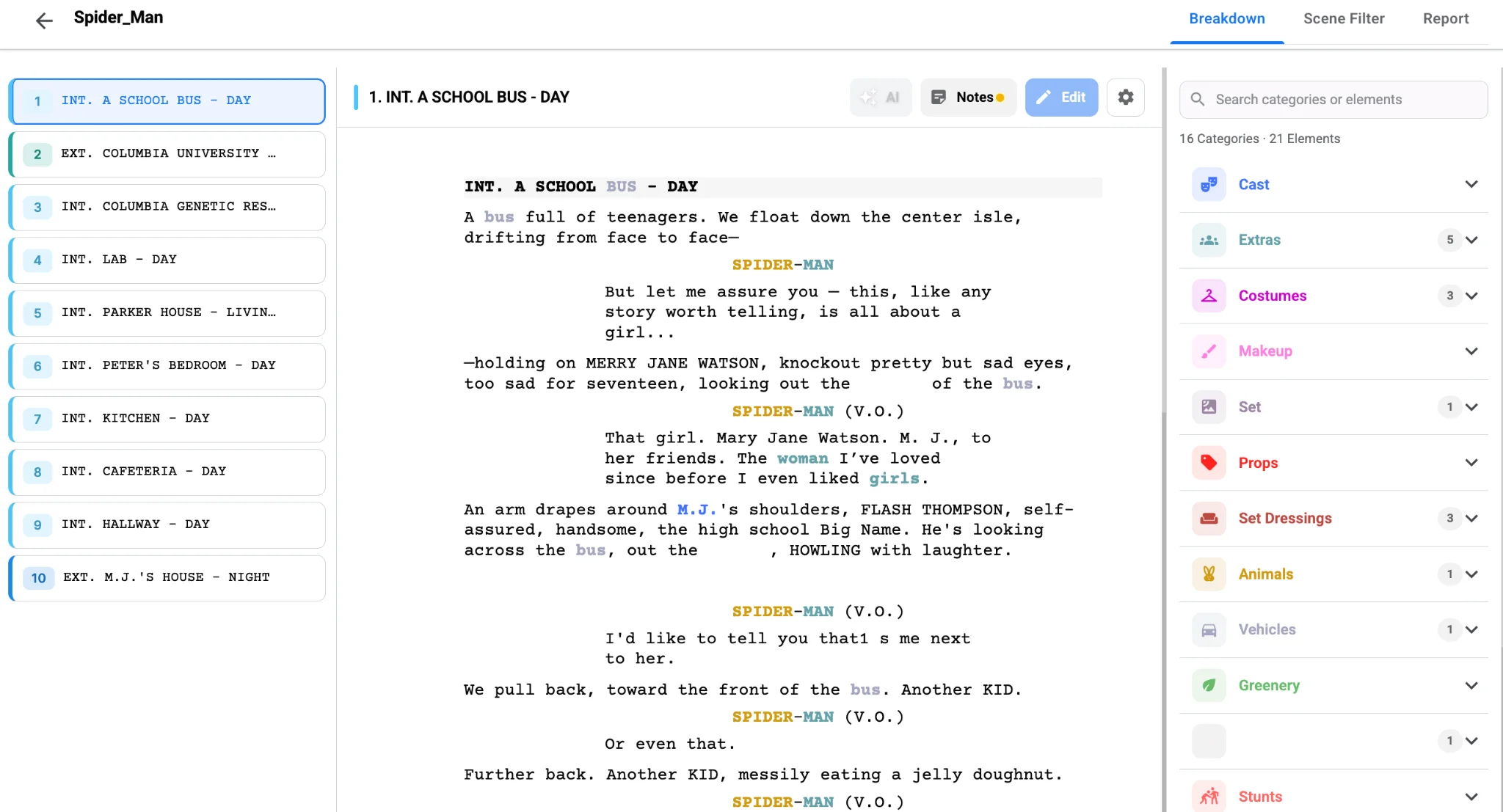
Studiovity’s screenwriting software keeps writing and breakdown in one project, which helps when drafts arrive in more than one language version.
Budget a little extra review time for the first multilingual project you run this way. After one production, the team will know which kinds of regional items the AI catches easily and which ones always need a human eye, and the second project will move much faster.
The payoff
Language should not decide how fast you can prep. Let AI handle the first pass, review with a bilingual eye, standardize names and lean on filters and colors so every department can read the result. Break down your next regional or bilingual script with Studiovity’s multilingual AI breakdown.