
A call sheet is one of the most important documents on a film set, and one of the easiest to get wrong when schedules, locations, crew details, and last-minute changes are moving fast. An AI call sheet generator helps production teams create clearer, more consistent call sheets by organizing essential production information, reducing manual formatting, and speeding up revisions. For filmmakers, assistant directors, production coordinators, and producers, the value is practical: fewer repetitive admin tasks, fewer communication gaps, and more time spent solving creative and logistical problems.
Related video: Studiovity film pre-production: script breakdown, shotlist, scheduling, and call sheet
As more teams adopt ai production tools, the traditional production call sheet is becoming smarter, more collaborative, and easier to update. This does not remove the need for experienced production judgment. It simply gives teams better support for the daily paperwork that keeps a shoot running.
What does an AI call sheet generator actually do?
An AI call sheet generator helps production teams build, review, and update call sheets by turning production details into an organized daily plan for cast, crew, and departments. In practice, it can assist with layout, scene details, crew call times, location information, weather notes, contact blocks, parking instructions, safety reminders, and distribution-ready formatting. The goal is not to replace the assistant director or production office; it is to make their workflow faster, cleaner, and less vulnerable to avoidable errors.
A traditional movie call sheet depends on accurate information from multiple sources: schedules, scripts, stripboards, contact lists, maps, department notes, meal planning, transport details, and client or studio requirements. When those details change, the call sheet often needs to be rebuilt or carefully revised under pressure. AI-supported call sheet software can reduce that pressure by helping the team structure information consistently and flag areas that may need attention.
For example, if a shoot day includes a company move, split crew calls, child actor restrictions, background holding, special equipment, and a weather-sensitive exterior scene, the call sheet becomes more than a simple schedule. It becomes the operational reference for the day. An AI system can help assemble the moving parts into a readable format while the production team focuses on whether the plan actually works.
Why film call sheets still matter in a digital production environment
Film production has become more digital, but the basic need for a clear daily plan has not changed. A call sheet tells everyone where to be, when to arrive, what scenes are being shot, who is needed, what to prepare, and how to contact the right people. Even on a small crew, that shared reference point prevents confusion. On a larger production, it is essential.
The call sheet also reflects the professionalism of the production. A clear document tells crew members that the day has been planned with care. A confusing, incomplete, or late call sheet can create uncertainty before the day even begins. Crew may arrive at the wrong parking area, actors may not understand their pickup times, departments may miss key notes, and the AD team can spend the morning answering questions that should have been addressed the night before.
Digital tools have improved distribution, but distribution alone is not the same as clarity. A PDF sent by email, a messaging app screenshot, or a shared document can still contain mistakes. The advantage of a modern call sheet generator is that it helps standardize the process before the document reaches the crew. That standardization is especially useful when productions are moving quickly, working with multiple units, or operating across several locations.
The everyday problems AI is helping production teams solve
The pressure around call sheets usually comes from timing. A production call sheet is often finalized after the next day’s schedule has been confirmed, department notes have been gathered, weather has been checked, and transportation or location details are locked. By that point, the team may be tired, the hour may be late, and there may still be conflicting information to resolve.
AI can help by reducing repetitive work and bringing attention to details that might otherwise slip through. It is especially useful when paired with a disciplined production workflow, accurate source documents, and human review.
Common call sheet pain points include:
- Manual data entry: Crew names, phone numbers, scene numbers, page counts, cast IDs, location addresses, and department notes often come from different places. Re-entering them increases the chance of mistakes.
- Version confusion: When call sheets are revised, crew members need to know which version is current. AI-supported systems can help maintain clearer version control when used properly.
- Formatting inconsistency: Poor layout slows people down. A call sheet should be easy to scan on a phone, tablet, laptop, or printed page.
- Late schedule changes: If a scene shifts, a call time changes, or a location note is updated, every related section may need to be checked.
- Department-specific details: Camera, grip, electric, art, wardrobe, hair and makeup, sound, transportation, and locations may all need different notes in the same document.
- Communication overload: Production teams already manage emails, texts, chats, radios, and in-person updates. A stronger call sheet reduces unnecessary back-and-forth.
AI does not eliminate these challenges, but it can make them easier to manage. The best results come when the production team treats the tool as an assistant, not an authority. Human review remains essential because a call sheet is not just information; it is a plan for people, equipment, time, and safety.
How AI improves the call sheet workflow
A useful AI call sheet workflow begins before the document is drafted. It depends on clean inputs, consistent naming conventions, and an organized approach to production data. When those pieces are in place, AI can help transform scattered details into a structured draft that the production team can refine.
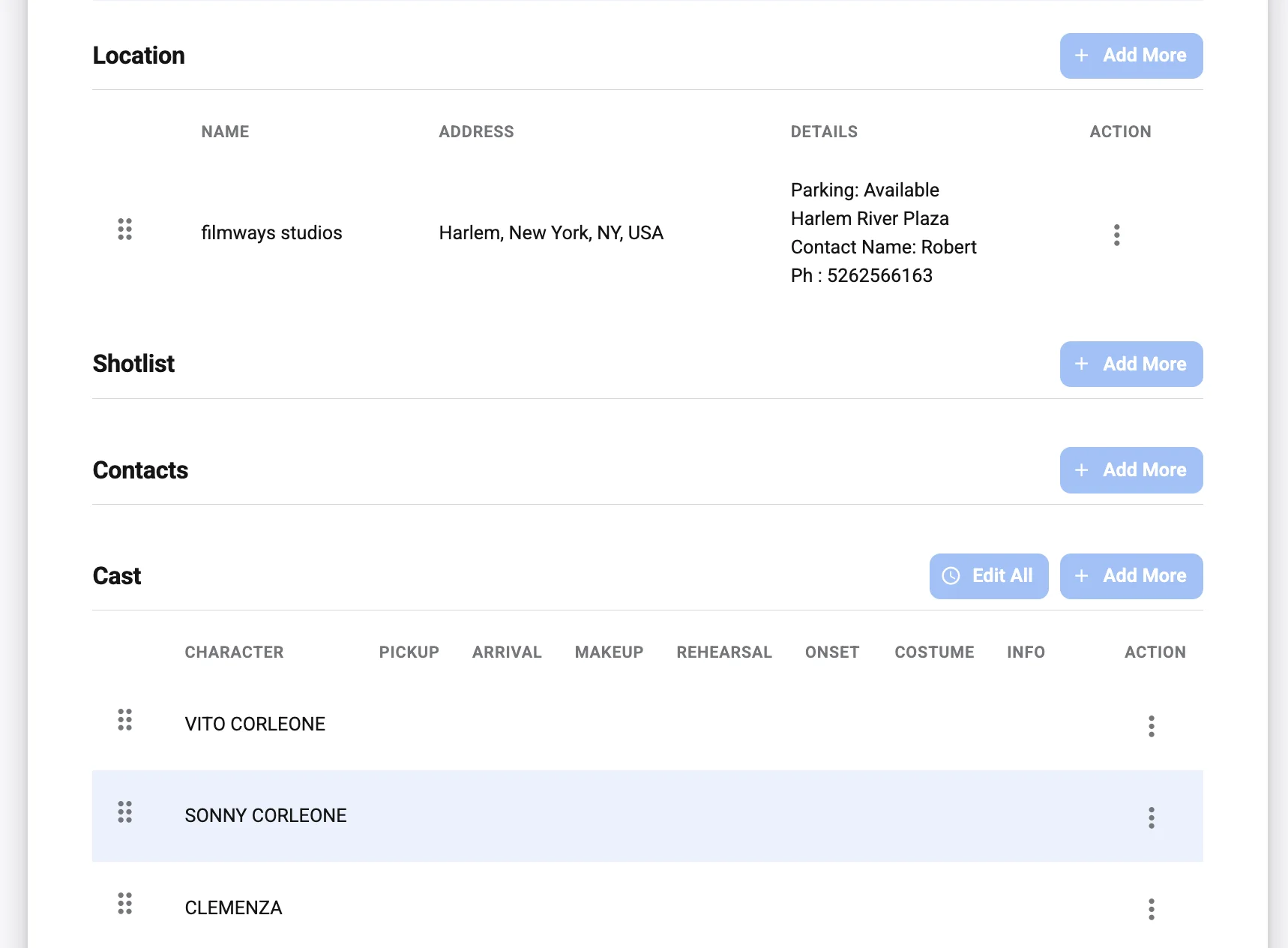
Faster first drafts
Creating the first draft of a call sheet can take significant time because the production office has to pull from multiple sources. A call sheet generator can speed up this stage by arranging key details into a familiar format. Instead of starting with a blank template, the team starts with a structured draft.
This is particularly helpful on commercials, branded content, independent features, music videos, short films, and corporate video shoots where teams may not have a large production office. Smaller productions often rely on one or two people to handle many responsibilities. Saving even a modest amount of administrative time can make the evening wrap process smoother.
Cleaner formatting for fast scanning
The best film call sheets are not only complete; they are easy to read quickly. Crew members often check call sheets while loading gear, traveling to set, standing in a location, or preparing for the next day. If the layout is cluttered, important information gets buried.
AI-supported call sheet software can help maintain consistent formatting across shoot days. That means scene information appears in the same place, crew call times are easy to find, location notes are clearly grouped, and safety or parking instructions are not hidden in dense text. Consistency helps the crew build trust in the document.
Stronger revision control
Revisions are part of production life. A location may change, a cast member’s call may shift, or a department may add a critical note after the first version is prepared. Problems happen when changes are made in one section but not reflected elsewhere.
AI tools can help production teams identify connected fields and reduce mismatches. For example, if a location changes, the tool may support updates to address blocks, maps, parking notes, nearest hospital information, company move details, and department notes. The production team still has to confirm accuracy, but the revision process becomes more manageable.
Better use of existing production data
Many productions already have the information needed for call sheets. The challenge is that the information may be spread across scheduling files, spreadsheets, contact lists, script breakdowns, emails, and department notes. AI production tools can help bring that data into one workflow.
When a system can pull from organized source material, the call sheet becomes less of a manual typing exercise. The production team can spend more time checking whether the plan makes sense and less time copying names, numbers, and scene details from one document to another.
Where AI fits in the production office
AI is most useful when it supports a clear chain of responsibility. A call sheet touches many departments, but it should still have a controlled approval process. The assistant director team, production coordinator, producer, or designated production office lead should determine who enters information, who reviews it, who approves it, and who sends it.
A practical workflow might look like this:
- Scheduling information is prepared. The AD team confirms the next day’s scenes, estimated times, cast needs, background, and major department requirements.
- Production details are gathered. Locations, transportation, parking, meals, contacts, safety notes, and special instructions are collected from the relevant departments.
- The AI tool creates or updates the draft. The call sheet generator organizes the details into a production-ready structure.
- Human review begins. The AD team and production office check call times, scene order, contact details, locations, legal requirements, and department notes.
- Approvals are completed. Producers, clients, studio representatives, or department heads review where required by the production’s process.
- The final call sheet is distributed. The approved version is sent through the agreed channels, with revision numbers and timestamps when needed.
- Changes are controlled. If updates are made after distribution, the team sends a clearly marked revision and communicates the change directly to affected people.
This structure keeps AI in the right role. It supports the work, but it does not become the final decision-maker.
Can AI replace the assistant director or production coordinator?
AI cannot replace the judgment, leadership, and set experience of an assistant director, production coordinator, or producer. It can help with organization, drafting, formatting, and checking, but it cannot fully understand the practical reality of a location, the temperament of a set, the urgency of a creative decision, or the human consequences of a poorly planned day.
Experienced production professionals do more than fill in documents. They anticipate bottlenecks, communicate with departments, protect shooting time, manage personalities, coordinate safety, and make decisions under pressure. A call sheet software platform may help organize the plan, but the plan still needs to be created and approved by people who understand production.
Think of AI as a capable production assistant for the paperwork layer. It can prepare a draft, suggest structure, reduce repetitive entry, and make updates easier. It can also help newer teams learn what belongs in a professional movie call sheet. But it should not be trusted blindly, especially when details affect safety, labor rules, travel, minors, stunts, special effects, animals, weapons, vehicles, water work, night shoots, or remote locations.
The essential elements of a strong AI-assisted call sheet
Whether a call sheet is built manually or with AI, the fundamentals remain the same. Every section should help the crew understand the day and act without confusion. If a section does not help people do their jobs, it should be simplified, clarified, or removed.
A strong production call sheet usually includes:
- Production title and shoot day: The project name, production company or unit, date, and day number when relevant.
- General crew call: The main call time for the crew, with separate department or individual calls as needed.
- Key contacts: Production office, producer, assistant directors, production coordinator, locations, transportation, medic, and emergency contacts.
- Location details: Shooting address, parking, base camp, holding, nearest hospital, map links or directions, and access instructions.
- Weather and sunrise/sunset notes: Useful for exterior work, company moves, wardrobe planning, and safety.
- Schedule and scenes: Scene numbers, descriptions, script pages, cast required, location notes, and estimated sequence of work.
- Cast information: Cast IDs, character names, pickup times, makeup and wardrobe calls, set calls, and wrap notes where appropriate.
- Background and stand-ins: Numbers, call times, holding areas, wardrobe instructions, and special requirements.
- Department notes: Camera, grip, electric, art, props, wardrobe, hair and makeup, sound, locations, transport, catering, VFX, and any special units.
- Safety information: Hazards, PPE reminders, emergency procedures, medic location, weather concerns, and any high-risk work that has been approved.
- Meals and breaks: Meal timing, catering location, water access, and any special food logistics.
- Distribution and revision information: Version number, issue time, and clear labeling for revised call sheets.
AI can support each of these sections, but the production team must decide what is relevant for the specific shoot. A lean commercial call sheet may not need the same detail as a feature film call sheet. A documentary shoot may require more travel and release notes. A studio shoot may need more department scheduling and access details. The format should serve the production, not the other way around.
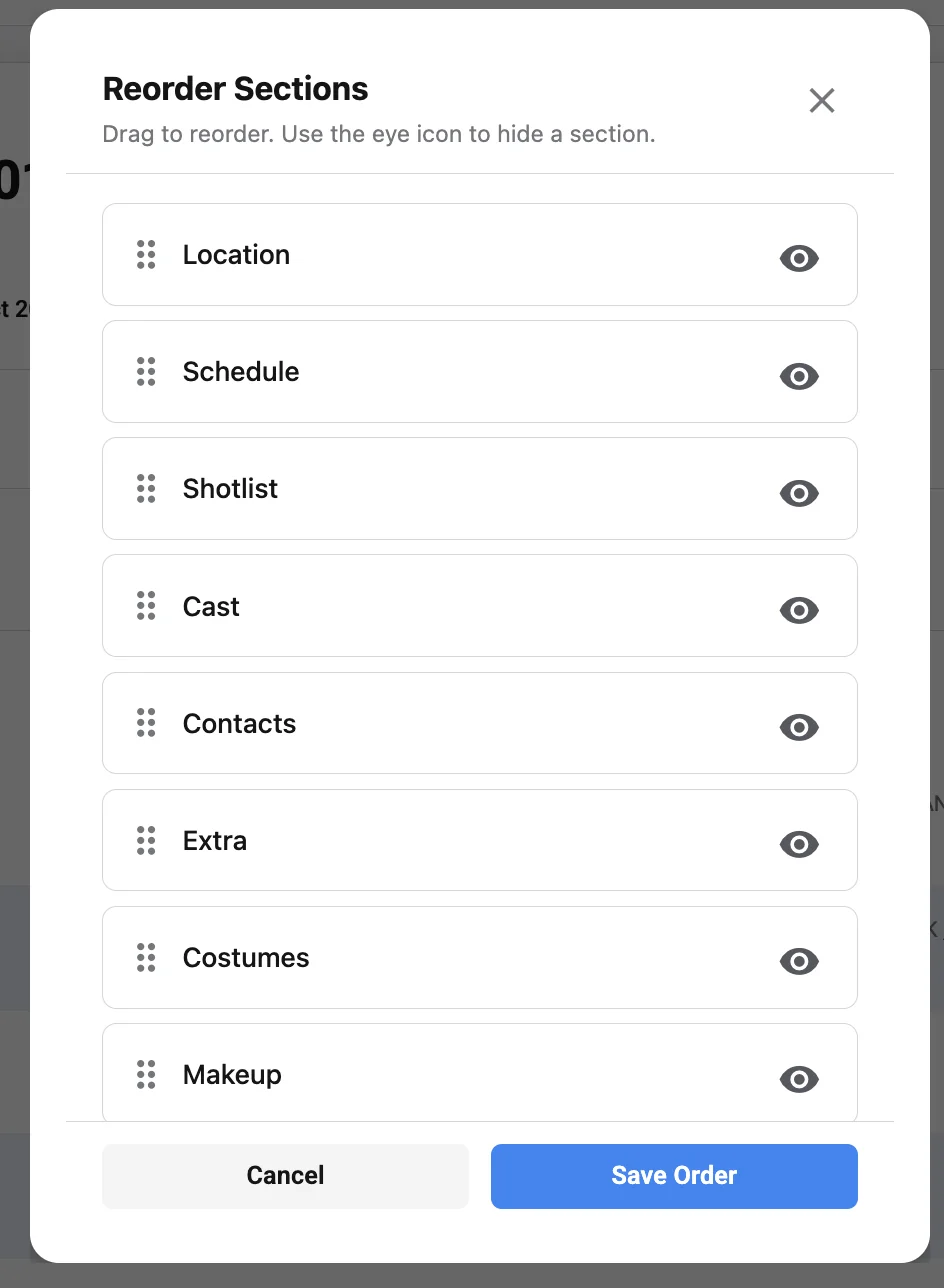
The practical benefits for independent filmmakers
Independent productions often operate with limited time, limited staff, and a high level of multitasking. The person creating the call sheet may also be coordinating locations, confirming cast, arranging meals, answering crew questions, and preparing sides. In that environment, a reliable call sheet generator can make the difference between a rushed document and a clear plan.
AI-assisted workflows are especially valuable when the team is professional but small. Instead of spending the night formatting tables and chasing repeated details, the producer or AD can focus on the questions that actually affect the next day’s success. Are the call times realistic? Is parking clear? Has the location contact confirmed access? Does the cast know where to report? Are department heads aligned on the first setup?
For newer filmmakers, AI can also provide structure. It can help them understand what information a professional call sheet should contain and how to present it. That does not replace mentorship or production experience, but it can reduce avoidable beginner mistakes.
The biggest caution is overconfidence. A polished call sheet can still be wrong. Independent teams should treat AI-generated drafts as starting points and build a review habit around them. At minimum, someone should verify names, numbers, addresses, dates, call times, weather-sensitive details, emergency information, and any safety-related notes before distribution.
The value for larger crews and professional production teams
On larger productions, the challenge is not simply creating a call sheet. It is coordinating information across many departments while maintaining accuracy, approvals, and confidentiality. A production call sheet may need to satisfy internal standards, union or guild expectations, studio procedures, client review, location restrictions, and department-specific needs.
AI production tools can support larger teams by helping them manage structured data and repeatable processes. If the same crew list, location library, cast database, and schedule information feed into the call sheet workflow, there is less need for duplicate entry. That can reduce friction across a long shoot where call sheets are issued daily.
Larger teams may also benefit from templates for different shoot types. A second unit call sheet, insert unit call sheet, travel day notice, rehearsal day sheet, and principal photography call sheet may all require different layouts. AI-assisted systems can help keep those formats consistent while still allowing department-specific customization.
However, professional teams must be especially careful with access control. Call sheets often contain private phone numbers, addresses, travel details, cast movements, and sensitive production information. Any AI-enabled call sheet software should be evaluated for permissions, data handling, export controls, user roles, and distribution settings. Convenience should never come at the expense of confidentiality.
What should filmmakers look for in call sheet software?
Filmmakers should look for call sheet software that saves time without weakening control, accuracy, or security. The best option is not necessarily the tool with the most features; it is the one that fits the production’s workflow, crew size, approval process, and level of complexity.
Before choosing a platform, production teams should consider how the tool will be used in real conditions. A system that looks impressive in a demo may be frustrating during a late-night call sheet revision if it is hard to edit, slow to export, or confusing for crew members to access. Practicality matters more than novelty.
Use this checklist when evaluating an AI call sheet generator:
- Ease of setup: Can the team create a usable call sheet quickly, or does the system require too much configuration?
- Template flexibility: Can it support commercials, features, shorts, documentaries, branded content, and multi-unit shoots?
- Data import options: Can it work with schedules, contact lists, cast information, and location details from existing tools?
- Revision control: Does it clearly label updated versions and help prevent outdated call sheets from circulating?
- Mobile readability: Can crew members easily read the call sheet on a phone without zooming endlessly?
- Permission settings: Can sensitive information be limited to the right users or groups?
- Export and distribution: Can the team send PDFs, links, emails, or other formats required by the production?
- Human editability: Can the AD team override suggestions, rewrite notes, and customize the layout without fighting the software?
- Reliability: Will it still support the workflow when internet access is poor, deadlines are tight, or changes happen quickly?
- Support for safety notes: Can hazards, emergency contacts, nearest hospital details, and special instructions be presented clearly?
The right tool should reduce administrative weight while preserving the authority of the production team. If software adds complexity, hides important details, or makes approval harder, it is not solving the right problem.
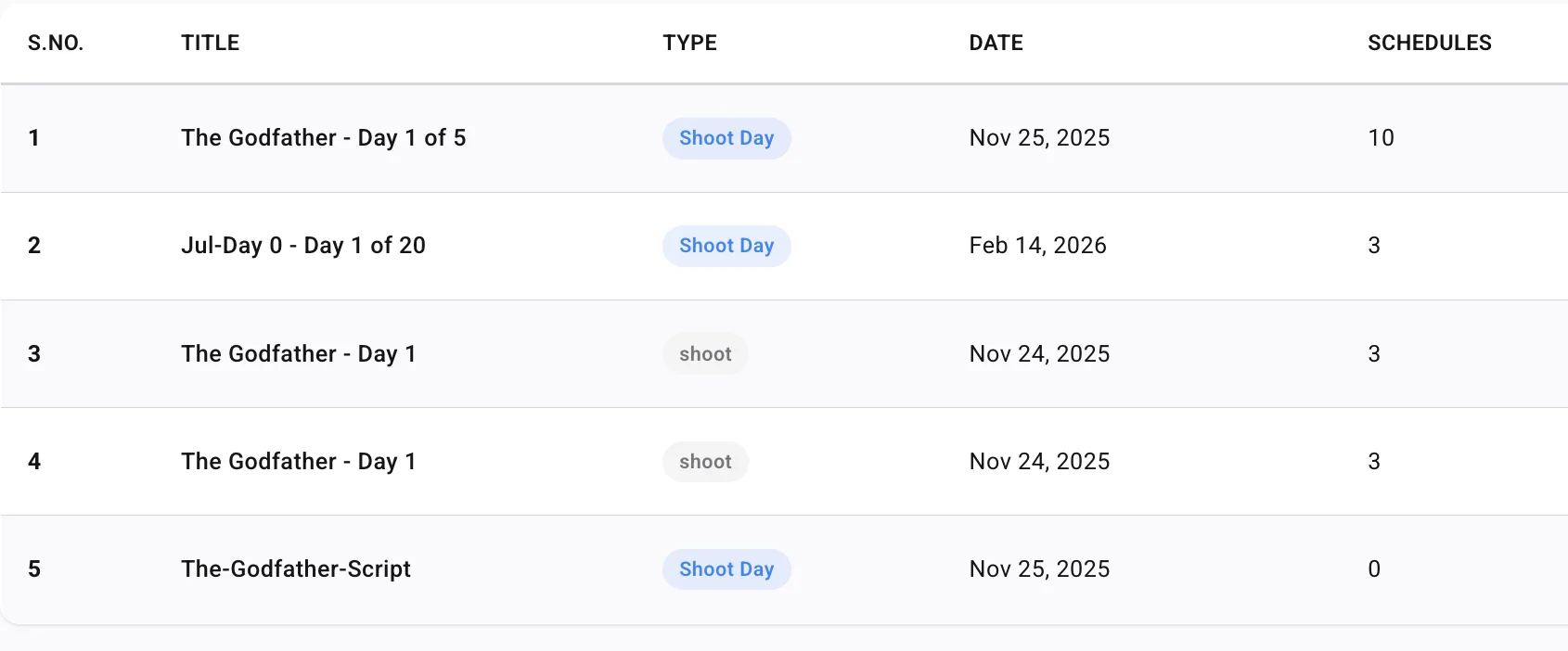
Smart ways to use AI without losing production control
The most effective teams set clear rules for how AI is used. They do not allow automation to casually reshape the day’s plan, invent missing information, or distribute unapproved changes. Instead, they use AI to accelerate the parts of the process that are repetitive and predictable.
A practical AI call sheet policy might include these habits:
- Start with verified source material. AI is only as reliable as the information it receives. Use current schedules, approved contact lists, confirmed locations, and department notes.
- Assign one owner for the document. Even if several people contribute, one person or department should control the final version.
- Review every critical field manually. Dates, call times, addresses, contact numbers, safety notes, and cast movements should always be checked by a human.
- Mark revisions clearly. If a call sheet changes after distribution, label the new version and communicate what changed.
- Protect private information. Limit access to personal contact details and movement information where appropriate.
- Keep a backup workflow. Productions should know how to issue a call sheet if a platform is unavailable.
- Collect feedback from the crew. If people consistently miss information, the layout may need improvement.
These habits turn AI into a controlled production support system. They also help prevent a common mistake: assuming that a clean-looking document is automatically correct.
How AI can improve communication across departments
A call sheet sits at the center of production communication. It does not replace direct department conversations, but it gives those conversations a shared reference point. When the call sheet is clear, departments can plan their own work with fewer assumptions.
For the camera team, the call sheet helps identify scenes, locations, timing, and possible lighting conditions. For grip and electric, it supports equipment planning, load-in timing, power needs, and company moves. For art and props, it clarifies which sets, dressing, and hero items are needed. For wardrobe and makeup, it connects cast call times with looks, continuity, and preparation windows. For locations and transportation, it reinforces access, parking, routing, holding, and movement.
AI can improve this communication by making sure department notes have a consistent place to live. Instead of burying important details in email threads, teams can structure the call sheet so key notes appear where crew members expect them. That creates a calmer morning because people are not hunting for basic information.
Still, not every detail belongs on the call sheet. Some conversations should remain in department meetings, production reports, risk assessments, private emails, or secure documents. The call sheet should be detailed enough to guide the day but not so overloaded that the crew stops reading it.
Common mistakes when using an AI call sheet generator
AI can make call sheet creation easier, but it can also create new problems if teams use it casually. The most common mistakes are not technical; they are workflow mistakes.
One mistake is feeding the tool incomplete information and expecting a complete result. If the location address is missing, the cast list is outdated, or department notes are vague, the generated call sheet will reflect those gaps. Another mistake is accepting AI wording without checking whether it matches the production’s actual plan. A sentence may sound professional while still being too broad, inaccurate, or unclear.
Production teams should watch for these issues:
- Generic safety language: Safety notes should reflect the real hazards of the day, not vague reminders.
- Incorrect assumptions: AI may organize information in a way that looks logical but does not match the shoot’s practical needs.
- Overloaded layouts: A tool may include too many sections because it can, not because the crew needs them.
- Outdated source data: If the contact list or schedule is not current, the call sheet will not be current.
- Unclear responsibility: If no one owns final approval, mistakes are more likely to reach the crew.
- Excessive automation: Automatically sending updates without review can create confusion or distribute incorrect information.
The solution is simple but important: keep humans in the loop. Let AI help with structure, speed, and consistency, while experienced production staff make final decisions.
Building a better call sheet process from pre-production onward
The best call sheets are not created at the last minute. They are the result of good pre-production organization. If contact lists, location details, schedule information, cast data, and department notes are maintained well from the beginning, the daily call sheet process becomes much smoother.
During pre-production, teams can prepare templates for different kinds of shoot days. They can decide how cast IDs will be formatted, how locations will be labeled, what contact information will appear, and where department notes will be collected. They can also define approval steps so the final call sheet does not get stuck waiting for unclear sign-off.
A strong pre-production setup may include:
- A current master crew list with approved contact details
- A cast list with character names, IDs, and relevant scheduling notes
- A location database with addresses, parking, holding, access, and restrictions
- A department note collection process with deadlines
- A safety information workflow for hazards and special activities
- A call sheet template that matches the production’s needs
- A distribution plan for crew, cast, clients, vendors, and stakeholders
A revision policy for late changes
When these pieces are ready, an AI call sheet generator can work more effectively. It is no longer trying to make sense of scattered information. It is helping organize a production system that already has structure.
The future of AI production tools on set
The rise of AI production tools points toward a more connected production workflow. Call sheets are only one part of that shift. The same data that supports a call sheet can also support schedules, production reports, sides, contact lists, location notes, travel plans, and department coordination.
In the future, production teams may expect more tools to communicate with each other. A schedule change could update draft call sheet fields. A confirmed location could populate maps and parking notes. A department head could submit notes through a structured form. A production coordinator could review changes in one place instead of searching across multiple threads.
The opportunity is not just speed. It is continuity. When information moves cleanly from pre-production to shoot day to wrap documentation, the entire production becomes easier to manage. Teams can reduce duplicated work, improve accountability, and create a clearer record of decisions.
At the same time, filmmakers should stay realistic. Production is physical, collaborative, and unpredictable. Weather changes, talent needs shift, gear breaks, locations surprise you, and creative decisions evolve. AI can support the paperwork and planning layer, but it cannot remove the need for strong communication, calm leadership, and practical problem-solving on set.
A practical takeaway for filmmakers and production teams
An AI call sheet generator is most valuable when it helps a production team create accurate, readable, and timely call sheets with less manual effort. It can speed up drafting, improve consistency, support revisions, and make production information easier to manage. Used well, it gives filmmakers more room to focus on the work that requires human judgment: scheduling realistically, communicating clearly, and keeping the day moving.
The key is to treat AI as a production support tool, not a replacement for production leadership. A polished movie call sheet still needs verified details, thoughtful planning, and final human approval. Whether you are running a lean independent shoot or coordinating a larger crew, the best call sheet process combines organized data, reliable call sheet software, and experienced people who understand what the day actually demands.
If you are exploring AI Call Sheet Generator: How AI Is Simplifying Film Production as part of your workflow, start with one goal: make the next shoot day clearer for everyone. When the call sheet is accurate, readable, and easy to trust, the whole crew benefits.