
A call sheet is the daily production document that tells cast, crew, and key departments where to be, when to arrive, what scenes are being filmed, and what they need to prepare. For filmmakers, producers, directors, assistant directors, and production teams, it turns the shooting schedule into a practical plan for the day. This guide explains how film call sheets work, what to include, and how to build a clear, reliable call sheet format for any production size.
Related video: How to use Call Sheet: a step-by-step walkthrough
What is a call sheet?
A call sheet is a one-day production roadmap distributed before a shoot day so everyone knows the location, call times, scenes, contacts, safety notes, and schedule. It is usually created by the assistant director team or production office using the latest shooting schedule, script breakdown, location information, and department notes. In simple terms, if the shooting schedule explains the full production plan, the movie call sheet explains what must happen tomorrow.
A strong call sheet prevents confusion before it starts. Actors know when they are needed for makeup and wardrobe. The camera, lighting, sound, art, and production teams understand the day’s priorities. Producers and directors get a shared reference point for time, logistics, and communication.
Why call sheets matter on set
Production days move quickly, and small communication gaps can become expensive delays. A call sheet keeps the entire unit aligned by putting essential information in one document rather than scattered across messages, spreadsheets, and conversations. It also supports accountability because each person can see their call time, location, department contact, and assigned work.
For assistant directors, the call sheet is especially important because it helps manage the day’s flow. It connects the creative plan to real-world logistics: travel time, meal breaks, company moves, background actors, equipment needs, and location rules. For producers, it provides visibility into whether the day is realistic and properly staffed.
The essential information every call sheet should include
Most call sheet examples vary by production style, but the core information is similar. Whether you are shooting a commercial, feature, short film, branded video, or series episode, the document should answer the same practical questions: who, what, where, when, and how.
A useful call sheet template typically includes:
- Production title and shoot day: Include the project name, production company if relevant, shoot date, and day number.
- General crew call: State the main arrival time for the crew, plus any pre-call times for departments that start earlier.
- Location details: Add the full address, parking notes, holding areas, basecamp details, and any access instructions.
- Key contacts: List the production office, producer, director, first AD, unit production manager, location contact, and emergency contact.
- Weather and sunrise/sunset: These details matter for exterior work, lighting plans, company moves, and safety preparation.
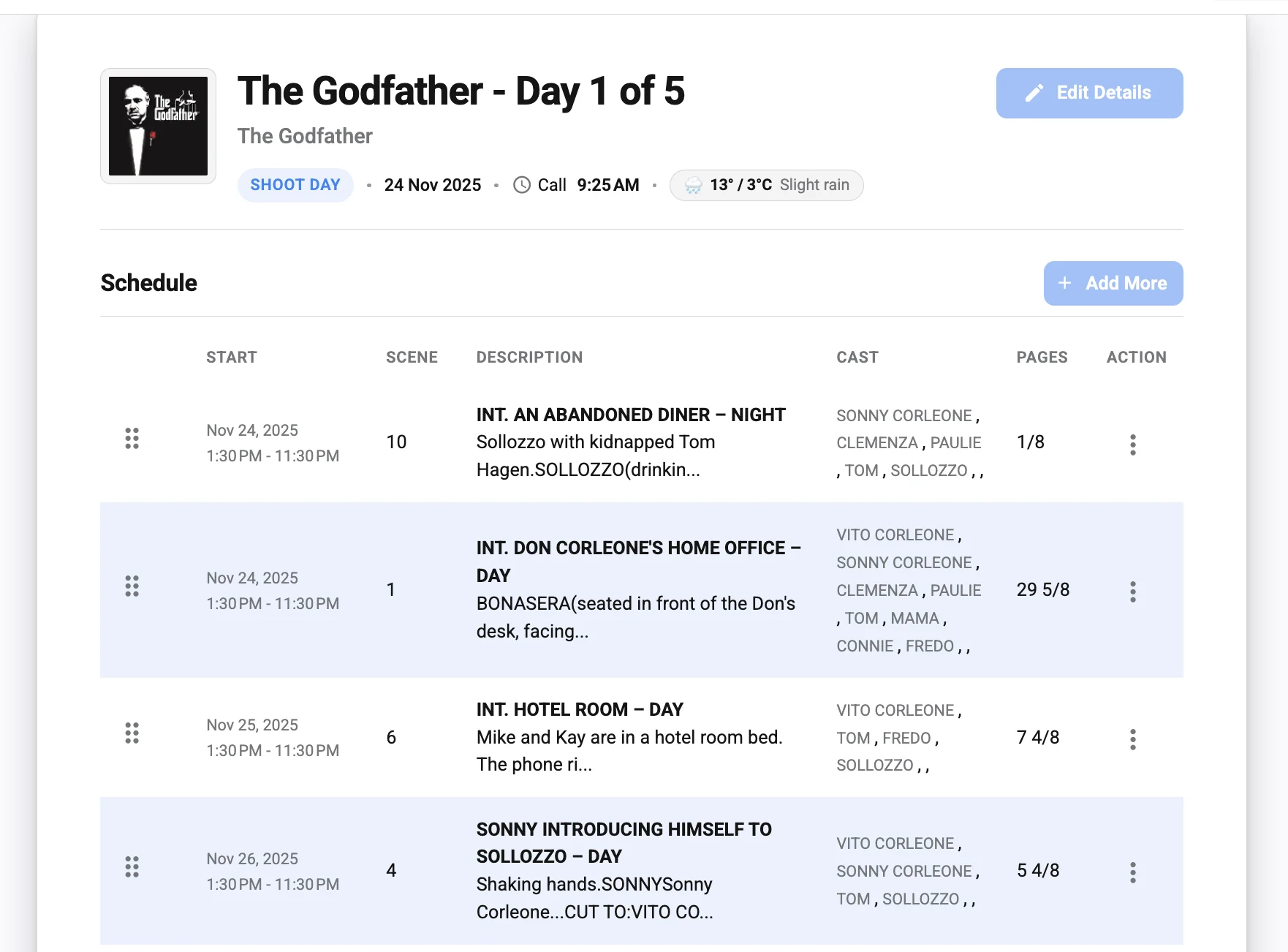
- Schedule for the day: Show scenes, set descriptions, page count or estimated workload, and planned order of filming.
- Cast call times: Include individual call times, pickup times if needed, makeup/wardrobe timing, and status notes.
- Department notes: Add relevant instructions for camera, grip, electric, sound, wardrobe, art, props, makeup, catering, transport, and locations.
- Safety and special requirements: Note stunts, intimacy work, animals, weapons, drones, minors, weather concerns, or restricted areas.
The best call sheets are detailed without becoming cluttered. If a note helps someone arrive prepared, include it. If it distracts from the day’s priorities, move it to a department memo.
A practical call sheet format for filmmakers
A clear call sheet format is easy to scan under pressure. People often check it on phones while traveling, loading gear, or standing on set, so hierarchy matters. Put the most urgent information near the top and keep supporting details organized below.
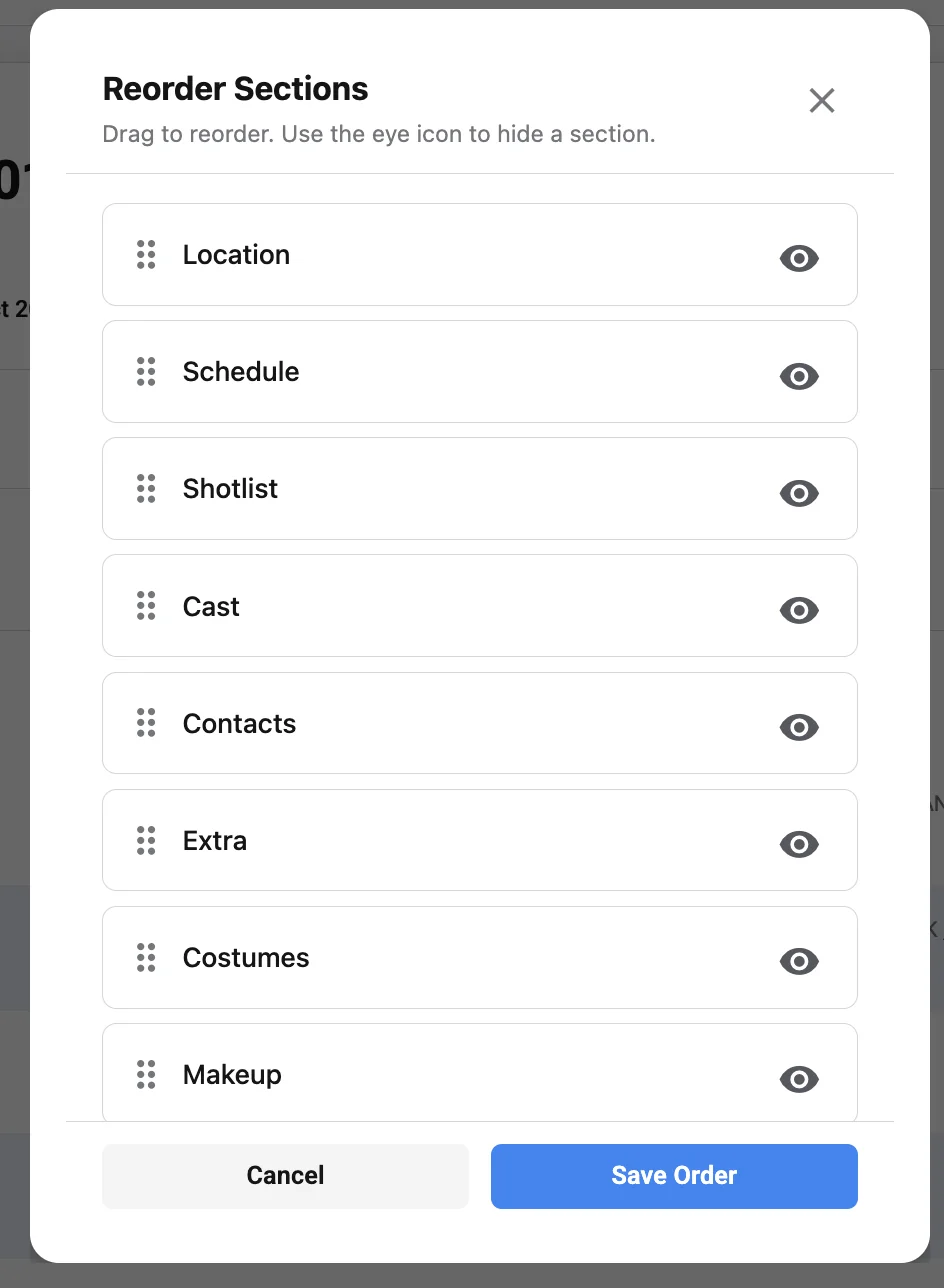
A practical layout can follow this order:
- Header: Project title, shoot date, production day, weather, sunrise, sunset, and general crew call.
- Top contacts: The people who must be reachable if someone is lost, delayed, or facing an urgent issue.
- Location block: Main location, parking, crew entrance, basecamp, nearest hospital if applicable, and map notes.
- Daily schedule: Scene numbers, descriptions, cast involved, estimated pages, set location, and timing.
- Cast grid: Character, actor, status, pickup, call, makeup, wardrobe, set time, and wrap if known.
- Crew list: Names, roles, phone numbers or approved contact details, organized by department.
- Department and safety notes: Specific reminders that affect preparation or compliance.
- Advance schedule: A short preview of the next shoot day, if confirmed.
This structure works because it mirrors how production teams use the document. First they confirm when and where to arrive. Then they check what is being filmed. Finally, they review department-specific instructions.
How do you create a call sheet from a shooting schedule?
You create a call sheet by pulling the next day’s scenes from the shooting schedule, confirming logistics with each department, assigning call times, and formatting the information into a clear daily document. The shooting schedule provides the framework, but the call sheet adds the operational details that make the day executable. Before sending it, the assistant director or production team should verify every major detail with the director, producer, locations, transportation, and department heads.
Start with the scenes planned for the next shoot day. Confirm the scene numbers, set descriptions, cast required, and any special elements from the script breakdown. Then build backward from the first shot: consider setup time, travel, makeup, wardrobe, lighting, rehearsals, background processing, and meal timing.
A simple workflow looks like this:
- Review the approved shooting schedule and note the next day’s scenes.
- Confirm location access, parking, holding, permits, and any restrictions.
- Check cast availability, pickup needs, and makeup or wardrobe requirements.
- Ask department heads for notes that affect timing, gear, safety, or setup.
- Set individual call times based on when each person is actually needed.
- Add weather, daylight, meal timing, and company move details.
- Proofread names, phone numbers, addresses, scene numbers, and dates.
- Send the final version with enough notice for the team to prepare.
Do not treat the call sheet as a formality. It should reflect the actual plan, not just a copied version of yesterday’s document with new scene numbers.
Common mistakes to avoid
Even experienced production teams can create confusion when a call sheet is rushed. The most common problems are not dramatic; they are small errors that affect arrival times, communication, or safety. A wrong address, missing parking note, outdated scene order, or unclear cast call can slow down the entire morning.
Avoid these call sheet mistakes:
- Using vague locations: “Warehouse exterior” is not enough. Provide the full address and access instructions.
- Sending too late: Cast and crew need time to plan travel, rest, childcare, pickups, or gear prep.
- Overloading the page: Too much unprioritized text makes key details harder to find.
- Forgetting department approvals: Locations, transportation, makeup, wardrobe, and safety notes should be checked before distribution.
- Ignoring version control: If anything changes, label the revision clearly so no one follows an outdated document.
- Copying old notes: Remove yesterday’s weather, scenes, meal times, and safety reminders if they no longer apply.
The goal is not to make the document look impressive. The goal is to make the day easier to run.
Call sheet examples and template options
Looking at call sheet examples can help new filmmakers understand how different productions organize information. A short film may only need a compact one-page format, while a larger feature or series may require multiple pages with detailed cast grids, crew lists, movement orders, and department notes. Commercial productions may place extra emphasis on client contacts, agency notes, product handling, or location restrictions.
A call sheet template is useful because it gives the team a consistent structure. However, templates should be adjusted to the production rather than followed blindly. If your shoot involves minors, animals, weapons, drones, water work, night exteriors, or complex travel, the template should make those details impossible to miss.
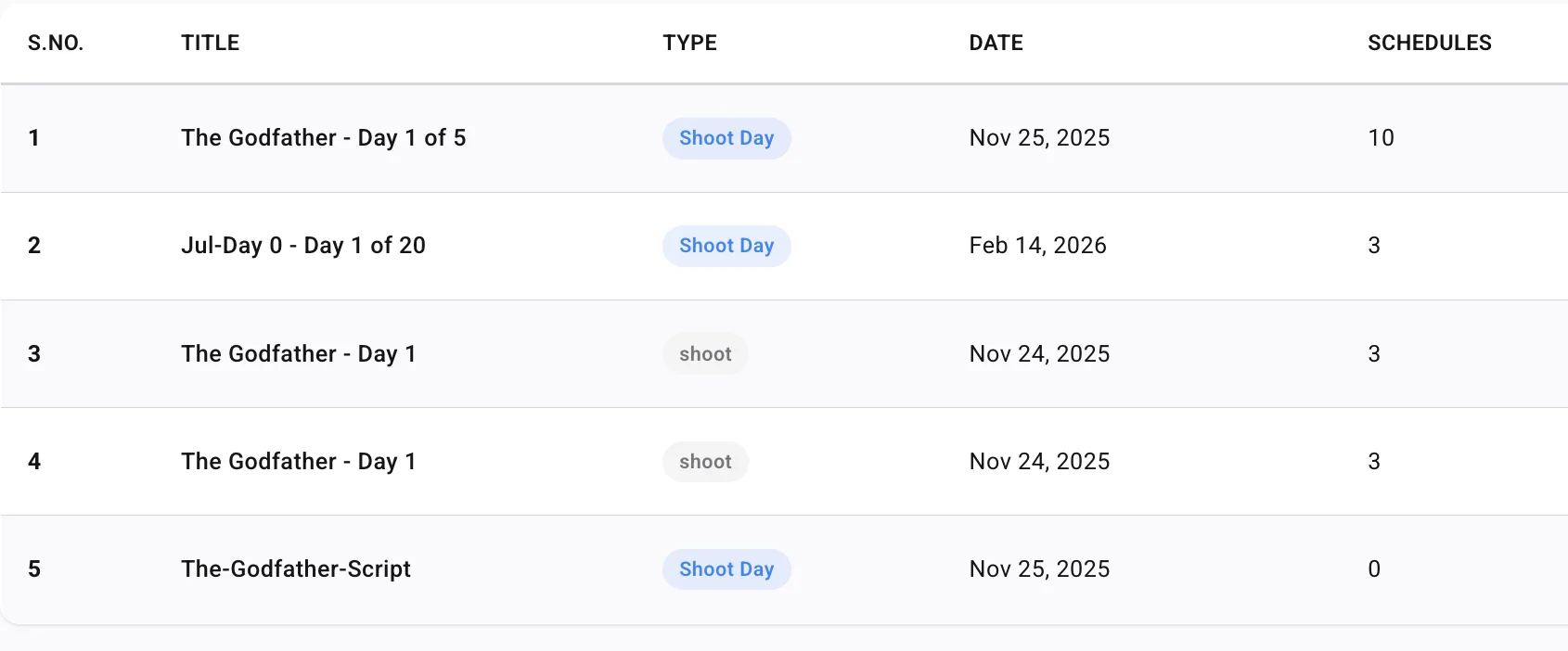
Digital tools can also reduce errors and save time. For example, Studiovity call sheet software can help production teams create and manage call sheets in a more organized workflow. Software is not a substitute for good planning, but it can make updates, formatting, and distribution more efficient.
Best practices for distributing film call sheets
Once the call sheet is approved, distribution should be controlled and consistent. Send it through the agreed production channel, whether that is email, production management software, or another approved system. Make sure recipients know which version is current and whom to contact if they spot an error.
Before distribution, use this quick checklist:
- Is the shoot date correct?
- Are all call times final and clearly labeled?
- Are addresses, parking notes, and access instructions complete?
- Are scene numbers and descriptions aligned with the shooting schedule?
- Are cast, background, and department needs accurately listed?
- Are safety notes visible and specific?
- Has the producer, director, or first AD approved the final version?
After sending, avoid making casual side updates unless absolutely necessary. If a meaningful detail changes, issue a revised call sheet so the entire team receives the same information.
Final takeaway
A call sheet is one of the most important communication tools in production because it turns planning into action. For filmmakers and production teams, a well-built movie call sheet reduces uncertainty, supports punctuality, and helps every department prepare for the day ahead.
If you are building your first call sheet, keep the format clear, verify every detail, and focus on what the team needs to know before arriving on set. That is the practical value behind What Is a Call Sheet? A Complete Guide for Filmmakers: a call sheet is not just paperwork; it is the daily operating plan for a professional shoot.