Line producers often treat the schedule and the budget as separate documents that get reconciled on Fridays. Yet most overspend on an indie shoot doesn’t come from a bad budget line. It comes from schedule decisions: an extra company move, an actor held four days to shoot two scenes, a fourteen-hour day built on optimistic page counts. Budget-aware scheduling makes those costs visible while you are still moving strips.
Related video: Master movie budgeting with Studiovity film production software
Hold days are the quiet budget killer
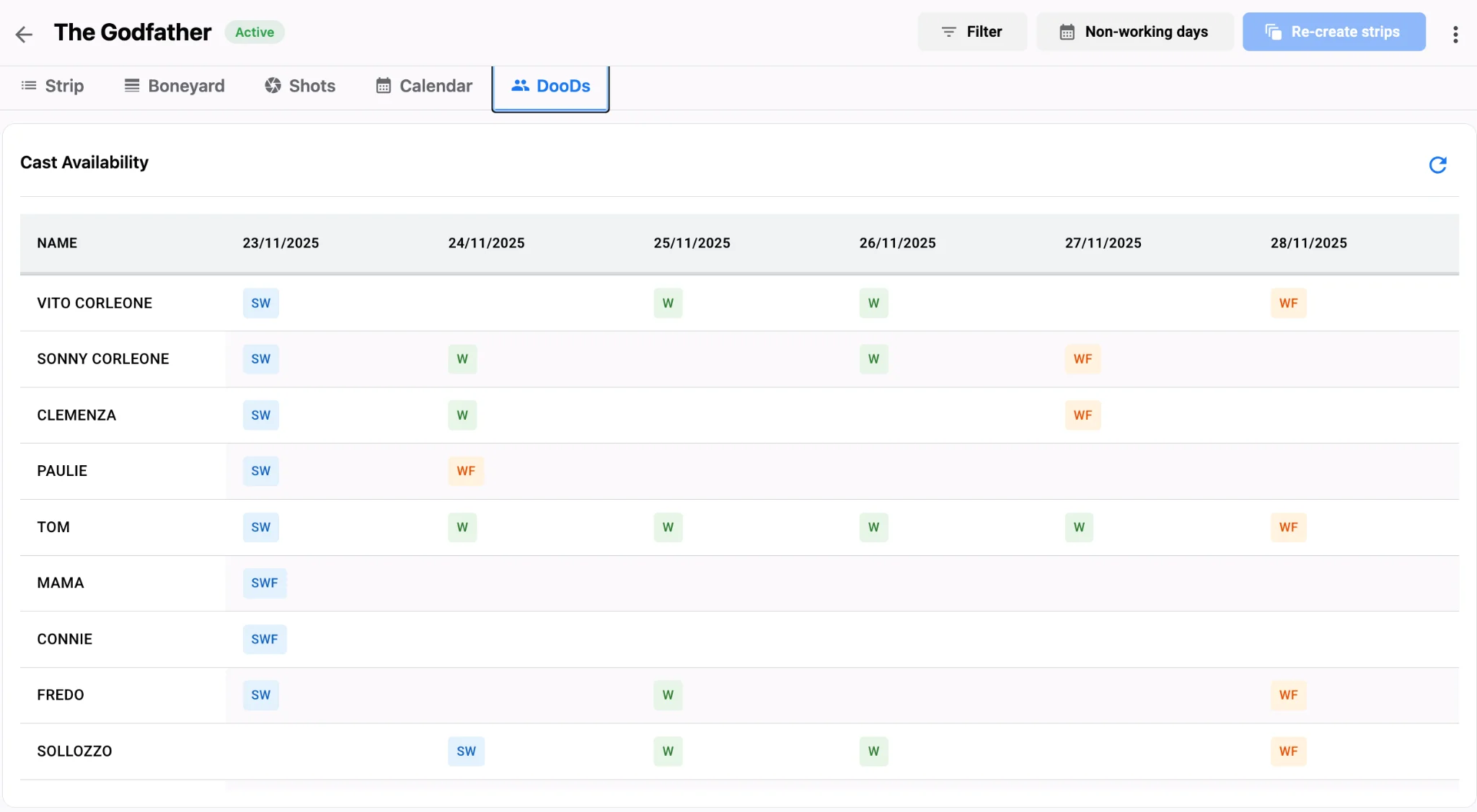
Paid holds add up fast, especially for principals on weekly deals. A Day Out of Days report shows exactly when each performer starts, works, holds, and finishes, and Studiovity generates it straight from the shooting schedule. Review the DOOD after every major re-sort. If an actor shows a work-hold-hold-work pattern, try pulling the second work day forward; closing that gap usually saves more than shaving a page from a heavy day. For a deeper look at reading these reports, see DOOD reports, one-liners and the boneyard.
Group by location and cast, then check the cost
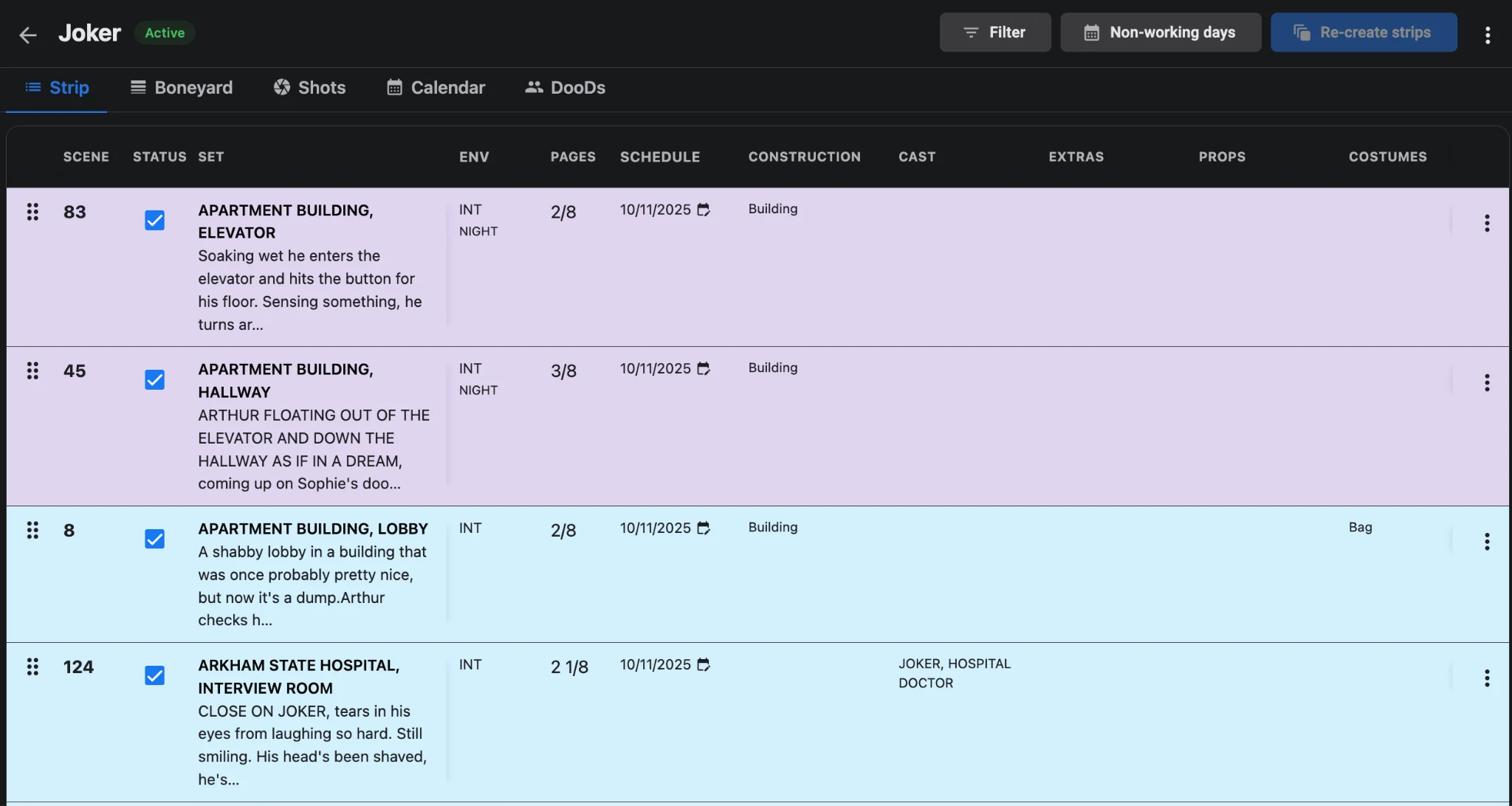
The AI in Studiovity’s video, TV and film scheduling software sorts scenes by location, cast availability, and production resources. Fewer company moves mean fewer paid hours in transit and less truck time. Treat the AI draft as your baseline, then adjust for cost drivers an algorithm can’t see, like a location fee that escalates after 6 PM or gear that is cheaper on a weekly rate. Flag any day that adds a company move or an extra cast hold, and re-cost it before the board is published.
Don’t overcommit the day
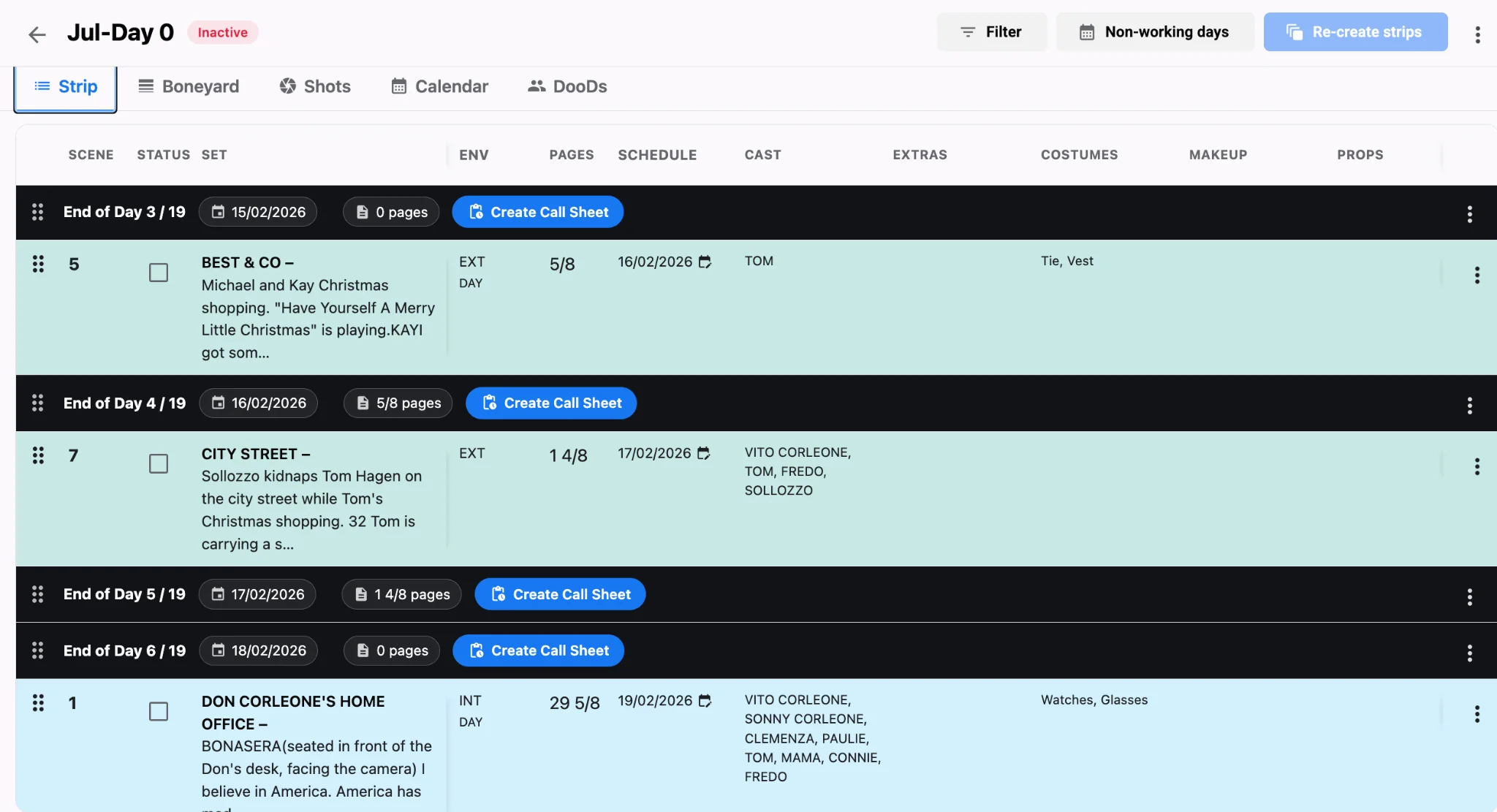
Overtime usually starts at the planning desk. When shots are linked to the stripboard with duration estimates, you can see when a day holds more setups than it can realistically deliver. That is the moment to split a scene or park it in the boneyard, not hour eleven on set—the boneyard keeps scene data intact, so it comes back easily when a lighter day opens up. Check end-of-day page totals against pages in eighths for sizing a realistic shoot day, and protect long weeks with the habits in night shoots and turnaround rules. Silent optimism on page counts is what turns a lean board into a Friday variance spike.
Keep the budget in the same room
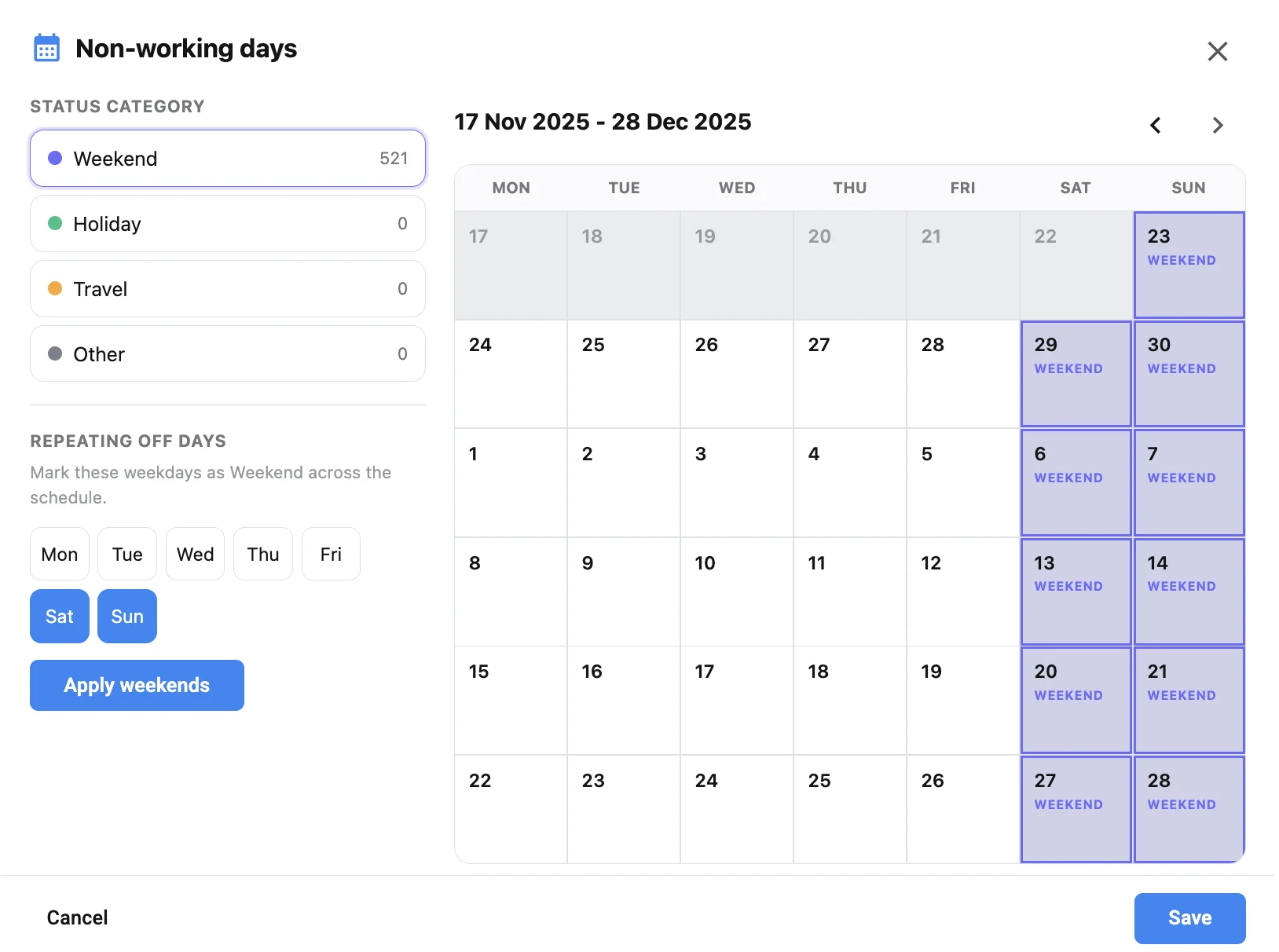
Studiovity’s movie budgeting software lives in the same platform: a top sheet, a detailed sheet with actual-versus-estimate variance, automatic fringes for payroll taxes and union fees, global variables, and multi-currency support. After each schedule draft, update labor and location lines and compare variance before publishing; reopen the stripboard whenever labor variance jumps. Mark weekends, holidays, and travel as non-working days so the calendar shows the real paid days behind weekly deals. On set, staggered individual call times from the call sheet software stop you paying people to wait for their first shot. When overtime is unavoidable, make it an explicit strip-order choice and book the cost the same afternoon. For more indie-scale cost control, read optimized film budgeting tips for independent filmmakers.