
Overpacked daybreaks rarely fail because the AD cannot count scenes. They fail because page counts were treated as decoration. A strip that says 2 4/8 pages is not the same workday as four eighth-page pickups, and lighting, makeup, and company moves do not care how pretty the board looks. Sizing the day from pages in eighths is still the most reliable gut check before you lock Day 1.
Related video: Studiovity movie scheduling: plan your shoot like a pro
Read eighths before you chase scene count
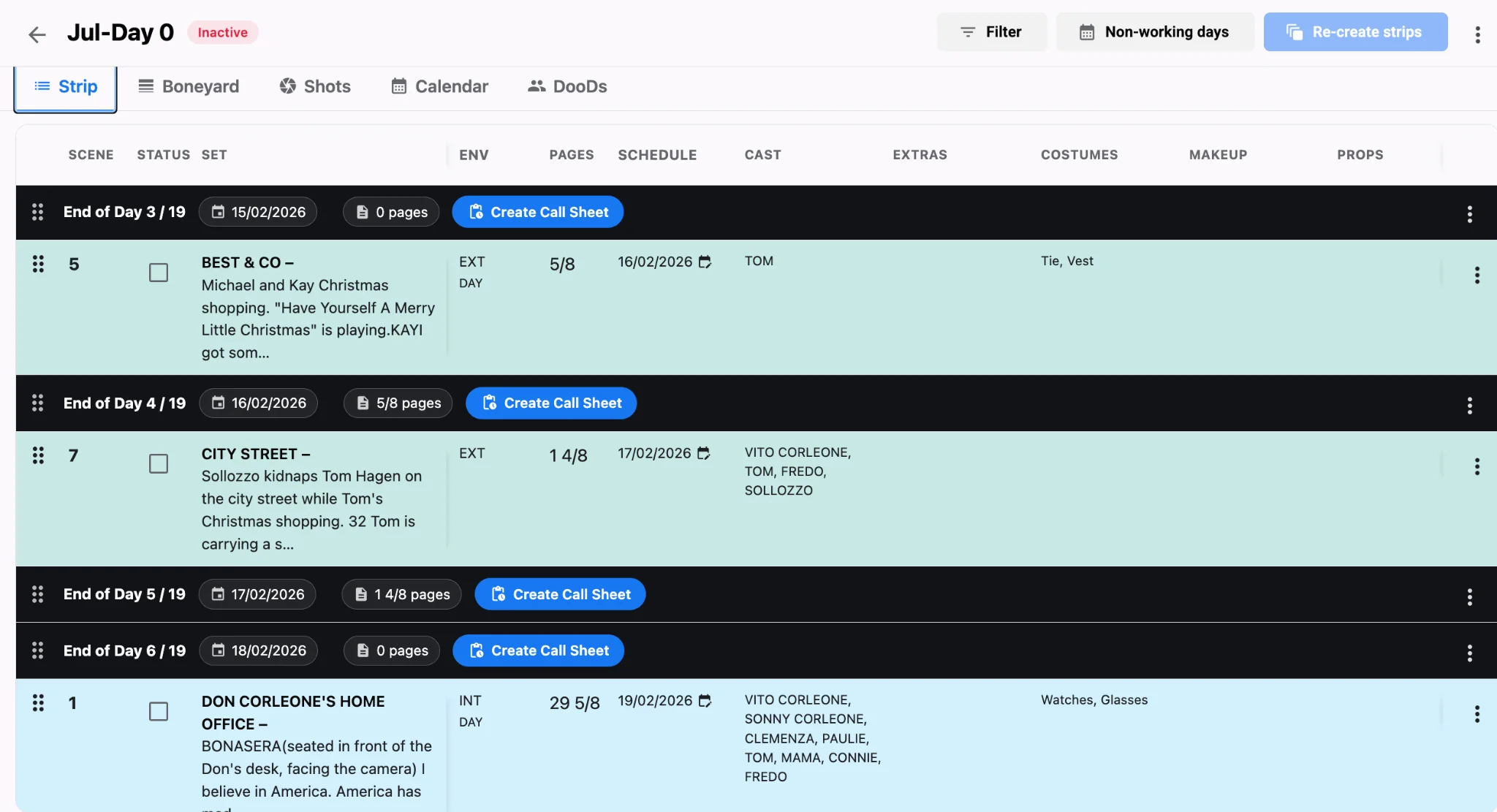
Scene count flatters ambitious boards. Eight short interiors can be lighter than two heavy dialogue exteriors. On a visual stripboard, every strip carries pages in eighths beside set and day/night. Add those eighths per daybreak and ask whether the company has ever finished that load at that location. In Studiovity’s film scheduling software, those page fields travel with the strip when you reorder, so the day total updates as you shuffle, not after someone rebuilds a spreadsheet.
Cap the day, then defend the cap
Agree a page-per-day ceiling with the UPM and director before board lock. Often that is five to six pages for dialogue-heavy drama, more for coverage-light action, and less for VFX or child-actor days. When a draft daybreak blows past the cap, cut or move strips. Do not hope for a miracle setup. Export a one-liner or full shooting schedule so producers see the page math the same way the AD does. The walkthrough how to create a professional shooting schedule covers building those daybreaks with honest totals.
Pair page load with shot complexity
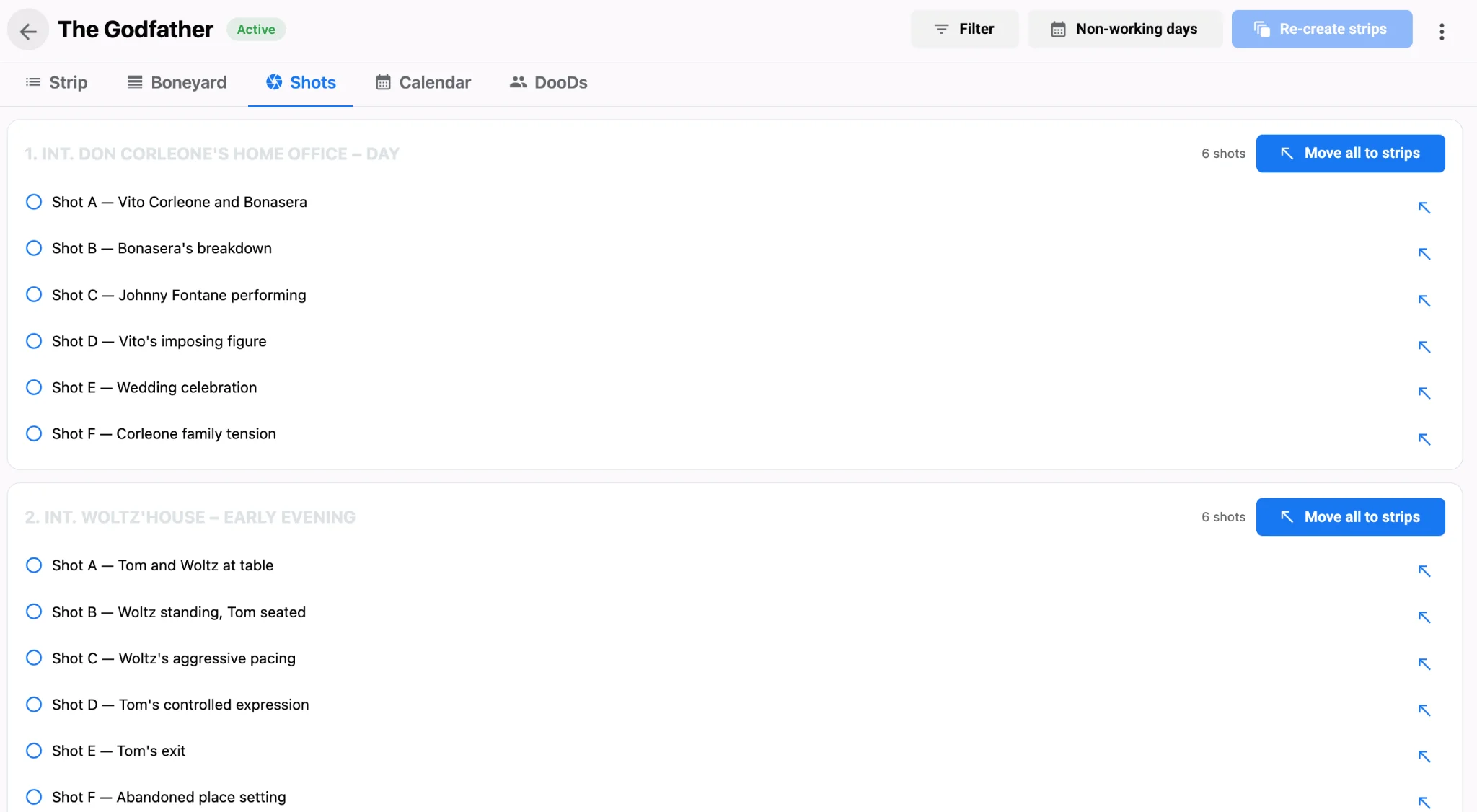
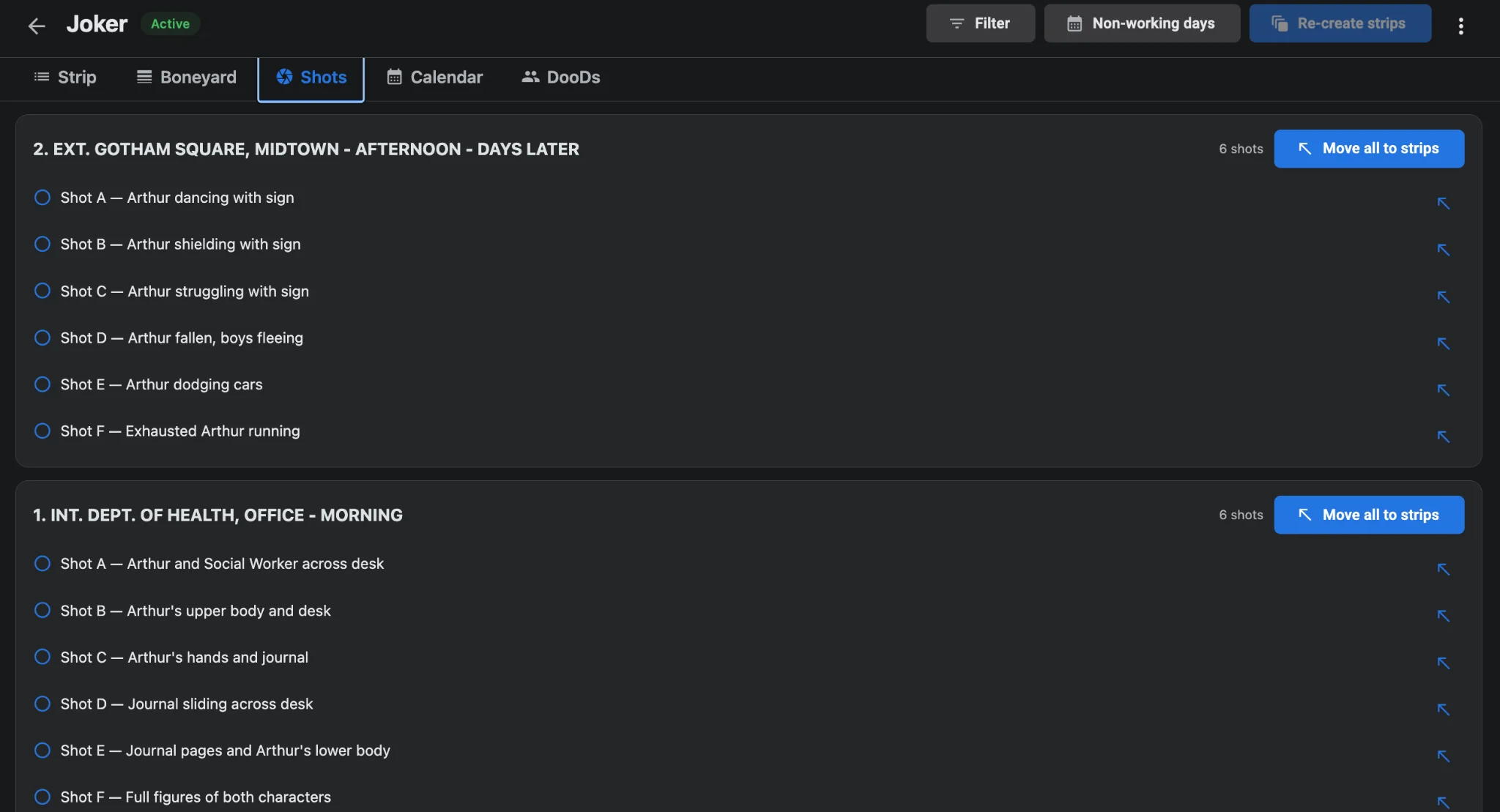
Pages alone miss the day that is light on script but heavy on camera. After the eighths look sane, open the shot list for that block and check whether six pages hide twenty complicated setups. Syncing shots to strips, as in shot list sync with your shooting schedule, keeps page math honest when storyboards grow mid-prep.
Protect call sheets from fantasy days
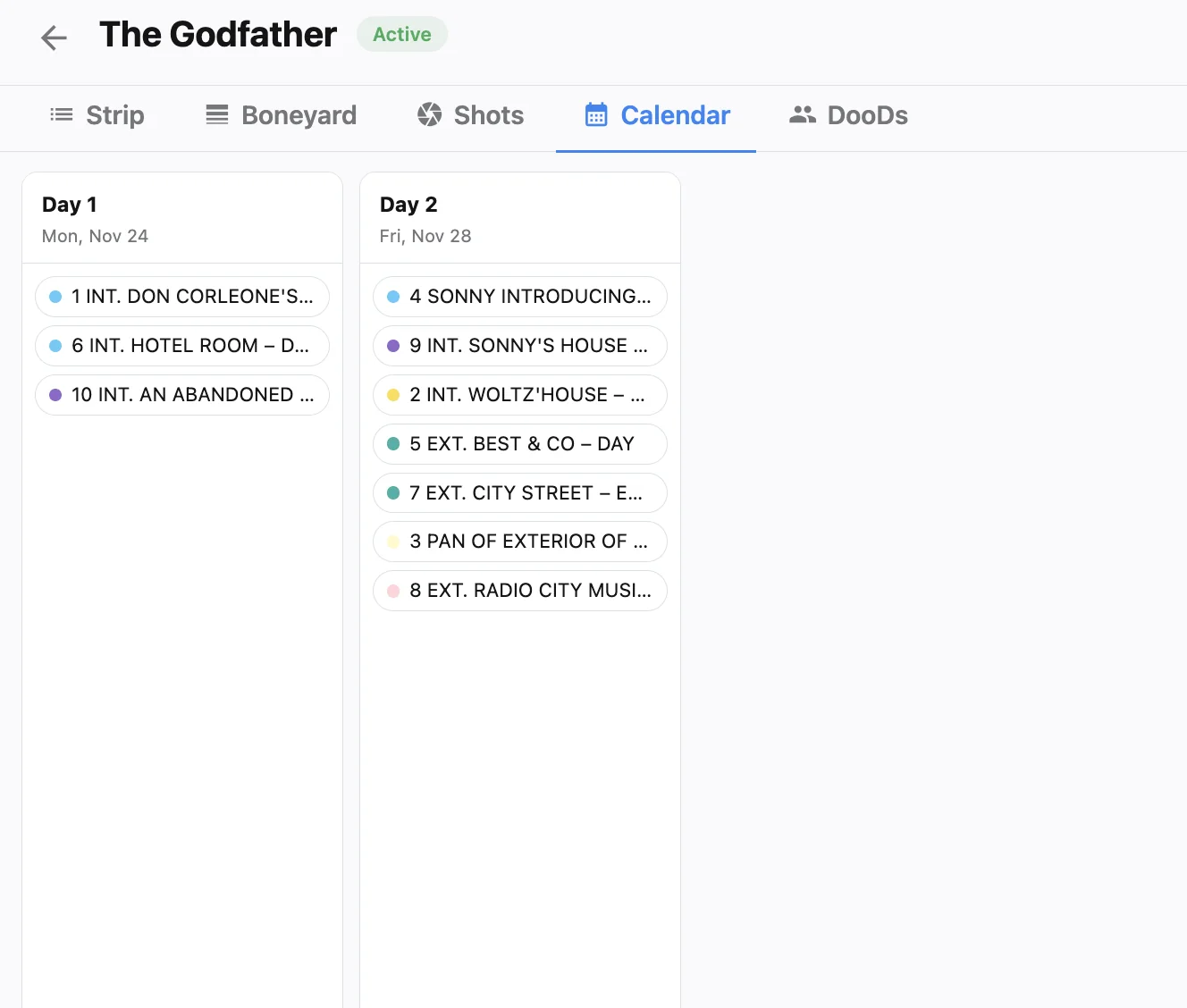
Once the board respects eighths, the call sheet should too. Build from the locked daybreak with call sheet software so cast call times and estimated wrap match a day the crew can finish. A sheet that promises fourteen hours on an eight-page day trains nobody to trust the next one.
Eighths checklist before lock
- Sum pages in eighths per daybreak and reject days above the agreed ceiling.
- Flag any single strip over about 2 pages for director timing notes.
- Recheck totals after every company-move reshape.
- Push the revised film schedule and a matching call sheet the same afternoon.
Realistic days are a page habit, not a pep talk. Keep eighths visible on every strip, defend the daily cap, and let AI film scheduling carry those counts through every reorder. For stripping scenes onto a board the crew can actually shoot, start with creating shooting schedule stripboards.