
Rules of Composition in Film: 7 Techniques to Show Deeper Meaning

Every memorable film tells a story through more than dialogue and action. Emotions, relationships, and hidden themes are often revealed by the way a shot looks before any character speaks. That is why understanding the rules of composition in film is considered essential by top directors. Great filmmakers arrange every element inside the frame. This guides the audience’s attention and communicates deeper meaning.


Whether you direct a feature film, create short videos, or shoot documentaries, applying the rules of composition in film will instantly improve your visual storytelling.

What Is Composition in Film?

Composition refers to how subjects, objects, lighting, colors, and empty space appear within a camera frame. Every decision influences how viewers interpret a scene. Strong composition creates balance. It directs focus and adds emotional impact.


Composition also helps audiences understand character relationships without obvious explanations. Instead of telling viewers how someone feels, filmmakers show those emotions through carefully arranged visuals.

Why Composition Matters

A well-composed frame keeps viewers engaged. It makes every shot feel intentional. Strong composition supports the script by reinforcing the story’s emotional tone.


For example, a lonely character standing in a large empty landscape instantly feels isolated. Likewise, two characters framed closely together suggest trust or intimacy. Composition is one of the most powerful storytelling tools available to filmmakers.

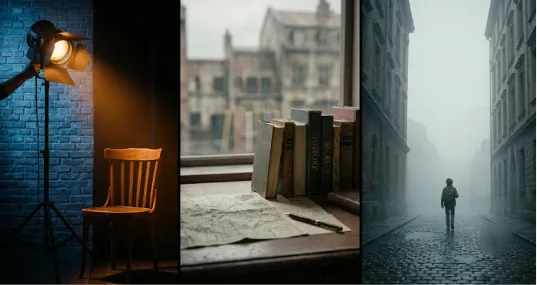
A vertical, three-panel triptych photograph showing distinct cinematic scenes. From left: a vintage spotlight illuminates an empty wooden chair against a blue brick wall; center, a cluster of antique books, one titled 'HISTORY', rest near a map on a desk; right, a solitary figure with a backpack walks down a dark, foggy cobblestone street flanked by old buildings. The overall title is displayed as a watermark on the center panel.

Essential Rules of Composition

Rule of Thirds

The Rule of Thirds divides the frame into nine equal sections using two horizontal and two vertical lines. Instead of placing the subject in the dead center, filmmakers position important elements along these lines or intersections.


The frame feels balanced while naturally drawing the audience’s eyes toward the subject. Centered framing has its place. However, the Rule of Thirds creates a more dynamic image in many situations.

Leading Lines

Roads, hallways, fences, rivers, and architectural elements naturally guide the viewer’s eyes. These leading lines direct attention toward the most important part of the frame. They create depth and movement. Scenes feel more immersive and visually interesting.

Framing Within the Frame

Windows, doorways, mirrors, arches, or tree branches can surround a subject inside the main frame. This technique isolates characters while adding visual layers.


The audience focuses on the character without distraction. The surrounding frame often symbols confinement, protection, or emotional distance.

Depth and Layers

Professional cinematography rarely looks flat. Instead, filmmakers place elements in the foreground, middle ground, and background. Every shot gains dimension. Layered composition makes environments feel realistic and cinematic.

Symmetry and Balance

Perfect symmetry creates order and control. Directors use symmetrical shots during calm or highly structured moments. An unbalanced frame creates tension or uncertainty. Changing visual balance can reflect a character’s emotional state.

Negative Space

Negative space refers to the empty area surrounding the subject. Many beginners try to fill every part of the frame. Yet, empty space often tells a stronger story.


Placing a small character against a vast background highlights loneliness, vulnerability, or freedom. The audience connects emotionally without needing additional dialogue.

Using Composition to Show Deeper Meaning

Composition becomes truly powerful when every visual choice supports the story. Filmmakers study the rules of composition in film to master this visual language.


Placing a character behind bars, fences, or window frames suggests emotional imprisonment. Separating two characters with large empty space communicates conflict before they exchange words. Low framing can make a character appear vulnerable. Dominant positioning within the frame signals confidence or authority.


Color, lighting, and composition work together. Bright open spaces create hope. Conversely, dark crowded compositions increase suspense or fear. Every visual element contributes to the message.

Common Composition Mistakes

Many filmmakers understand the basics but overlook their purpose. Reviewing the rules of composition in film helps avoid these common mistakes:


  • Centering every subject without a storytelling reason.

  • Ignoring distracting objects in the background.

  • Filling every part of the frame with unnecessary details.

  • Forgetting depth and shooting everything on a single plane.

  • Following every composition rule without considering the scene’s emotion.


Rules exist to strengthen storytelling, not restrict creativity.

Planning Better Composition During Pre-Production

Strong composition starts long before filming begins. Directors and cinematographers plan shots using storyboards, shot lists, and script breakdowns. They use the rules of composition in film to design the visual blueprint of the movie.


Pre-production tools help visualize camera angles, scene blocking, and framing before arriving on set. Production moves faster while maintaining a consistent visual style.


Modern platforms like Studiovity simplify this process. The platform combines AI-powered storyboarding, shot lists, screenplay management, and production planning into one collaborative workspace. Filmmakers can easily practice the rules of composition in film before the cameras start rolling.

Final Thoughts

Composition transforms ordinary shots into unforgettable storytelling moments. Every frame should support the emotions, themes, and relationships within the story. Mastering the rules of composition in film takes practice. However, understanding principles like the Rule of Thirds, leading lines, symmetry, negative space, and depth provides a strong creative foundation.


Use these rules with purpose. The strongest compositions do more than create beautiful images. They reveal meaning without saying a word. When every frame serves the story, audiences experience the film on a deeper emotional level.

Advanced Screenwriting Software and
Film pre-production tool

Studiovity is a new standard for Screenwriting, Storyboard, Ai breakdown and Scheduling. 

More to explore​

Subscribe To Our Newsletter

Get updates and learn from the best

Story Writing Competition Registration

Get important information like submission link, registration and submission details and more on WhatsApp!