
Have you ever wondered how a film crew knows exactly how many vintage cars or coffee cups to bring to set? Behind every movie masterpiece lies a massive logistical puzzle called film pre-production, the planning phase before cameras ever roll. AI Script Breakdown Explained reveals how filmmakers now simplify this process with smart automation.
Turning a written story into reality requires a “script breakdown,” serving as the ultimate grocery list for filmmakers. Just as you read a recipe to know what ingredients to buy, a production team must dissect the pages to identify every prop, actor, and location—industry “elements”—needed to build an accurate budget.
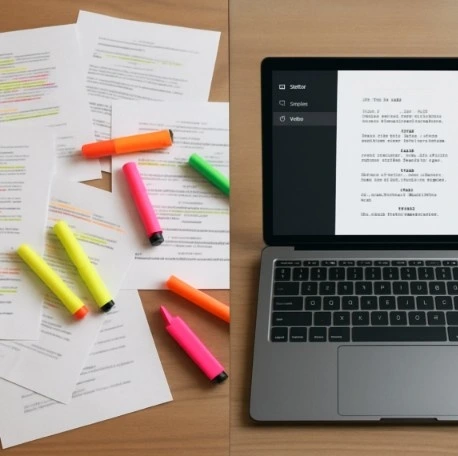
According to seasoned producers, this manual planning process hides massive labor costs. Traditionally, assistants spent weeks reading pages with colored markers. Miss one specific briefcase in a heist scene, and the entire multi-million-dollar production grinds to an expensive halt.
Now, an AI script breakdown acts as a tireless digital highlighter that handles this busywork instantly. Through automated screenplay element tagging, this smart assistant scans the text and categorizes the lists, delivering a 90% time reduction that turns days of tedious paperwork into minutes of effortless planning.
The Digital Highlighter: How AI 'Reads' Your Script to Find Every Prop and Explosion
Remember the old way of planning a movie? An assistant spent weeks reading a script with colored markers, circling every item needed for a shoot. Now, imagine a librarian who reads a hundred pages in a second and instantly applies a digital highlighter to every detail. That is the essence of how to use AI for movie script breakdowns.
Instead of magic, the software relies on pattern recognition to understand your movie’s blueprint. It looks at scene headings—known as sluglines (like INT. COFFEE SHOP – DAY)—to figure out exactly where and when the camera rolls. From there, natural language processing for film production allows the computer to tell the difference between a character named “Rose” and a red rose sitting on a table.
Once the context is clear, the system automatically performs element tagging to categorize essential screenplay elements. This smart scanning acts like a hyper-efficient assistant and instantly generates a precise breakdown of five critical categories:
- Characters (the actors needed on set)
- Props (like a coffee cup or laser blaster)
- Costumes (a specific torn jacket)
- Vehicles (a vintage getaway car)
- Locations (the physical diner or spaceship)
Miss a specific object during manual breakdown, and a whole film set could stall for hours. By letting automation handle this busywork, creators save precious time and quickly build a production grocery list without the headache of manual tagging. AI Script Breakdown Explained also shows why faster tagging improves scheduling from day one.
Building Your Production 'Grocery List' Without the Headache of Manual Tagging
Think of your favorite heist movie as a massive cooking project. Before cameras roll, crews must solve a logistical puzzle by securing every required ingredient. AI software for prop and location tracking steps in here, transforming chaotic planning into an organized shopping trip.
The traditional method of compiling this production grocery list is famously exhausting. A human assistant might spend 72 hours squinting at spreadsheets and manually typing out every required getaway car or bank vault. Today, modern film production tools read that same script and generate a comprehensive, categorized report in just three minutes.
Stripping away manual data entry fatigue changes everything for the creative team. Instead of drowning in paperwork, filmmakers receive instant reports detailing exactly what each moment needs. This rapid turnaround acts as a catalyst and streamlines scene-by-scene scheduling workflows so directors can focus on making art rather than managing administrative chores.
Even the most detail-oriented assistant can accidentally overlook a crucial coffee cup or background extra when reading hundreds of pages. That single missed item can grind an expensive shoot to a sudden halt. Fortunately, removing this manual guesswork is just the first step in saving your budget from human error. AI Script Breakdown Explained demonstrates exactly why AI is becoming a line producer’s best friend.
Saving Your Budget From Human Error: Why AI is a Line Producer’s Best Friend
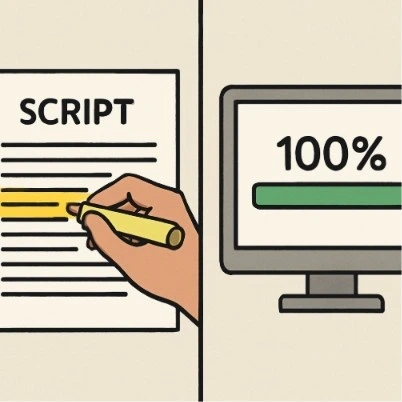
Every minute on a movie set costs a fortune, making the line producer—the film’s financial manager—despise surprises. If a required item is missing, cameras stop filming. This cost of delay means paying a massive crew to stand idle. Reducing manual errors in line producing is ultimately about saving thousands of dollars an hour.
Tired assistants naturally miss tiny details during marathon reading sessions. Fortunately, maximizing film budget efficiency with AI provides an unblinking safety net. By cross-referencing and instantly checking scene text against master schedules, smart software prevents common slip-ups:
- Hidden Props: A vintage watch mentioned only once is easily overlooked by human eyes but instantly highlighted by AI.
- Forgotten Extras: A script simply notes a busy restaurant, and AI automatically flags the need to hire background actors.
- Continuity Flaws: AI remembers a jacket was torn in scene four and reliably tracks that damaged item for scene ten.
Catching these exact blunders early is the secret to improving film production speed. Instead of halting an expensive shoot while someone desperately rushes out to buy a forgotten prop, the entire crew stays safely on schedule.
This digital safety net guarantees every physical object arrives exactly when needed. Yet, the smart software goes far beyond just tracking inanimate props and seamlessly prepares to tackle character reports and costume plots while generating weeks of paperwork in three minutes.
Character Reports and Costume Plots: Generating Weeks of Paperwork in Three Minutes
Moving beyond props, the hardest logistical puzzle in filmmaking is organizing the human beings. To know exactly which days an actor must be on set, producers rely on a character report. This vital document filters a script by character presence for actor scheduling. Traditionally, an assistant combed through hundreds of pages just to tally one actor’s total scenes.
Wardrobe departments face similar exhaustion while building a costume plot, which tracks what actors wear throughout the story. Creative design—such as sketching a beautiful dress—differs entirely from logistical tracking, which simply ensures that dress is ready for Tuesday’s shoot. AI now instantly reads the script to generate automated costume plots for every character.
Relying on character reporting and costume plot automation compresses weeks of administrative headaches into roughly three minutes. Modern AI creative tools eliminate tedious data entry and empower wardrobe heads to dedicate their energy to actual fabric selection rather than highlighting scene numbers.
This leap in efficiency changes everything for smaller projects and makes digital pre-production tools for independent directors a tremendous equalizer. Since lower-budget creators can finally access studio-level organization, the final hurdle is simply choosing the right AI toolkit. AI Script Breakdown Explained highlights how independent filmmakers can finally replace spreadsheets with smart software.
Choosing the Right AI Toolkit: When to Swap Spreadsheets for Smart Software
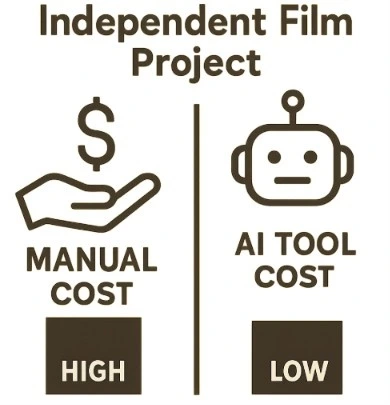
Before adopting new technology, every producer asks: are AI script breakdown tools worth it? Because you already understand production budgeting, calculating your return on investment (ROI)—the value gained versus the money spent—is easy. Hiring someone to manually highlight a 120-page script costs weeks of labor. Conversely, smart software often costs less than a single day’s wages and quickly pays for itself by letting human crews focus on creative choices instead of making grocery lists.
However, financial savings only matter if the new tech works smoothly with old habits. Hollywood relies on established programs, meaning legacy software integration is vital. Smoothly integrating AI with Movie Magic Scheduling—the industry-standard digital calendar—ensures your modern lists flow into the traditional formats crews already know. Good software effortlessly connects smart automation with reliable cloud-based production management for film crews.
To ensure your chosen platform actually simplifies your workflow, use this essential selection checklist:
- Export options: Does it send data directly to standard industry programs?
- Tagging accuracy: Can the digital highlighter easily distinguish a black car from a black cat?
- Collaboration features: Can the whole team safely review files together online?
With the right software secured, you are ready to implement these tools into your workflow and accelerate your filmmaking process. AI Script Breakdown Explained makes it easier to understand which features matter most before investing in a platform.
Taking Your First Step into AI Film Pre-Production: A Blueprint for Faster Filmmaking
You now have the power to turn a massive logistical puzzle into a quick digital sweep. By viewing technology as a tireless assistant, you instantly shift your focus from tedious data entry to pure creative decision-making. Every hour saved on highlighting paper is an hour gained for perfecting your story’s vision and unleashing human creativity.
Ready to step into the future of AI film pre-production? You don’t need a massive Hollywood budget to start working smarter today. Follow this practical blueprint to build your first automated breakdown:
- Upload your script: Feed your standard document into a dedicated AI breakdown tool.
- Review AI tags: Let the digital highlighter catch the props and cast, then easily adjust anything it missed.
- Export to schedule: Send your automatically organized lists straight to your production calendar.
As technology evolves, reducing manual errors will just be the starting line for what is possible behind the scenes. Start with a short scene to see immediate results, and watch how quickly you reclaim your day. Hand your first script over to an AI assistant today, and get back to the true art of making movies!
Transform Your Workflow with Studiovity
Modern filmmaking moves fast, and staying organized during pre-production is more important than ever. Studiovity helps filmmakers simplify every stage of production with AI-powered tools for screenplay writing, AI script breakdowns, budgeting, scheduling, shot lists, storyboarding, call sheets, and team collaboration. Instead of spending days managing spreadsheets and manual paperwork, creators can automate repetitive tasks, reduce costly production errors, and focus more on storytelling. Whether you are producing a short film, commercial, web series, or feature film, Studiovity gives your crew a smarter and faster way to manage film pre-production from anywhere.