
If a film set functions like a private city, the call sheet serves as the only map that matters. When asking What is a Call Sheet and How Do You Read One, the answer becomes clear through practice. To the untrained eye, this document looks like a confusing grid of tiny fonts. However, for professionals, it drives the difference between a smooth shoot and chaos. It answers three key questions: where to go, when to start, and what to film.
Think of this document as a high-stakes travel itinerary. Just as a boarding pass guides you through an airport, the call sheet aligns hundreds of people toward one goal. Producers often describe it as the brain of production because it turns a director’s vision into clear logistics.
For example, in a “Superhero Bank Robbery” shoot, actors go to Basecamp while the lighting crew heads to the set. It defines the General Call, which marks the official start time. It also lists contact details for the Production Office. Without these details, teams arrive at the wrong time or place.
Beyond scheduling, this document protects the crew. It includes weather updates and hospital details. Therefore, it acts as both a plan and a safety tool.

Mastering the Header: Finding Your Call Time and Location Without Panicking
Your alarm must match the correct time, and this is where many beginners struggle. The top section shows the General Call. However, you should never rely only on it. Departments often have Pre-call times, so always check your specific instructions.
Arriving at the wrong location creates delays. So, understand the difference between “Set” and “Basecamp.” Basecamp acts as the central hub. In contrast, the set is the filming location. If you see a “Company Move,” the crew will shift locations during the day.
The header also provides essential context:
- Date & Day of Days track production progress
- General Call Time sets the baseline start
- Weather Forecast helps you prepare properly
- Safety Data lists hospital and emergency contacts
When you scan the header, you ensure you arrive prepared. After that, you can identify who runs the production.
Who Pulls the Strings? Identifying the AD and UPM Roles
Below the header, you will find the key decision-makers. While the Director focuses on creativity, others manage logistics.
The Unit Production Manager (UPM) handles budgets and approvals. Meanwhile, the 1st Assistant Director runs the set and ensures everything stays on schedule. The 2nd Assistant Director prepares the call sheet and coordinates communication.
If issues arise, you contact the 2nd AD or production office. This keeps the workflow smooth.
Here is a quick breakdown:
- UPM manages budget and hiring
- 1st AD controls on-set operations
- 2nd AD prepares schedules and call sheets
- Production Office handles logistics
Understanding this hierarchy helps you communicate effectively.
Cracking the Talent Code: Understanding Cast Numbers and Status Acronyms
The central grid often feels complex. However, once you understand it, everything becomes clear. Instead of names, actors receive numbers. This improves communication and protects privacy.
For example, saying “Talent 1 is ready” is faster than using full names.
Next, you will see status codes:
- SW (Start Work) means the first working day
- W (Work) means a regular workday
- WF (Work Finish) means the final day
- H (Hold) means the actor is not working but remains available
You will also notice Pickup and Call times. Pickup shows when transport arrives. Call shows when the actor must be ready. Mixing these up causes delays.
Now that you understand who is working, you can focus on what gets filmed.
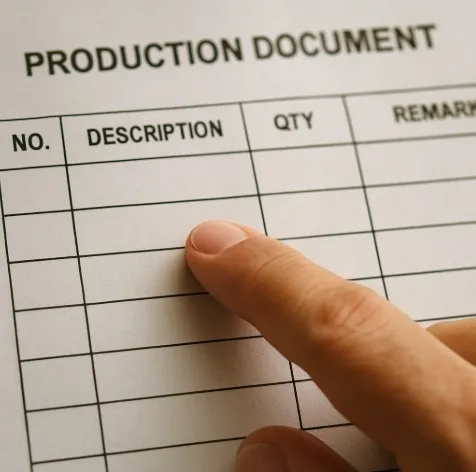
The Shooting Schedule: Why Scene 50 Comes Before Scene 1
Filming rarely follows story order. Instead, the schedule depends on logistics. This keeps production efficient and cost-effective.
Each row includes:
- Scene number
- Slugline (INT/EXT, Day/Night)
- Page length in eighths
For instance, “INT – NIGHT” signals indoor night shooting. A scene marked “2 4/8” takes longer than “3/8.”
When you analyze this section, you can predict the pace of the day. This is essential when learning What is a Call Sheet and How Do You Read One in real scenarios.
The Fine Print That Saves Lives: Finding Hospitals and Safety Protocols
The bottom section focuses on safety. It lists the nearest hospital and emergency contacts. This ensures quick response during emergencies.
Above this, you will find Special Instructions. These include warnings about hazards and timing rules. Productions must follow strict meal schedules to avoid penalties.
By reviewing this section, you stay prepared and aware. Safety always comes first on set.
Planning for Tomorrow: How to Read Department Notes and Advance Calls
Filmmakers always plan ahead. The Advance Schedule shows what happens next.
Check these details:
- Tomorrow’s location
- Tomorrow’s call time
- Rigging crew instructions
This prevents last-minute confusion. Digital call sheets make this even easier by sending updates directly to your phone.
Understanding this section answers another part of What is a Call Sheet and How Do You Read One—it’s not just about today, but also tomorrow.
Your First Day Survival Kit: Turning Call Sheet Knowledge into Professional Success
A call sheet no longer feels confusing once you understand its structure. You now know how to read it with confidence.
Follow this quick checklist:
- Confirm your exact call time
- Save the location in your GPS
- Identify the nearest hospital
- Review the advance schedule
Also, use the “Pocket Fold” method to keep key details visible.
When you apply these steps, you stop feeling lost. Instead, you become a reliable crew member. That is the real answer to What is a Call Sheet and How Do You Read One—it’s a tool that helps you work smarter, stay safe, and succeed on set.
Simplify Your Call Sheets with Studiovity
Understanding What is a Call Sheet and How Do You Read One is only the first step. Managing it efficiently is what truly elevates your production. This is where Studiovity steps in. It transforms complex call sheets into clean, digital workflows that your entire crew can access in real time.
With Studiovity, you can generate professional call sheets in minutes, automate updates, and keep every department aligned without confusion. Instead of chasing last-minute changes, your team stays informed through instant notifications and centralized communication.
If you want to move beyond manual coordination and take full control of your production, Studiovity helps you turn every call sheet into a powerful, time-saving system.