
Imagine hosting a wedding where the caterers, the band, and the guests all arrive whenever they feel like it. Now, apply that potential chaos to a movie set with hundreds of crew members and expensive equipment, and you have a recipe for disaster. To prevent this meltdown, productions rely on a single, vital document known as the call sheet, which functions exactly like a strict daily itinerary to keep the operation synchronized. Understanding What Information Should Be Included in a Film Call Sheet ensures that this coordination never breaks down.
While the main director focuses on the actors’ performances, a crew member called the 1st Assistant Director (1st AD) manages the clock. As a core part of the 1st Assistant Director daily duties, they compile every logistical detail—from the weather forecast to the specific scenes being filmed—into this daily packet. Whether the production is a massive superhero blockbuster or a small student project, the format remains surprisingly universal because the logistical needs are identical.
Knowing exactly What Information Should Be Included in a Film Call Sheet prevents confusion and keeps the day running safely. This paper serves as the “central nervous system” of the shoot, telling everyone not just when to arrive, but what to prepare for the moment they land on set. These are the sections that turn a script into a workable schedule.
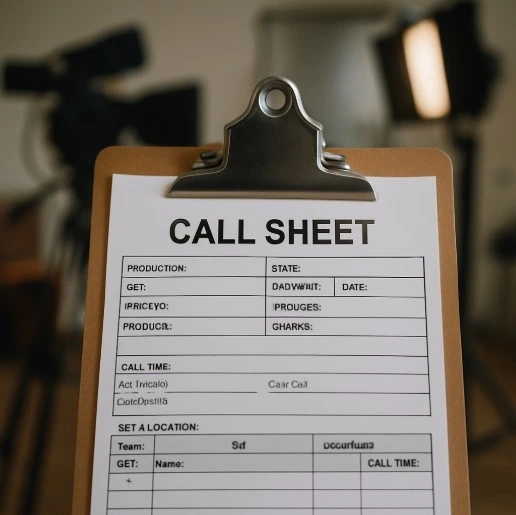
Vital Signs of a Shoot: Why Weather and Location Details Rule the Header
If you pick up a call sheet, your eyes might instinctively jump to the cast list, but the producers focus entirely on the top inch of the page. This header acts like the dashboard of a car, displaying the vital signs for the day’s shoot. It lists the “Weather Forecast” and “Sunrise/Sunset” times, which tell the camera team exactly how long they have before they lose natural light. If rain is predicted, this section often points to “Weather Cover,” a pre-planned indoor backup location that keeps the production moving despite the elements.
Getting everyone to the right address is the next logistical hurdle. The header usually distinguishes between the specific shooting location and “Basecamp,” which is the central hub where trailers are parked and actors get into costume. This separation is crucial because it ensures that the 50 personal cars belonging to the crew don’t accidentally end up in the background of the movie scene.
Beyond logistics, this document serves as a legally required safety net. In an emergency, no one should have to search for help; the “Nearest Hospital” is always printed in bold. Before checking their individual tasks, the crew reviews these non-negotiable details, all of which define What Information Should Be Included in a Film Call Sheet:
- Production Title: Confirms you are on the right project.
- Date & Day Count: Tracks progress (e.g., “Day 12 of 30”).
- Weather Forecast: Dictates clothing and equipment protection.
- Sunrise/Sunset: Establishes the available lighting window.
- Nearest Hospital: Ensures immediate emergency response.
With the location and safety checks secured, the crew turns their attention to the specific timing of the day’s work.
Mastering the Shooting Schedule: How Scene Descriptions and Page Counts Dictate the Day
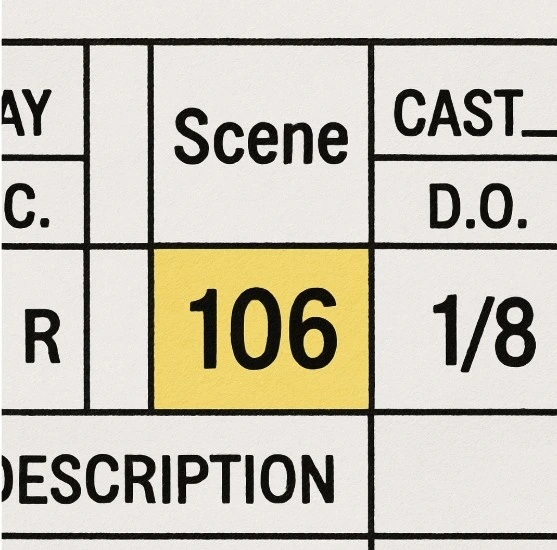
Just below the header lies the heartbeat of the production: the daily shooting schedule requirements. Think of this grid as a rigorous “To-Do List” that determines whether the day is a success or a failure. Instead of vague goals like “film the coffee shop scene,” the schedule provides a specific Scene Description—a brief synopsis that acts as a signal flare for different departments.
Measuring how long these scenes take requires a unique Hollywood metric known as the “page count.” The industry assumes that one page of a script equals roughly one minute of screen time, but rarely does a scene last exactly sixty seconds. To solve this, assistant directors slice every page into eight even strips.
Reading this grid correctly is the only way to anticipate the workflow. Since movies are almost always shot out of order to save travel time, you might film the movie’s ending before lunch and the opening scene at sunset. Each row in the schedule acts as a standalone mission briefing containing these essential coordinates, reinforcing What Information Should Be Included in a Film Call Sheet:
- Scene #: The reference ID from the script.
- Description: A one-line summary of the action.
- Cast IDs: Numeric codes indicating which actors are needed.
- Location: Specific setting (e.g., “Main Counter” vs. “Back Alley”).
- Page Count: The estimated time/length value (e.g., 4/8).
Once the crew understands what they are shooting, they need to know exactly when to show up to make it happen.
The Clock is Ticking: Understanding Call Times, Ready Times, and Meal Breaks
While the schedule outlines the mission, the top of the call sheet serves as the master clock that synchronizes the entire team. The most critical number listed is the “General Crew Call,” which acts like the opening bell for the factory floor.
Managing these hunger intervals is crucial because missing a meal break often triggers expensive financial fines known as meal penalties. The general industry rule is that work cannot exceed six hours without a sit-down meal, making the call sheet a literal countdown clock for the production team. This timing structure is another key part of What Information Should Be Included in a Film Call Sheet.
Cast and Background Coordination: Tracking Talent from Makeup to ‘Action’
If the crew is the engine, the cast is the fuel, and managing their arrival requires a distinct section of the call sheet. To streamline communication, every speaking role is assigned a Character Number.
Managing an actor’s morning requires a specific breakdown of columns that separate travel from preparation. You will typically see these headers:
- Cast # / Character Name
- Status (SW/W/H/F)
- Pickup
- H/MU/W
- On Set
Regardless of the role size, modern call sheets aggressively protect personal data. This careful organization further highlights What Information Should Be Included in a Film Call Sheet.
The Logistics of a Location: Why Maps and Parking Instructions Are the Unsung Heroes
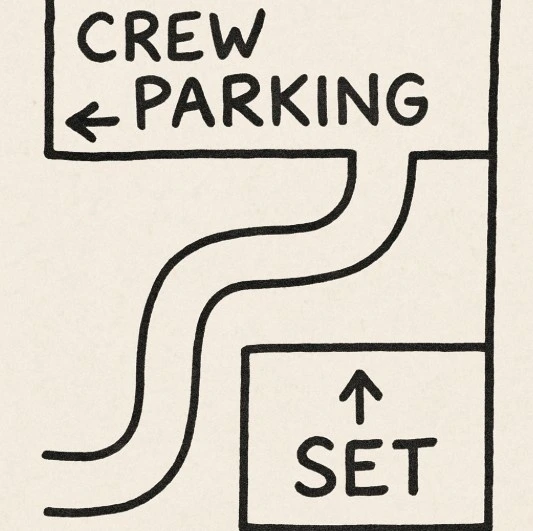
Getting the cast dressed is useless if they drive to the wrong side of town. While the “set” is where the camera rolls, Basecamp is the essential headquarters where the day actually begins.
To keep the herd together, the call sheet acts as a treasure map featuring vital movement details:
- Crew Parking
- Basecamp Address
- Map Link
- Nearest Hospital
Beyond navigation, the bottom of the sheet acts as the day’s primary warning system.
Future-Proofing the Production: Using Advanced Schedules to Prevent Tomorrow’s Chaos
Filmmaking requires living in the moment while simultaneously planning for the future. Near the bottom of the document lies the “Advance Schedule.”
Even the best plans are subject to the whims of nature, which is why you will often see a “Cover Set” listed alongside the advance. Mastering these final details is essential when considering What Information Should Be Included in a Film Call Sheet.
From Chaos to Coordination: Your Checklist for Creating a Professional Call Sheet
You no longer view a film set as a mysterious hive of activity, but as a carefully orchestrated event held together by one document.
Ultimately, who is responsible for creating call sheets sets the tone for the entire shoot. A professional call sheet signals that you value the cast and crew’s effort. Before you hit “send” on your first official call sheet, ensure you have covered the essentials:
- 1st AD Check
- Hospital Verified
- Maps Linked
- Contact Privacy Secured
By now, you clearly understand What Information Should Be Included in a Film Call Sheet, allowing you to run a smoother, safer, and more professional production.
Simplify Call Sheets with Studiovity
Creating a call sheet should feel simple and fast. Studiovity helps you manage every detail in one place. You can build, edit, and share call sheets in minutes. The platform keeps your schedule clear and your team aligned. You can add scenes, cast, and locations without confusion. You can also update changes and notify your crew instantly.
Studiovity reduces manual work and saves time on set. It keeps your production organized from start to finish. If you want a smoother shoot, this tool gives you full control. Try Studiovity today and turn your call sheets into a reliable system.