Common Script Breakdown Mistakes Filmmakers Must Avoid
Imagine you are on set, the sun is rapidly setting, and you realize the crucial vintage camera your protagonist needs is locked inside a rental house three hours away. That sinking feeling is not bad luck. It is the direct result of Common Script Breakdown Mistakes. In practice, a forgotten prop or missing vehicle halts filming completely, bleeding money by the minute while the crew waits. Avoiding Common Script Breakdown Mistakes protects your budget and keeps your team confident in your leadership.
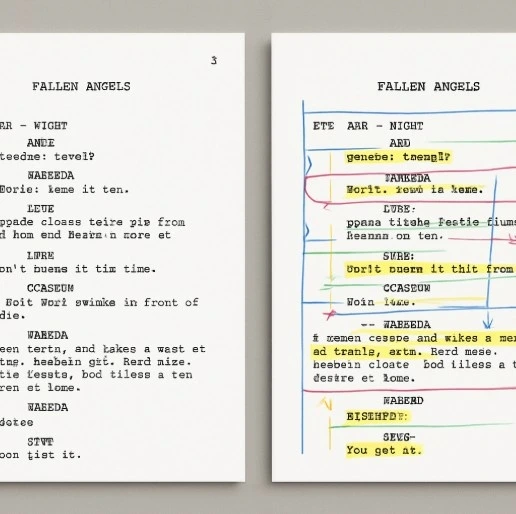
Think of your properly formatted screenplay as a beautiful architectural floor plan. While that document shows where the walls go, the script breakdown works as your exact list of lumber, nails, and concrete needed to build the house. To generate this list, professionals start by “lining a script.” This process involves drawing vertical lines and color-coding every requirement. These categorized items are your “breakdown elements,” which include actors, wardrobe, and all functional items required for a scene.
According to professional Assistant Directors, this categorization step transforms creative vision into production logistics. A thorough breakdown defines what fits the budget and what shoots on which day. The assistant director manages far more than dialogue. A structured planning process ensures every requirement reaches the set before anyone calls action.
Stop Changing Scene Numbers: The Foundation of Production Sync
Handing out a blueprint and then changing room numbers midway creates confusion. In filmmaking, this happens when scene numbers change after the script is locked. A locked script means those numbers become permanent references for every department. If Scene 4 suddenly becomes Scene 5, departments lose sync and mistakes happen quickly.
Professionals avoid this issue by following strict numbering rules:
Never renumber after distribution
Use A/B suffixes for new scenes (Scene 4A)
Keep deleted scenes marked as “OMITTED”
This system keeps every department aligned and prevents breakdown errors from spreading across the schedule.
Why One Page Does Not Equal One Minute: Mastering Page Eighths
Many beginners assume one page equals one minute. This shortcut often leads to scheduling issues. Professionals divide each script page into eight parts called eighths. This gives a more accurate measure of script length.
However, page length does not reflect complexity. Consider this:
A 1/8 page fight scene may take hours
A 4/8 dialogue scene may wrap quickly
Misjudging these differences is one of the most frequent Common Script Breakdown Mistakes. Identifying complex scenes early helps control both time and budget.
Finding the 'Invisible' Props: Beyond the Explicit Dialogue
Imagine reaching set and realizing no one arranged coffee cups. This situation reflects a failure to identify implicit needs. Many overlooked items are not written directly in the script.
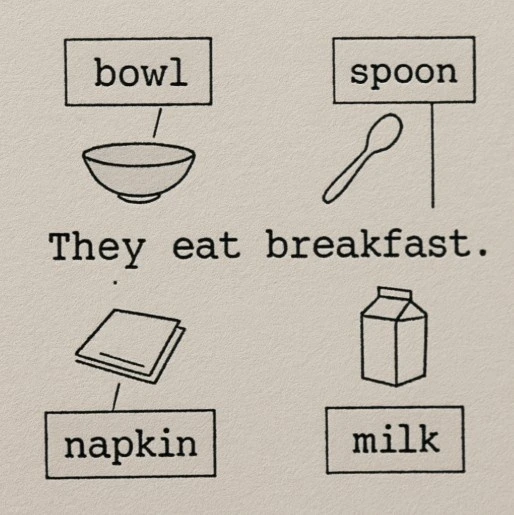
For example, “They eat breakfast” requires:
Plates
Utensils
Food
Napkins
Missing these details leads to delays. Strong breakdown skills require thinking beyond written dialogue and visualizing the full scene.
Is it a Prop or Set Dressing? Why Mislabeling Wastes Your Budget
After identifying elements, assigning them correctly becomes essential. Mislabeling creates confusion and increases costs. Two departments may purchase the same item, or no one may handle it.
Professionals use the “Touch Test”:
Prop: Actor interacts with it
Set Dressing: Background element
Wardrobe: Worn by actor
Clear categorization avoids duplication and keeps the budget under control.
The Art of Lining: Using Color to Prevent Missed Shots
Reading a plain script during production slows everything down. That is why Assistant Directors use color-coded lining.
Standard color coding includes:
Red: Cast
Yellow: Extras
Purple: Props
Green: Greenery
Blue: VFX
This system ensures nothing gets missed. If an item is not highlighted, it rarely appears on set.
The Automation Trap: Why Software Won't Catch Everything
Modern tools promise instant breakdowns. While helpful, they cannot replace human judgment. Software lacks context and often misses critical details.
Automation struggles with:
Sarcastic dialogue
Emotional scene complexity
Visual metaphors
Over-reliance on automation leads to Common Script Breakdown Mistakes that affect production accuracy. The best approach combines software speed with human insight.
Your Pre-Production Checklist: Moving from Script to Set with Confidence
A script becomes actionable only after a detailed breakdown. Avoiding Common Script Breakdown Mistakes requires discipline and review.
Before moving to scheduling, follow this checklist:
Verify page counts and actor requirements
Maintain continuity across scenes
Assign every item to the correct department
These steps ensure your production runs smoothly and avoids costly disruptions.
A screenplay is more than words. It is a complete blueprint. When you avoid Common Script Breakdown Mistakes, you build a strong foundation for efficient filmmaking and successful execution.
Avoid Common Script Breakdown Mistakes with Studiovity
Stop letting details slip through the cracks. With Studiovity, you can streamline your entire script breakdown process—from automated tagging to smart scheduling—so nothing gets missed on set. Turn your screenplay into a production-ready blueprint faster, smarter, and with complete confidence. Try it free and take control of your pre-production today.
Script breakdown elements are the production requirements hidden inside every scene: the characters, background actors, props, set dressing, wardrobe, makeup, locations, vehicles, animals, stunts, effects