
Watch your favorite action movie and you will see a seamless three-minute chase sequence. It flows effortlessly across the screen. However, those 180 seconds often require four production days across two months. Around sixty crew members and changing weather conditions also play a role. Most viewers assume filming begins at page one and ends at page one hundred. In reality, that rarely happens. A shooting schedule in film organizes the production so every scene gets filmed efficiently.
Think of a film set like a busy restaurant kitchen during dinner rush. A chef does not cook one table’s entire order from appetizer to dessert before helping the next table. Instead, they grill several steaks at once to maximize efficiency. Likewise, directors shoot every scene required at a specific location before moving the entire crew. This logistical puzzle depends on the shooting schedule, which guides the cast and crew throughout the production.
While the script shows the creative vision, the schedule reflects practical limits like time and budget. Experienced filmmakers know a disorganized calendar drains money quickly. Therefore, production teams rely on a stripboard. This colorful chart turns each scene into a movable puzzle piece. The team rearranges these pieces until they find the most efficient filming order.
Beyond dates, the schedule acts as the hidden engine of movie production. The 1st Assistant Director builds the plan. At the same time, many variables decide why a movie’s ending might be filmed on the first day. In short, the shooting schedule in film transforms cinematic chaos into organized creativity.
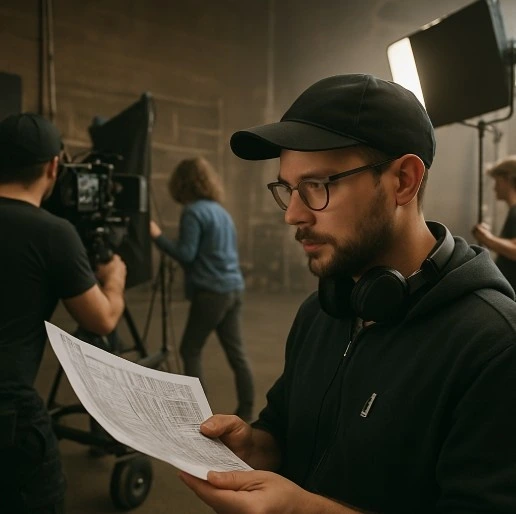
Why Movies Aren't Filmed in Order: The Logic of Production Efficiency
Efficiency controls the calendar, not the screenplay. For example, if a script returns to the same diner in scenes 5, 22, and 88, the crew films them together. This happens even if those scenes appear far apart in the story. Filmmakers call this strategy location pooling.
Location pooling avoids a costly process called a company move. Every time the crew relocates equipment, valuable hours disappear. Lights must be dismantled, trucks must be loaded, and gear must be transported. During that time, no footage gets captured.
Meanwhile, natural light also shapes the schedule. Directors often chase Golden Hour, which appears shortly after sunrise or before sunset. During this brief window, sunlight looks warm and cinematic. Because it lasts only 20 to 60 minutes, productions plan entire days around it.
Therefore, the final filming order depends on four key priorities:
- Location: Film all scenes at one place together
- Actor Availability: Schedule expensive actors efficiently
- Day vs. Night: Group similar lighting conditions
- Special Effects: Allow extra time for stunts or complex setups
Balancing these priorities requires strong planning. As a result, the shooting schedule in film becomes a strategic puzzle that guides the entire production.
Meet the 1st Assistant Director: The Logistics Expert Who Controls Time
The Director focuses on storytelling, performances, and camera choices. Meanwhile, the 1st Assistant Director (1st AD) manages the schedule and the crew. Think of the Director as the architect and the 1st AD as the construction manager.
The 1st AD oversees safety, maintains discipline, and keeps production moving. In addition, they design the timeline long before filming begins. They constantly balance creative goals with financial limits.
For example, the Unit Production Manager protects the budget. At the same time, the 1st AD protects time. They negotiate how long the crew can spend on complex scenes without causing overtime or union violations.
Every day brings new challenges. Rain might ruin an outdoor scene. An actor might fall sick. In these moments, the 1st AD quickly adjusts the shooting schedule in film to keep the production running.
However, this planning starts with an essential process: the script breakdown.
The Script Breakdown: Turning Story into Production Data
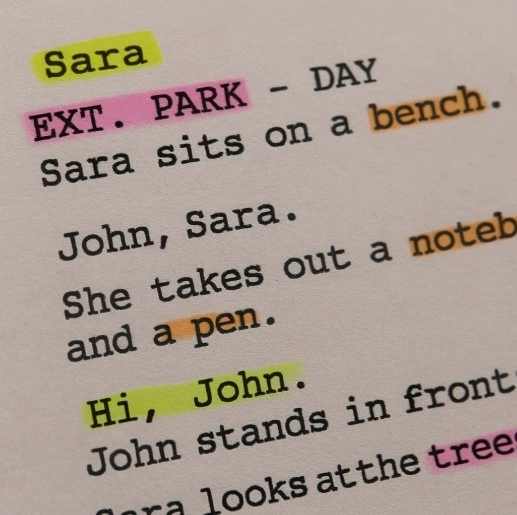
Before filming begins, the 1st AD studies the script line by line. Instead of focusing on emotion, they focus on logistics. This process is called a script breakdown.
During the breakdown, each scene gets analyzed for production requirements. Every important item becomes a trackable element.
For example, a scene mentioning coffee in a 1967 Mustang requires:
- A specific actor
- A vintage car
- A prop coffee cup
Identifying these elements prevents costly delays on set.
Filmmakers also measure script length using eighths. One script page usually equals one minute of screen time. Therefore, half a page becomes 4/8ths, while a short line might be 1/8th.
These measurements help filmmakers estimate shooting time accurately. Consequently, the shooting schedule in film becomes easier to build and manage.
Decoding the Stripboard: The Visual Engine of Film Scheduling
Historically, production teams used physical strips of paper on boards. Each strip represented one scene. Today, digital stripboards work the same way but with drag-and-drop flexibility.
Each strip contains important details:
- Scene number
- Location
- Cast involved
Filmmakers move these strips to create the most efficient order.
Additionally, stripboards use standard color codes:
- Yellow: Day / Exterior
- White: Day / Interior
- Green: Night / Exterior
- Blue: Night / Interior
These colors help the crew quickly identify lighting setups. As a result, they avoid mistakes that would require hours of equipment adjustments.
While the stripboard shows the full production plan, daily operations require another document.
Shooting Schedule vs Call Sheet: Why Both Matter
The schedule provides the big picture for the entire production. In contrast, the call sheet focuses on a single day.
Think of the schedule as architectural blueprints. Meanwhile, the call sheet acts as the daily construction plan.
A call sheet includes critical details such as:
- Call times for each crew member
- Weather forecast
- Sunrise and sunset times
- Nearby hospitals
- Location addresses
Importantly, it ensures people arrive exactly when needed. For example, an actor might arrive at 5:00 AM for makeup. Meanwhile, stunt performers might arrive at 10:00 AM.
Because of this detailed coordination, the shooting schedule in film directly determines what appears on every call sheet.
The Day Out of Days (DOOD): Managing Cast and Budget
Film productions must manage expensive talent carefully. Hiring an actor but keeping them idle wastes money.
To solve this problem, producers use the Day Out of Days (DOOD) chart. This grid tracks exactly when actors work during production.
The chart uses four simple codes:
- S – Start: First workday
- W – Work: Active shooting day
- H – Hold: Paid but not filming
- F – Finish: Final workday
Producers aim to reduce Hold days. Therefore, they group an actor’s scenes together whenever possible.
This strategy protects the budget and keeps production efficient.
Block Shooting vs Chronological Filming
Actors often prefer filming in story order. It helps them follow character development naturally. However, budgets rarely allow this approach.
Instead, most productions use block shooting. The crew films every scene in one location before moving elsewhere.
Within those blocks, technical setups also shape the schedule. If a wide shot requires two hours of lighting setup, the crew films all related scenes before changing the setup.
Only rare productions shoot chronologically. For example, the film Boyhood experimented with long-term storytelling. However, most productions prioritize efficiency.
Therefore, the shooting schedule in film always balances creativity with logistics.
From Spreadsheets to Professional Scheduling Software
Small projects can manage schedules with simple spreadsheets. Tools like Excel or Google Sheets allow filmmakers to move scenes easily.
However, complex productions require specialized software. These tools detect scheduling conflicts automatically.
For example, they warn producers if:
- An actor appears in two places at once
- A night scene appears during a daytime block
Common tools include:
- Google Sheets – Great for beginners
- StudioBinder – Cloud-based scheduling tools
- Movie Magic Scheduling – Industry standard software
Each tool helps teams organize large productions more efficiently.
The Reality of a 12-Hour Production Day
Even the best schedule faces unexpected problems. Rain, illness, and technical issues can disrupt filming instantly.
Therefore, professional productions prepare a cover set. This backup location allows the crew to keep filming if outdoor scenes fail.
Another key rule involves turnaround time. Most crews require at least 12 hours of rest between shooting days.
Ignoring this rule can cause fatigue, accidents, and production delays.
Because of these challenges, the shooting schedule in film must remain flexible.

Your Roadmap to a Finished Film
Now you can see filmmaking differently. Behind every scene lies a carefully designed logistical plan.
The schedule connects creative storytelling with practical production needs. It organizes locations, actors, and resources into a clear roadmap.
More importantly, strong organization actually supports creativity. When logistics run smoothly, filmmakers focus on storytelling.
Whether you plan a large production or a small independent project, the same logic applies. Group scenes by location. Manage actor availability. Reduce unnecessary travel.
Once you understand the strategy behind a shooting schedule in film, you gain control over the complex dance of time, budget, and creativity that brings movies to life.
Plan Your Shooting Schedule Faster with Studiovity
Managing a shooting schedule manually can quickly become complicated as scripts, locations, actors, and production elements grow. Studiovity simplifies this process by turning your screenplay into a structured production plan.
With AI-powered script breakdown, visual stripboards, and integrated scheduling tools, Studiovity helps filmmakers quickly create shooting schedules, generate call sheets, and organize their entire production workflow in one place—allowing teams to stay efficient and focus on storytelling.