
Film Scheduling Made Easy: Best Tools to Create a Shooting Schedule in 2026
You’ve got a talented cast, but the sun is setting while you are only halfway through the scene. This isn’t a talent issue; it is a planning failure. Without a solid timeline, creative vision quickly devolves into expensive chaos.
Think of your schedule as the digital blueprint for your production. Just as you wouldn’t lay bricks without a floor plan, you shouldn’t call “action” without a roadmap. In practice, reducing movie production delays relies entirely on establishing this logical foundation through proper film scheduling before cameras roll.
Fortunately, manual guesswork is obsolete. AI-assisted software now automates the heavy lifting. These intelligent tools act as a digital assistant to ensure your film scheduling is airtight and you wrap on time.
Transforming Scripts into Data: The Art of Modern Script Breakdowns
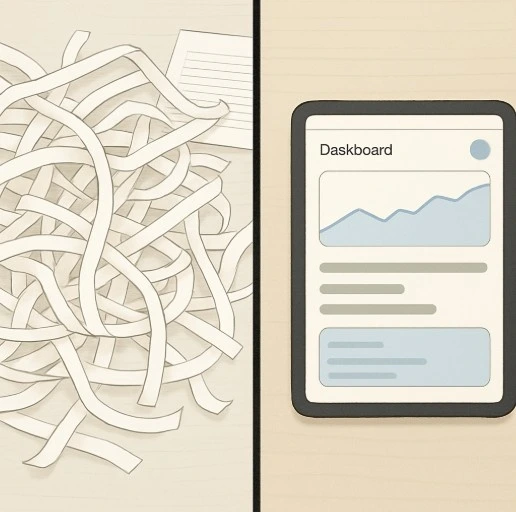
Reading a screenplay for emotional impact is vastly different from reading it for production. To a producer, that touching scene in a coffee shop isn’t just character development; it is a list of specific requirements including the location rental, three actors, background extras, and steaming hot props. You must learn to strip away the narrative magic to reveal the logistical blueprint underneath.
Traditionally, this involved lining a script, a process where assistant directors drew vertical lines down physical pages to indicate exactly who and what appeared in every fraction of a scene. Today, this evolves into “tagging.” You highlight every ingredient—specific props, costume changes, or vehicles—turning a static text document into a dynamic database of necessary assets.
Modern efficiency demands better tools than a stack of highlighters. Using automated script breakdown software for filmmakers, platforms like Studiovity scan your screenplay and instantly categorize these elements for you. The AI detects that “Vintage Mustang” is a vehicle and “Sarah’s Locket” is a prop, completing days of manual data entry in mere seconds.
Validating this digital harvest ensures you never arrive on set missing a critical item. Once your script is converted into these actionable tags, you are finally ready to feed that information into a film scheduling engine to see exactly how long your shoot will take.
From Free Apps to AI Powerhouses: Finding Your Perfect 2026 Scheduling Tool
Choosing the right software is like picking a camera; it must match your project’s scale. Historically, schedules lived on one laptop, creating communication bottlenecks. Today, real-time collaboration tools for film production allow your cinematographer to check the calendar on their phone while you update it remotely, ensuring no one ever works from an outdated plan.
Navigating the 2026 market means finding the balance between cost and complexity across three distinct tiers of film scheduling tools:
Entry-Level (e.g., Celtx): Often the best free software for students, offering basic functionality perfect for simple shorts.
Cloud-Native Prosumer (e.g., Studiovity): Balances professional logic with modern ease-of-use, utilizing AI for instant team syncing and optimization.
Legacy Standard (e.g., Movie Magic): The robust industry heavyweight for complex union rules, though it often comes with a steeper learning curve.
Your decision hinges on whether you need strict compliance or agile speed. While legacy tools excel at intricate payroll constraints, comparing Movie Magic Scheduling vs StudioBinder alternatives often reveals that modern cloud platforms serve independent creators better. If you aren’t managing massive union contracts, AI-driven automation in your film scheduling will save you days of manual planning.
Mastering the Digital Stripboard: How to Group Scenes for Maximum Efficiency
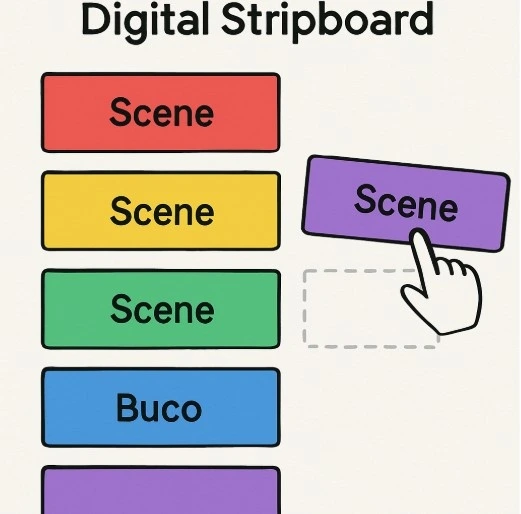
Visualizing your movie as a timeline is impossible when staring at a script PDF. Modern software solves this by converting every scene into a “digital strip”—a color-coded block containing your location, cast, and estimated runtime. These digital stripboard features for assistant directors allow you to treat your production like a puzzle, dragging and dropping scenes to see how shifting one block impacts the entire day.
Efficiency dictates that you never shoot in script order; you shoot in logistical order. The golden rule is to group everything by location first. Moving a crew—known as a “company move”—kills hours of productivity, so you must finish every scene in the Kitchen before driving to the Park. Once locations are locked, you layer in managing cast and crew availability conflicts, ensuring you aren’t paying an actor to sit around for six hours between takes.
To build a principal photography timeline planning guide that minimizes waste, prioritize your sorting criteria in this specific order:
Location Availability: Lock in difficult venues first.
Cast Schedules: Cluster scenes to release expensive talent early.
Time of Day: Shoot exteriors while the sun allows.
Emotional Intensity: Avoid back-to-back heavy dramatic scenes to protect actors.
Beyond the Calendar: Generating Reports and Managing the Set
A finished film scheduling process offers more than just dates; it acts as a database that instantly calculates your logistical requirements. By using modern software to learn how to generate day out of days reports, you gain a precise grid showing exactly when each actor starts, works, and wraps. This report—often called a DOOD—prevents you from accidentally booking a supporting actor for three non-consecutive days when you could shoot them all in one afternoon, saving significant budget on daily rates.
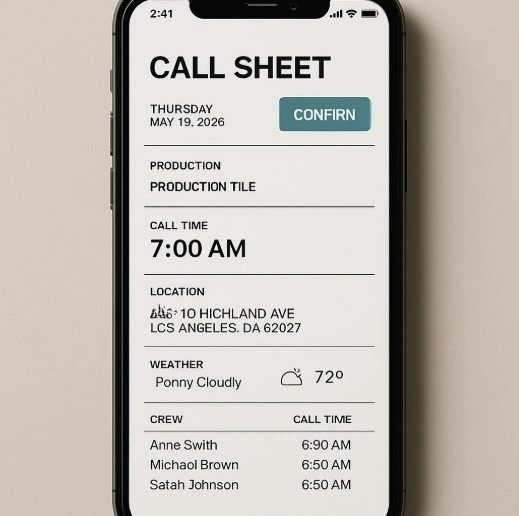
Data stays useless if it remains trapped on your laptop, so the next step involves optimizing daily call sheets for film crews. In 2026, we no longer rely on emailing static PDFs that become obsolete the moment a time changes. Instead, you push a “publish” button that sends a personalized, interactive link to every crew member’s phone, complete with maps, weather alerts, and automatic read receipts.
Production environments are volatile, but mobile-friendly film production calendar apps keep your team synchronized even when chaos strikes. If a location cancels or rain delays a shoot, a simple drag-and-drop update in the cloud instantly pushes the new film scheduling data to everyone’s device, eliminating the panic of manual phone trees.
Your 30-Minute Action Plan to a Pro Schedule
Transforming a script into a shootable plan is no longer a dark art reserved for seasoned professionals. By leveraging modern software, you have turned a chaotic list of scenes into a strategic blueprint that respects your crew’s time and budget. You now possess the insight to balance creative vision with logistical reality.
To make professional film scheduling your reality, import your screenplay to auto-tag assets today. Refine your stripboard to minimize company moves, then sync the live calendar. Mastering this process ensures that while technology handles logistics, you remain free to direct.
Why Studiovity is Your Ultimate Partner in 2026 Production
In the fast-paced world of 2026 cinema, Studiovity stands out as the bridge between creative dreaming and technical execution. By integrating AI-driven script breakdowns with an intuitive digital stripboard, it removes the friction of traditional film scheduling. Whether you’re managing an indie short or a feature-length production, Studiovity ensures that your data flows seamlessly from the first page of your script to the final call sheet on set. Don’t let logistical chaos dim your vision—embrace a platform designed to let you focus on what truly matters: telling your story.