Every producer eventually faces a massive financial dilemma that impacts the bottom line. The critical question of Should You Rent or Buy Film Equipment determines your long-term profit margins and immediate cash flow.Before you even finalize your film production calendar, you must analyze your asset strategy carefully. Smart producers utilize advanced pre production software to forecast these costs accurately early in the process. This decision is rarely black and white; therefore, it requires a strategic approach to capital expenditure.
Owning equipment can feel like a safety net. You have the gear ready whenever inspiration strikes. However, ownership is a capital-intensive strategy. If you are an independent filmmaker or a small production house, buying creates an asset on your books. Nevertheless, camera bodies depreciate faster than almost any other tech asset.
Conversely, investing in “glass” (lenses) and lighting/grip gear often yields better long-term value. These items have a longer shelf life and retain resale value. If your production house shoots typical corporate interviews or consistent content daily, buying makes mathematical sense. You eliminate daily rental fees and pick-up/drop-off logistics.
Yet, you must consider utilization rates. If a camera sits on a shelf for 20 days a month, it is losing money. Therefore, calculate your “break-even days.” If a camera costs $4,000 and rents for $200/day, you need to use it for 20 days just to cover the cost. Anything less, and you are operating at a loss compared to renting.
The Flexibility of Renting
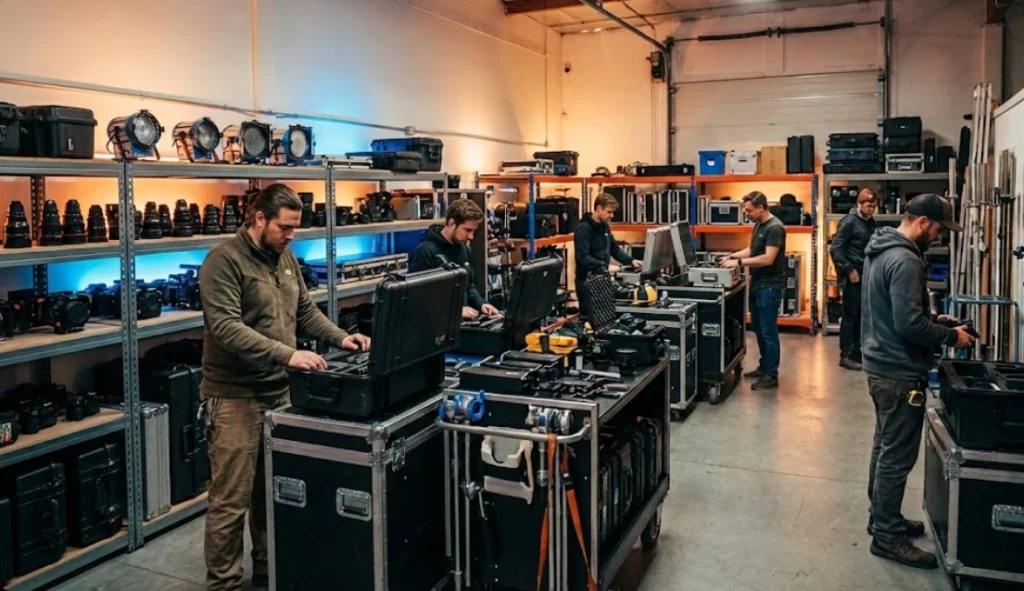
For narrative features, commercials, and high-end music videos, renting is often the superior choice. Renting grants you access to top-tier technology—like ARRI Alexa or RED Raptor systems—that would otherwise destroy a modest budget.
Furthermore, renting aligns perfectly with tight film scheduling. You only pay for the days the gear generates footage. This variable cost structure keeps your overhead low. Additionally, rental houses maintain their gear immaculately. You receive calibrated lenses, clean sensors, and fully charged batteries. If a rented light fails on set, the rental house replaces it immediately. If your owned light fails, production stops until you fix it or buy a new one.
Moreover, technology evolves rapidly. Buying a camera today means owning outdated technology in three years. Renting allows you to pivot to the latest sensor technology for every single project without the burden of upgrading your personal inventory.
Analyzing the Script Needs
The decision often lies within the pages of your script. A detailed script breakdown reveals the specific technical requirements of your story. Does Scene 4 require a specialized underwater housing? Does the car chase in Act 3 require a Russian Arm?
You should never buy specialized gear for a single sequence. Analyze your breakdown reports. Identify the “hero gear” needed for 90% of the shoot and the “specialty gear” needed for 10%. Consequently, a hybrid model often emerges as the winner. You might own the C-stands, lights, and audio gear (the durables), but rent the camera body and anamorphic lenses (the variables).
This approach protects your budget while ensuring high production value. You allocate funds where they show up on screen.
Hidden Costs of Ownership
Many filmmakers look at the sticker price and forget the ecosystem costs. Should You Rent or Buy Film Equipment isn’t just about the purchase price; it is about the Total Cost of Ownership (TCO).
Consider these often-overlooked expenses:
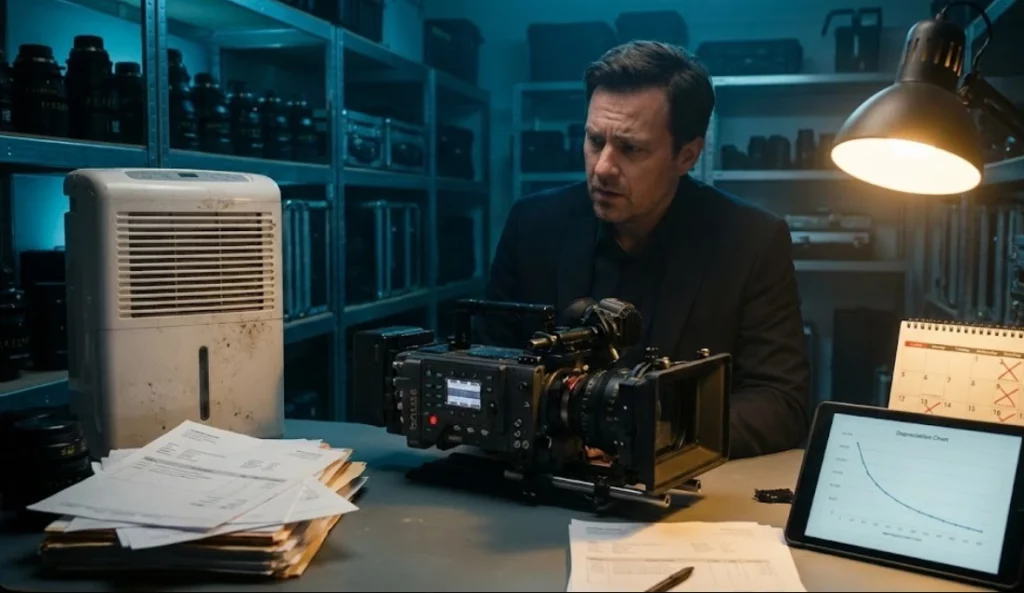
Storage: Secure, climate-controlled storage is essential.
Insurance: Premiums for owned gear are an annual fixed cost, whereas rental insurance is per project.
Maintenance: Sensors need cleaning, cables fray, and firmware needs updating.
Depreciation: That $6,000 camera is worth $2,500 in two years.
When you rent, these headaches belong to the rental house. You focus purely on the creative execution. Your call sheet lists the rental house pickup time, and that is the extent of your logistical worry regarding gear maintenance.
The Team Dynamic
Your cast and crew perform better when they trust the equipment. If you force a DP to use your owned camera solely because you own it, you might limit their creative vision. A Director of Photography often has a specific visual language in mind that requires specific lenses.
If you insist on using your own gear to “save money,” you might compromise the look of the film. However, if you consult your department heads during the budgeting phase, you can find a middle ground. Perhaps you buy the communication headsets (comm systems) which are always useful, but rent the specific camera package the DP requests. This builds trust and ensures the crew has the right tools for the job.
Tax Implications and Resale Value
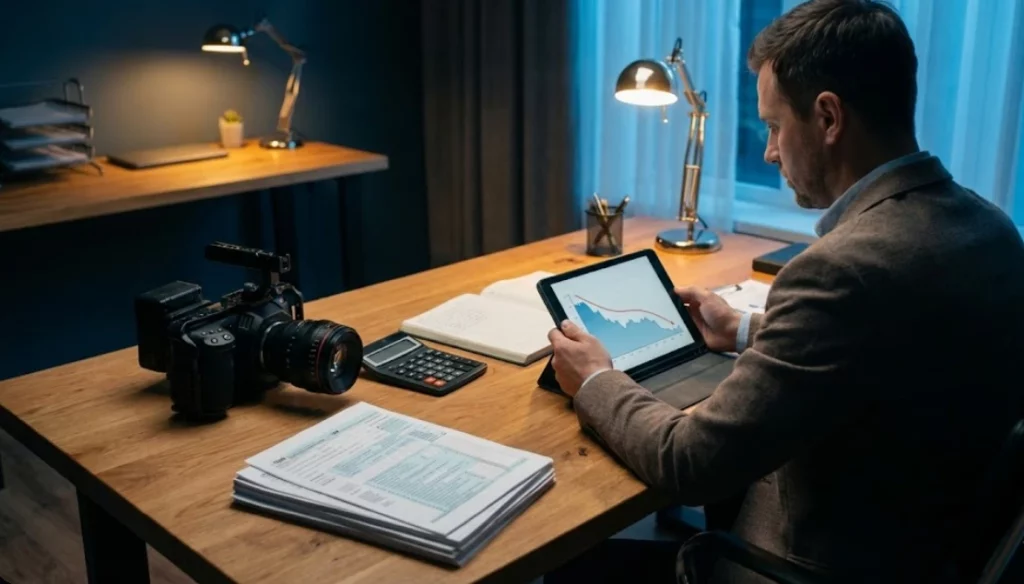
Finally, speak to your accountant. In many regions, equipment purchases are tax-deductible capital expenses. You can write off a significant portion of the purchase price against your profits. This can make buying attractive for profitable production companies looking to reduce tax liability.
However, the resale market is volatile. Selling used gear takes time and effort. You become a salesperson instead of a filmmaker. If you trade in gear, you lose value. Therefore, only buy items you intend to use until they die, or items that hold value historically, like high-end tripods or heavy-duty grip equipment.
Conclusion: The Verdict
So, Should You Rent or Buy Film Equipment? The answer depends on your business model. If you are a high-volume content creator shooting daily, buy your workhorse kit. If you are producing feature films or high-stakes commercials, rent the best tools the budget allows.
Analyze your frequency of use, check your cash flow, and never let gear acquisition distract you from storytelling. Use digital tools to plan effectively, visualize your needs, and execute with precision.