You stay in your seat until the very end of the movie. The lights remain dim, the credits roll, and amidst the endless list of Directors, Producers, and actors, a peculiar title appears: “Best Boy.” It is arguably the most frequently asked question by those outside the entertainment industry. However, inside the studio system, this role is the logistical backbone of the technical departments. So, what is a Best Boy in Film exactly?
Simply put, the Best Boy is the second-in-command to the department head. They effectively manage daily operations, personnel, and equipment logistics so the Key Grip or Gaffer can focus entirely on the artistic execution of the shot. While the Director of Photography visualizes the look of the screenplay, the Best Boy ensures the manpower and gear are actually physically present to make it happen. They are an essential part of the technical team, acting as the administrative foreman who bridges the gap between creative requests and practical reality.

The Distinction: Electric vs. Grip
To fully understand what is a Best Boy in Film, you must first recognize that the title applies to two distinct but parallel departments. First, there is the Best Boy Electric, who reports directly to the Gaffer (the head electrician). Secondly, there is the Best Boy Grip, who reports to the Key Grip (the head of rigging and camera support).
Although their technical duties differ significantly, their administrative burdens remain quite similar. The Best Boy Electric handles power distribution, generators, and lamp inventory. Conversely, the Best Boy Grip manages stands, dollies, cranes, and safety rigging. However, both roles require a deep understanding of modern pre production software. They utilize these digital tools to track inventory, manage rental orders, and communicate seamlessly with the production office. Without this administrative layer, the department heads would be too bogged down in paperwork to lead the creative lighting process effectively.
Pre-Production: Where the Work Begins
The job begins long before the cameras start rolling. During the critical pre-production phase, the Best Boy analyzes the script breakdown to determine exactly what gear is necessary for every specific scene. For instance, if a scene requires a massive night exterior setup, the Best Boy calculates the electrical load, orders the necessary generators, and hires additional crew members.
Consequently, they prevent expensive delays by ensuring the right tools arrive at the right location. They constantly liaise with rental houses to negotiate prices and secure equipment. Furthermore, they organize the equipment truck, ensuring that thousands of dollars worth of sensitive gear is packed safely and logically. If a piece of gear is buried behind a wall of boxes when the Director calls for it, time is lost. Therefore, strategic organization is a primary skill for any successful Best Boy.

Mastering Logistics and The Schedule
Once production is underway, the Best Boy becomes a master of logistics. They rely heavily on accurate film scheduling to forecast the department’s needs days or even weeks in advance. If the unit moves from a soundstage to a remote desert location, the Best Boy plans the power generation and transport logistics meticulously.
Moreover, they utilize the film production calendar to look ahead for “swing gangs” or pre-rig crews. For example, while the main unit shoots in a house, the Best Boy might send a separate team to pre-light the next location. This foresight allows the Gaffer and Key Grip to walk onto a new set that is already prepared, saving the production massive amounts of money. Thus, precise timing and forward-thinking are non-negotiable attributes of the role.
Execution on Set: The Shot List
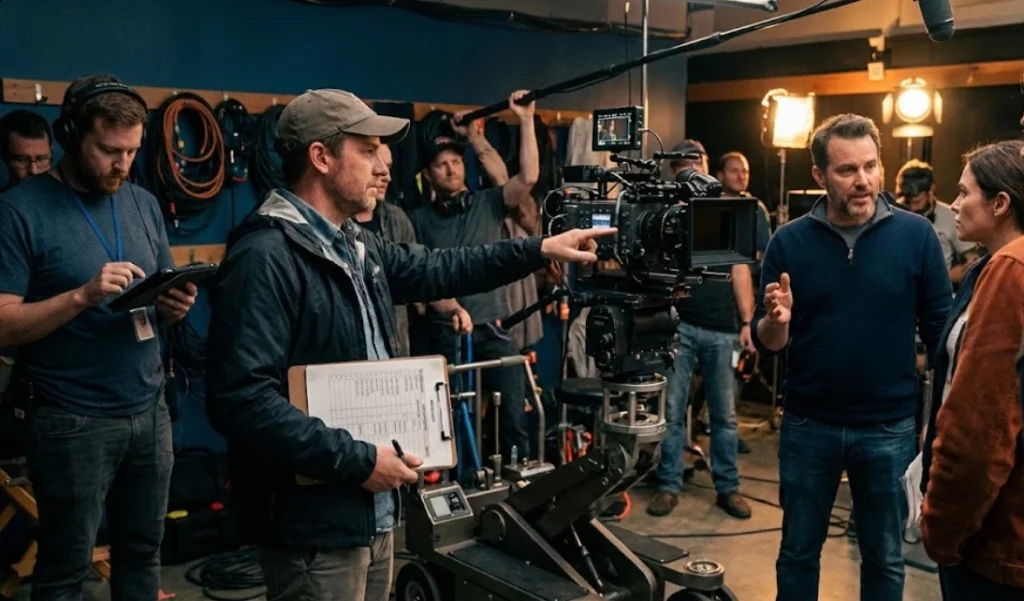
During the shoot, the Best Boy ensures the department runs like a well-oiled machine. When the Director approves the daily shot list, the Best Boy immediately communicates the requirements to their team. If the next shot involves a complex crane move, the Best Boy Grip ensures the dolly track is laid, levelled, and safe.
Simultaneously, the Best Boy Electric ensures that power cables are run safely out of the frame and that the generator has enough fuel to last the night. They serve as the safety officer for their department, ensuring that no crew member is put in a dangerous situation due to fatigue, faulty equipment, or rushed schedules. In addition, they maintain the equipment inventory. If a light bulb blows or a stand breaks, the Best Boy swaps it out and logs the repair, maintaining operational readiness at all times.
Managing the Crew and Paperwork
Beyond equipment, the Best Boy manages people. They are responsible for hiring the additional cast and crew needed for heavy days, often referred to as “day players.” If the schedule calls for a massive lighting setup, the Best Boy brings in extra hands to handle the workload safely.
Crucially, they manage the time cards and administrative paperwork for their entire team. In an industry where union rules are strict and overtime penalties are steep, keeping track of crew hours is vital for the budget. They distribute the call sheet to their team every night and ensure everyone knows their report times and parking locations. This administrative shield protects the production from labor disputes and ensures that the crew gets paid correctly and on time.
Skills Required for Success
To succeed in this demanding role, one needs more than just physical strength. A successful Best Boy possesses a unique blend of skills:
Leadership: They command a team of technicians and must earn their respect.
Diplomacy: They mediate between the production office (who controls the money) and the Gaffer (who wants the best gear).
Technical Knowledge: They must know every piece of equipment to order it correctly and troubleshoot issues on the fly.
Organization: They track thousands of inventory items and complex labor hours.
Consequently, this is rarely an entry-level position. Most Best Boys spend years working as set electricians or grips before ascending to this rank. They have “paid their dues” and understand every facet of the job from the ground up.
Conclusion: The Unsung Heroes
The next time you see that title scroll past in the credits, you will know the comprehensive answer to ” what is a Best Boy in Film?” They are the operational generals who ensure the lights turn on, the camera stays secure, and the crew gets paid. By bridging the gap between creative ambition and logistical reality, they make cinema possible. Without them, the set would be a chaotic mess of missing gear and confused crew members. They turn the Director’s vision into a physical reality, one truckload of gear at a time.