Cinematography is more than just capturing a moving image; it is the art of visual storytelling that dictates how an audience feels. Understanding fundamental cinematography techniques for beginners transforms a simple video into a cinematic masterpiece. Every choice, from lighting to camera angles, communicates emotion and subtext. However, before you even touch a camera, a great visual strategy starts with a solid screenplay. Writing visuals into your script guides the entire production team. Furthermore, utilizing advanced pre production software helps you organize these visual ideas early in the process.
Lighting is arguably the most critical element of cinematography. It defines the mood, depth, and atmosphere of a scene. Without proper lighting, an image looks flat and uninspired. Therefore, learning to manipulate light is essential for any aspiring filmmaker.
The Three-Point Lighting Setup
This is the standard setup for visual storytelling. It consists of three lights:
Key Light: The primary light source that illuminates the subject.
Fill Light: A softer light that fills in the shadows created by the key light.
Back Light (Rim Light): Separates the subject from the background, adding depth.
For instance, a high-contrast ratio (chiaroscuro) creates drama, perfect for thrillers. Conversely, high-key lighting (bright and even) works well for comedies.
Composition Rules You Must Know
Composition refers to how you arrange elements within the frame. It guides the viewer’s eye to what matters most. While you are planning your shoot, you should identify these requirements during your script breakdown. This ensures the art department knows exactly what props are needed to balance the frame.
The Rule of Thirds
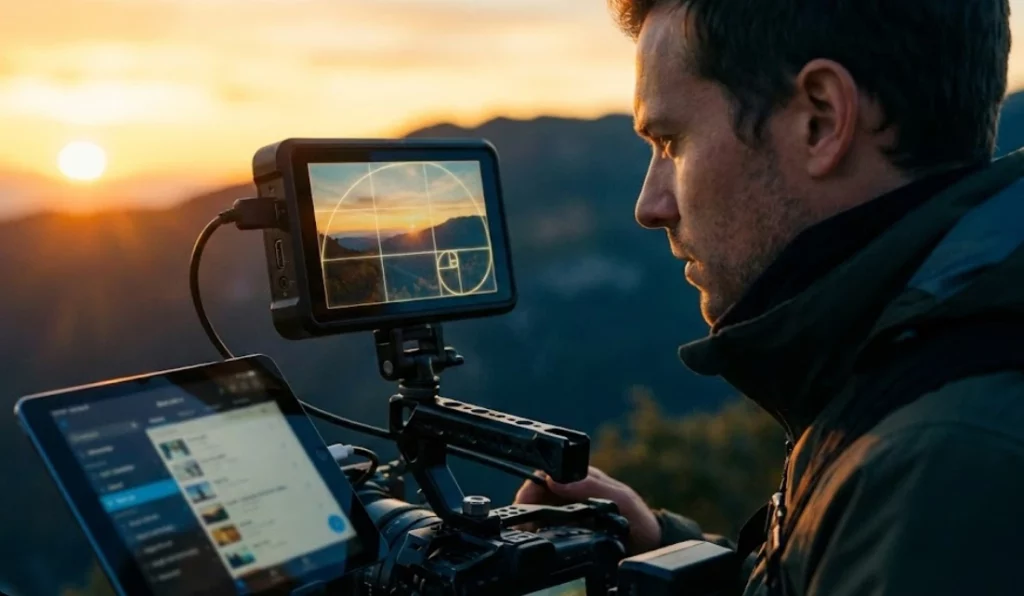
Imagine breaking an image down into thirds (both horizontally and vertically) so that you have 9 parts. Place your subject at the intersections of these lines. This technique creates more tension, energy, and interest than simply centering the subject.
Leading Lines
Use natural lines in the environment (fences, roads, hallways) to lead the viewer’s eye toward the subject. This creates a sense of depth and focus.
Camera Angles and Psychological Impact
Where you place the camera changes how the audience perceives the character. Mastering cinematography techniques for beginners requires understanding this psychological impact.
Low Angle: Shooting from below looking up makes a character look powerful, dominant, or threatening.
High Angle: Shooting from above looking down makes the subject appear vulnerable, weak, or small.
Eye Level: Creates a neutral perspective, helping the audience connect with the character on an equal footing.
Detailed planning of these angles creates a cohesive visual language. You should document every specific angle in your shot list. This guarantees that your camera team executes your vision precisely on set.
Movement that Moves the Story
Camera movement should never be arbitrary; it must serve the narrative. A static camera allows the audience to observe, while a moving camera immerses them in the action.
The Pan and Tilt: Rotating the camera horizontally (pan) or vertically (tilt) reveals information gradually.
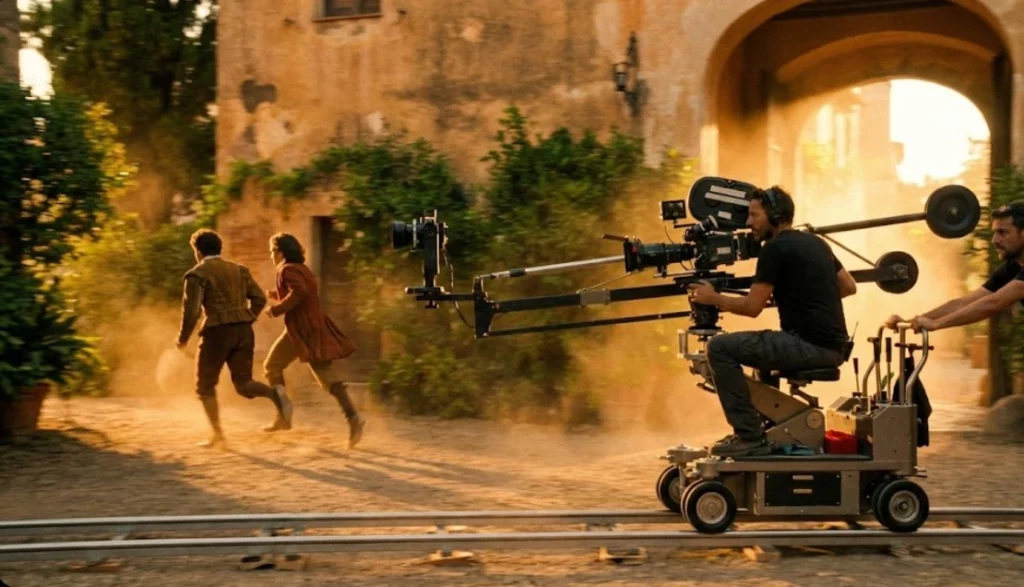
The Dolly Shot: Moving the entire camera forward or backward physically moves the audience into the scene.
The Tracking Shot: Follows a subject as they move through a space.
However, complex movements require logistical coordination. Precise film scheduling ensures you have enough time allocated to set up tracks or gimbals for these dynamic shots.
Lens Choices and Depth of Field
The lens you choose drastically alters the image. A wide-angle lens expands the space, making objects feel further apart. In contrast, a telephoto lens compresses space, bringing the background closer to the subject.
Additionally, lenses control the Depth of Field (DoF). A shallow depth of field (blurred background) isolates the subject, directing the viewer’s attention. Deep depth of field keeps everything in focus, often used for wide establishing shots.
Planning Your Visuals: The Pre-Production Phase
Even the best cinematography techniques for beginners will fail without organization. A beautiful shot is useless if the crew isn’t ready to capture it. Therefore, communication is key. You must detail equipment needs on the daily call sheet so the lighting and grip teams are prepared.
Furthermore, collaboration is vital. You need to coordinate efficiently with your cast and crew. Everyone from the gaffer to the set designer impacts the final image. Finally, always track your shoot dates on the film production calendar. This ensures you never run out of time to get that perfect “golden hour” shot.
Conclusion
Cinematography is a lifelong journey of learning and experimenting. By mastering lighting, composition, angles, and movement, you elevate your filmmaking from amateur to professional.
Start practicing these techniques today, plan your shots meticulously, and watch your stories come to life on screen.