
When the serene, snow-capped peaks of the Himalayas meet the raw, gritty passion of football, you get a cinematic masterpiece. In this detailed Real Kashmir Football Club review, we analyze how the BBC documentary series transcends sports to become a study in human resilience and exceptional filmmaking. The series follows former Rangers star David Robertson as he leaves Scotland to coach a struggling football team in Kashmir, one of the most militarized zones on earth. For filmmakers, this show is more than entertainment; it is a masterclass in capturing unscripted drama under extreme conditions.
Therefore, if you are planning your own complex production, you need the right tools to manage the chaos.
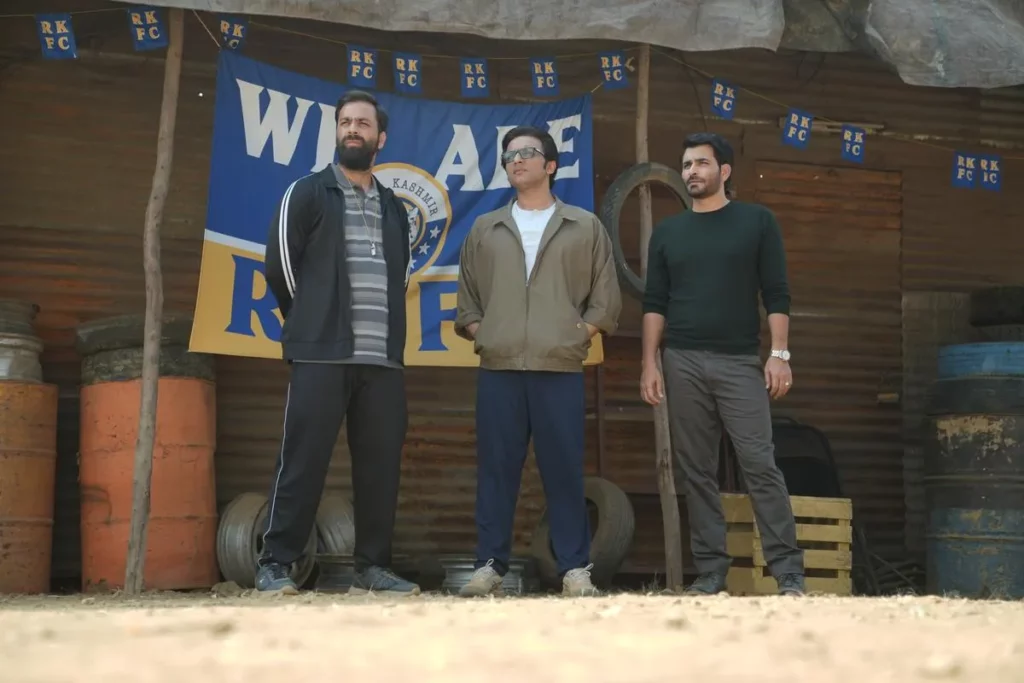
The Narrative Arc: Crafting Underdog Gold
Every great story needs a compelling “why.” In this Real Kashmir Football Club review, we notice immediately that the creators focus heavily on the stakes. They do not simply show us football matches; rather, they show us what winning means for a region defined by conflict. Consequently, the narrative structure follows a classic hero’s journey, but with a collective hero: the team itself.
Filmmakers should note how the editors balance personal interviews with kinetic match footage. The pacing is deliberate. First, they establish the isolation of the coach, David Robertson. Then, they introduce the players, each with a backstory rooted in the region’s turmoil. This technique builds emotional investment. Even if you do not like football, you root for these characters because the screenwriting—or rather, the story editing—is impeccable. For writers trying to structure their own underdog stories, using a digital Beat Board helps visualize these emotional highs and lows effectively.
Production Logistics: Filming in a Conflict Zone
From a producer’s perspective, this series is a logistical miracle. Filming in Kashmir presents unique challenges: unpredictable weather, security curfews, and limited resources. However, the production quality never dips. The crew captures intimacy in locker rooms and the vastness of the landscape with equal skill.
Imagine the coordination required here. You have a crew moving between secure hotels and freezing training grounds. Furthermore, you have to manage permissions, transport equipment through checkpoints, and schedule shoots around match fixtures that might change instantly. This is where professional Scheduling becomes the backbone of a project. Without a tight, flexible schedule, a documentary like this collapses. The “Real Kashmir” crew likely relied on dynamic stripboards to move scenes efficiently when snowstorms or security alerts cancelled a shoot day.

Character Analysis: The Coach as the Protagonist
A significant portion of this Real Kashmir Football Club review must focus on David Robertson. He is the perfect documentary subject: grumpy, passionate, and endlessly quotable. However, he is also a fish out of water. The filmmakers lean into this contrast. They film him struggling with power cuts and longing for his family, which humanizes him beyond his role as a tactical coach.
For narrative filmmakers, Robertson represents a complex character archetype. He is the mentor and the outsider simultaneously. Analyzing his relationship with the players—specifically his bond with key local talent—adds depth to the story. If you are developing a script with a similar ensemble cast, utilizing a Character Relationship Map is essential. It allows you to track how the protagonist connects with every supporting character, ensuring that every interaction on screen serves the larger story.
Visual Storytelling: Cinematography Meets Reality
Visually, the series is stunning. The cinematographers use the natural light of the Himalayas to create a mood that is both melancholic and hopeful. Moreover, the contrast is stark. You see vibrant green turf against grey skies and white snow. You see the warmth of the team bus against the cold steel of military checkpoints.
This visual language effectively communicates the central theme: life thrives even in difficult conditions. Furthermore, the camera work during the matches is visceral. It puts the viewer right on the pitch. Achieving this requires precise planning. The director and Director of Photography (DOP) must agree on a Shot List beforehand to ensure they capture the necessary coverage without interfering with the game. In unscripted content, you only get one chance to capture a goal or a moment of heartbreak. Therefore, planning your shots is just as critical in documentaries as it is in fiction.

Managing the Chaos: Why Tools Matter
Ultimately, the success of Real Kashmir FC lies in its execution. The story was there, but capturing it required immense organization. The production team had to track assets, manage crew travel, and keep an eye on the budget in a volatile economy.
Similarly, independent filmmakers often face their own versions of these challenges. You might not be in a conflict zone, but you still battle time, money, and logistics. Using a centralized platform to manage your Call Sheets and Movie Budgeting ensures that your creativity isn’t stifled by administrative chaos. The “Real Kashmir” team succeeded because they were prepared.
Conclusion: A Victory for Storytellers
In summary, this Real Kashmir Football Club review finds the series to be a triumph. It successfully blends sports, politics, and human drama into a cohesive narrative. It teaches filmmakers that the best stories are often found in the most unexpected places. However, finding the story is only step one. Telling it requires planning, structure, and the right team.
Whether you are shooting a documentary in the mountains or a short film in the city, the principles remain the same. You need a vision, and you need a plan to execute it.
Ready to organize your production like a pro?