Stepping onto a professional movie set is an exhilarating experience, yet it is also a high-stakes environment where time literally equals money. Therefore, understanding proper film set etiquette is not merely about politeness; it is a critical skill that determines whether a production runs smoothly or spirals into costly chaos. Every crew member, from the Director to the Production Assistant, plays a vital gear-like role in this machine. Consequently, if one gear slips, the entire engine stalls.
Successful filmmakers know that film set etiquette is the invisible glue holding a production together. It ensures safety, efficiency, and creative focus. Whether you are an industry veteran or a first-time director, adhering to these unspoken rules is non-negotiable. Furthermore, mastering film set etiquette will protect your reputation and ensure you get hired again. In this guide, we will break down the 9 essential rules you need to know to maintain a professional, high-performance environment.
A film set is not a democracy; it is a strict hierarchy designed for speed and decision-making. The Director steers the creative ship, while the First Assistant Director (1st AD) manages the clock and safety. Therefore, understanding who reports to whom is the foundation of film set etiquette.
For example, if you are a Grip, you report to the Key Grip, not the Director of Photography (DOP) directly. Bypassing your immediate superior creates confusion and bottlenecks communication. Consequently, you must always respect the chain of command. If you have a brilliant idea or a safety concern, pass it to your department head. They will determine if it needs to go up the ladder. This structure keeps the set quiet and focused, allowing the Director to work with the actors without distraction.
2. Punctuality is Non-Negotiable
In the film industry, the saying goes: “If you are early, you are on time. If you are on time, you are late. If you are late, you are fired.” This might sound harsh, but it is the reality of professional production. Punctuality is the cornerstone of film set etiquette.
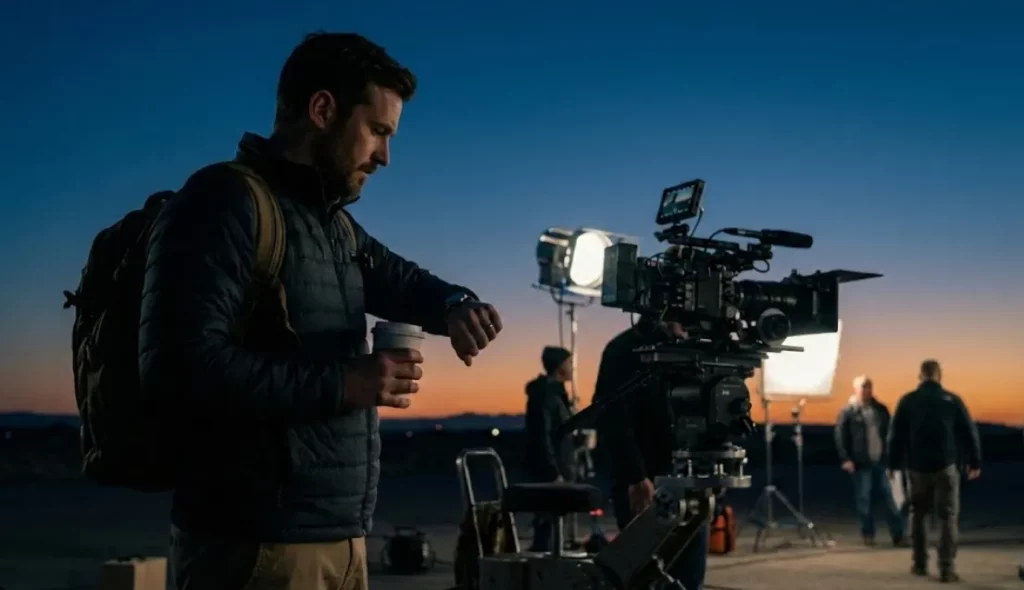
Your “Call Time” is the exact moment you must be ready to work, not the time you pull into the parking lot. Therefore, you should arrive at least 15 minutes early to grab coffee, settle in, and read your Call Sheet. This document is your bible for the day. It tells you where to be, when to be there, and what scenes are up first. Ignoring the call sheet is a major breach of etiquette because it forces the entire crew to wait for you, burning the budget with every ticking second.
3. Silence is Truly Golden
“Quiet on set!” is a command, not a suggestion. When the camera is rolling, absolute silence is required. However, film set etiquette demands that you keep your volume low even between takes. Loud chatter distracts actors who are trying to stay in character and prevents department heads from communicating effectively.
Moreover, silence applies to your technology as well. Phones must be on silent—not vibrate, but silent. A buzzing phone ruined a perfect take is a surefire way to get kicked off a set. Additionally, if you are using radios or walkie-talkies, keep your earpiece volume low so it doesn’t bleed into the set audio. If the AD calls for “Points” or “Rolling,” stop talking immediately and freeze if you are in the actor’s eyeline.
4. The "Don't Touch" Rule (Stay in Your Lane)
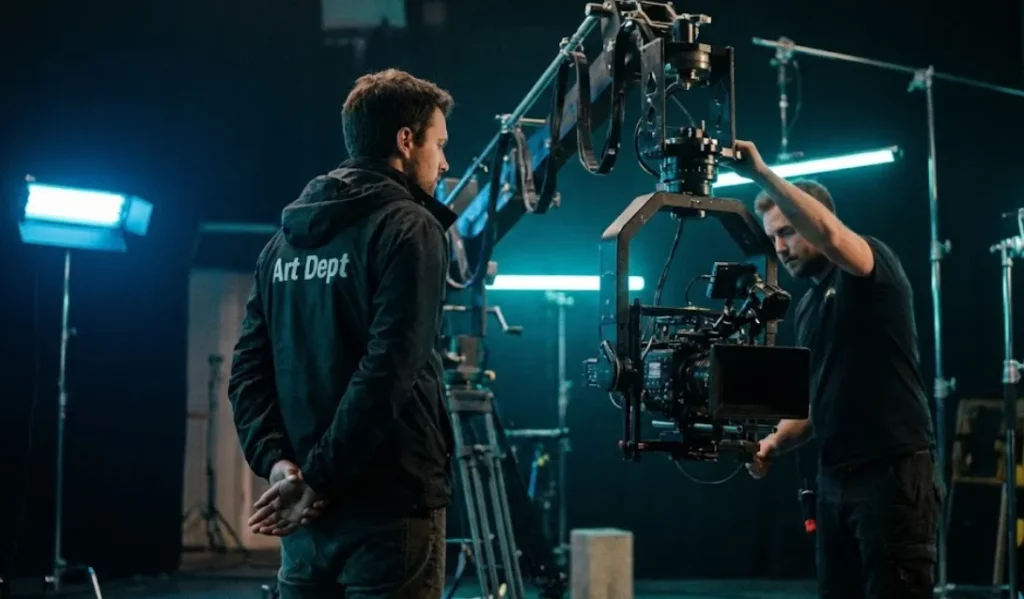
One of the fastest ways to offend a crew member is to touch equipment that doesn’t belong to your department. Film set etiquette dictates a strict “hands-off” policy. If you are in the Art Department, do not move a light stand. If you are an Actor, do not adjust the camera lens.
There are two reasons for this. First, safety. You might not know that a C-stand is balancing a heavy load, and moving it could cause injury. Second, continuity. The Props team has placed items specifically for the shot; moving a coffee cup three inches to the left can ruin the continuity between takes. Therefore, if something is in your way, politely ask the relevant department to move it. They will appreciate your respect for their craft.
5. Prioritize Safety Above All Else
A film set is an industrial work zone filled with high-voltage cables, heavy machinery, and sometimes pyrotechnics. Consequently, safety protocols are a massive part of film set etiquette. You must always be aware of your surroundings.
Never run on a set. Running creates panic and increases the risk of tripping over cables. Speaking of cables, always step over them, never on them. If you see a safety hazard, such as a loose rig or a wet floor, report it immediately to the 1st AD. Do not assume someone else has seen it. Furthermore, if you are feeling fatigued, speak up. The long hours of production can lead to mistakes, and admitting you need a quick break is better than causing an accident due to exhaustion.
6. Communication Protocols and Radio Discipline
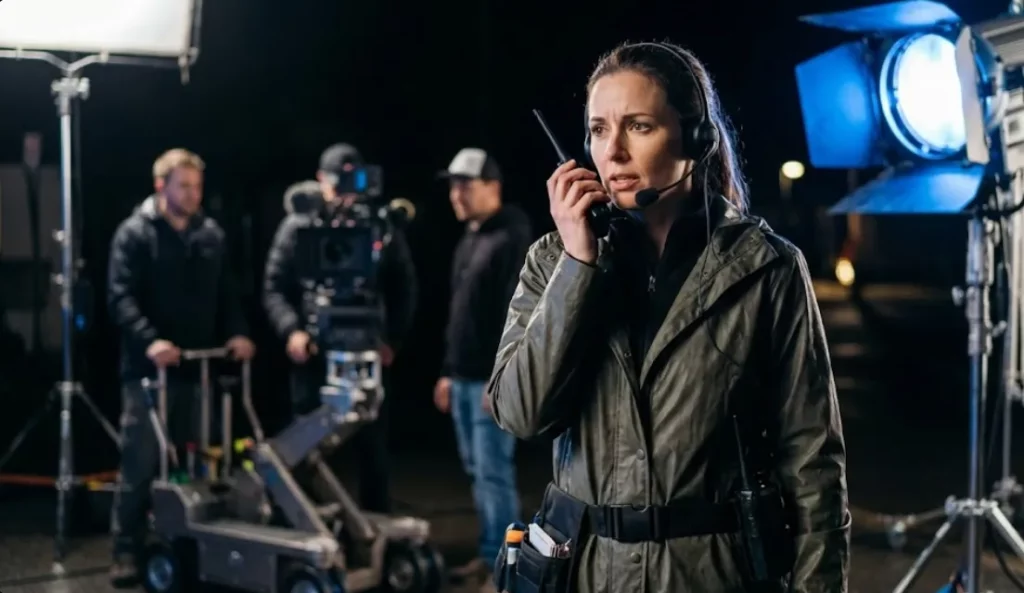
Clear communication saves time. Professional crews use specific terminology to keep messages short and unmistakable. For instance, “Copy that” means you heard and understood. “Flying in” means you are bringing an item to the set immediately. “10-1” indicates you are stepping away to the restroom.
Using these codes is a sign of good film set etiquette. It keeps the radio channels open for urgent information. Additionally, keep your chatter professional. The open radio channel is not the place for jokes or gossip. Everyone, including the Producers, can hear you. Therefore, maintain a professional demeanor at all times. Tools like Studiovity’s Task Manager can also help reduce radio clutter by assigning non-urgent tasks digitally.
7. Respect the Talent (Actors)
Actors have a uniquely difficult job; they must be emotionally vulnerable in a room full of strangers. Thus, respecting their process is crucial. Do not stare at actors, ask for autographs, or try to chat with them right before a scene. This breaks their concentration.
Unless you are the Director, the AD, or the makeup artist touching them up, give them space. Furthermore, avoid standing in their “eyeline” (the direction they are looking during a scene). If an actor sees a crew member yawning or checking their phone in their line of sight, it pulls them out of the moment. Consequently, finding a spot out of view during the take is essential film set etiquette.
8. Craft Services and Food Manners
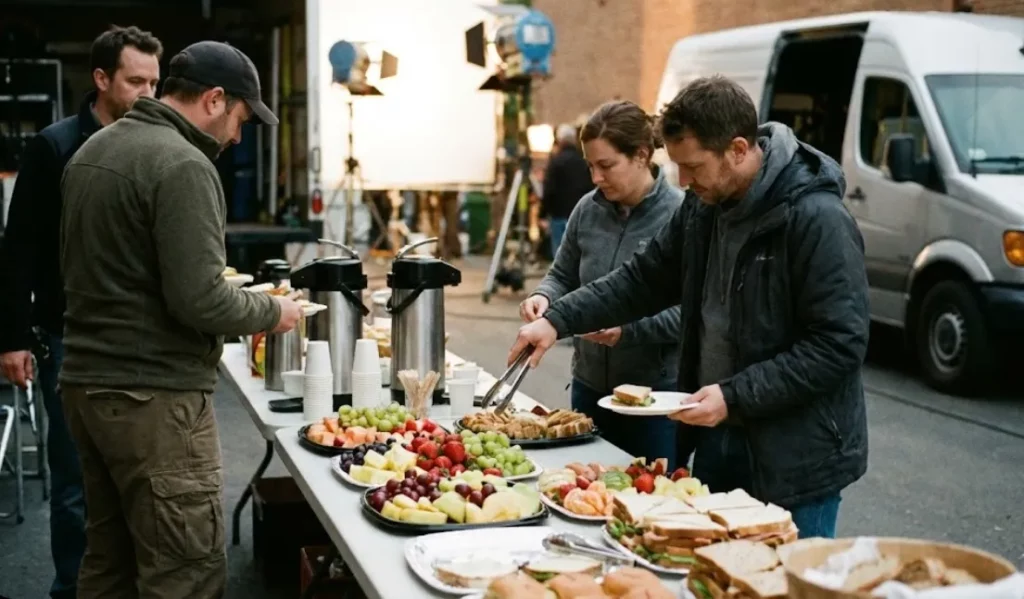
Craft services (the snack table) is a wonderful perk, but it also has its own set of rules. First, remember that the “first team” (actors and key crew) usually eats first to get back to work quickly. Wait your turn.
Additionally, don’t treat the craft service table like a personal grocery store. Take what you need for the moment. Wastefulness is frowned upon, especially on indie productions with tight budgets. Moreover, always clean up after yourself. Leaving empty coffee cups or half-eaten plates around the set is disrespectful to the locations team and creates a messy work environment.
9. The Wrap: Leave It Better Than You Found It
The day isn’t over when the Director calls “Wrap.” Post-shoot etiquette is just as important. Help your department pack up gear efficiently. Do not just sprint to your car.
Furthermore, ensure the location is pristine. We are often guests in someone’s home, business, or city. Leaving a mess ensures that the production will never be allowed to film there again. Therefore, do a final sweep for trash, tape, and gear. A disciplined wrap out leaves a lasting positive impression on the location owners and the production heads.
Conclusion: Efficiency is the Ultimate Etiquette
Ultimately, film set etiquette is about efficiency and respect. It is about creating an environment where art can happen on schedule and under Budget. When every crew member follows these 9 rules, the friction of production disappears, leaving room for creativity to flourish.
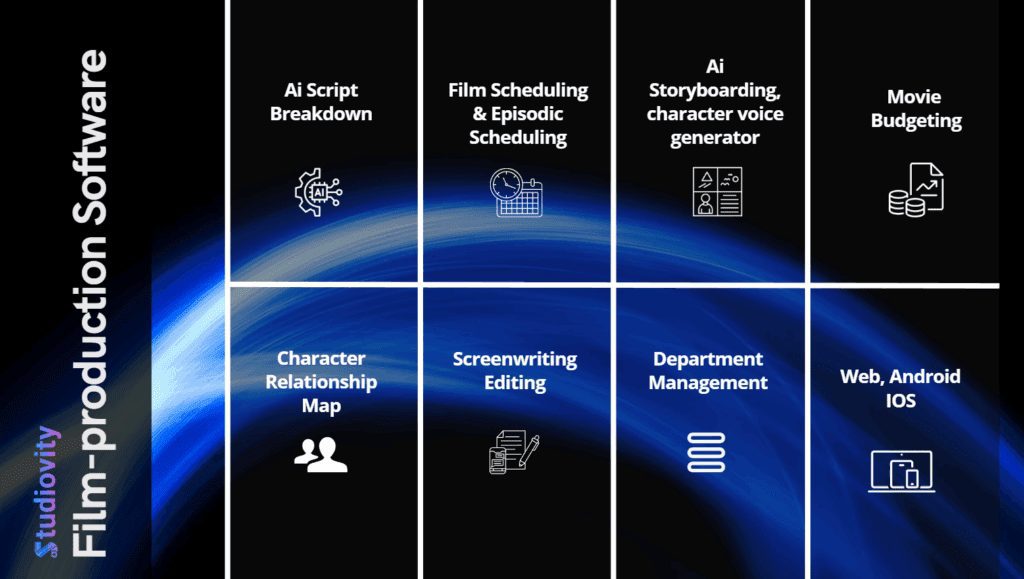
To maintain this level of organization before you even step on set, utilize tools that enforce structure. Platforms like Studiovity AI help you manage Script Breakdowns and Scheduling with precision, ensuring that when your crew arrives, they are walking into a professional, well-oiled machine.
Script breakdown elements are the production requirements hidden inside every scene: the characters, background actors, props, set dressing, wardrobe, makeup, locations, vehicles, animals, stunts, effects