The landscape of advertising has shifted beneath our feet. For decades, the formula was simple: hire a massive movie star, put a product in their hand, and watch sales skyrocket. However, the effectiveness of celebrity endorsements in commercials is no longer a guarantee. Modern audiences are skeptical, platforms are fragmented, and the definition of “celebrity” itself has fractured. Producers and directors must now ask a critical question before greenlighting a multi-million dollar talent budget: does the face on the screen actually move the needle, or is it just an expensive vanity metric?
The Shift from Aspiration to Relatability
In the golden age of television, celebrity endorsements in commercials worked because they offered a window into an aspirational lifestyle. If George Clooney drank that coffee, you wanted that coffee. But social media shattered that glass ceiling. Today, audiences crave relatability over distance.
Consequently, we are seeing a massive pivot toward “creators” over traditional “stars.” A YouTuber with a dedicated niche audience often commands higher conversion rates than a Hollywood A-lister with broad, diluted appeal. For example, Ryan Reynolds’ Mint Mobile ads succeed not just because he is famous, but because he breaks the fourth wall. He acts as a creator, acknowledging the artifice of the ad. This authenticity builds trust. Conversely, traditional “hold the product and smile” spots are increasingly ignored by Gen Z and Millennial viewers who view them as inauthentic cash grabs.
The Financial Stakes: Balancing Budget and Impact
Hiring A-list talent fundamentally alters the financial structure of a production. You aren’t just paying for the shoot days; you are paying for usage rights, exclusivity, and residuals. This can cannibalize the budget for production value, VFX, or media buying.
Therefore, precise financial planning is non-negotiable. Before you lock in a star, you must run the numbers. Using professional Movie Budgeting Software allows producers to create comparative scenarios. You can model a budget with an A-list celebrity versus a budget that reallocates those funds into higher production value or broader distribution. Often, the data reveals that a mid-tier talent with high engagement offers a better ROI than a top-tier star with low relevance to the product.

When It Goes Wrong: The Risk of the "Wrong Fit"
History is littered with celebrity endorsements in commercials that backfired spectacularly. The most infamous example remains the Kendall Jenner Pepsi ad. It failed because the partnership felt cynical and tone-deaf. The celebrity overpowered the message, and the lack of authentic connection to the social cause sparked immediate backlash.
This highlights a crucial production lesson: the creative concept must come first. If the script is weak, no amount of star power can save it. In fact, a celebrity shines a brighter spotlight on a bad script. This is why the writing phase is critical. Using AI-powered Screenwriting Software allows creative teams to iterate rapidly. You can use tools like the AV Script format to visualize exactly how the talent interacts with the product, ensuring the narrative supports the endorsement rather than relying on it as a crutch.
Navigating the logistics of A-List Talent
Let’s assume the creative concept is solid and the celebrity is a perfect fit. Now you face the logistical nightmare of execution. A-list talent operates on incredibly tight schedules. You might have them for four hours, hard out.
Consequently, your on-set efficiency must be military-grade. There is no room for “figuring it out” on the day.
Shot Listing: Every angle must be pre-planned. Using Shot List & Storyboard Tools ensures the DP and Director know exactly what coverage is needed before the talent arrives.
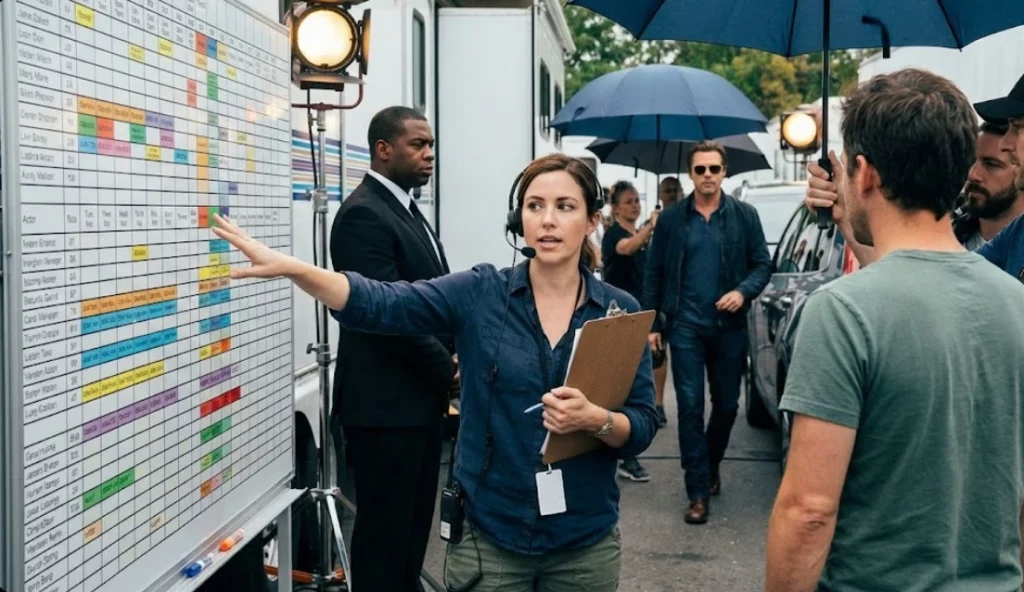
Scheduling: You need a rock-solid timeline. Scheduling Software helps you front-load the celebrity’s scenes, ensuring you capture their coverage efficiently without incurring massive overtime penalties.
Communication: Every crew member needs to know the plan. Automated Call Sheet Software ensures the entire unit is aligned on the talent’s arrival, holding areas, and movement logistics.
The Rise of the "Brand Partner" vs. The "Endorser"
Successful celebrity endorsements in commercials today look less like paid acting gigs and more like partnerships. We are seeing celebrities take equity stakes (like Michael Jordan with Nike or Reynolds with Aviation Gin).
This shift changes the production dynamic. The talent becomes a stakeholder. They are involved in the creative process. They care about the output. For production houses, this requires a collaborative workflow. You need tools that allow for easy sharing and feedback. Cloud-based Script Breakdown Software allows agencies and talent teams to review requirements instantly, ensuring that the partnership remains transparent and aligned from pre-production through post.
Conclusion: Authenticity Wins the Day
So, do celebrity endorsements in commercials still work? The answer is yes, but with a massive asterisk. They work if the partnership is authentic, if the creative is strong, and if the production is executed flawlessly. The days of slapping a famous face on a billboard are over. Today, it’s about storytelling, strategy, and seamless execution.
Whether you are shooting a Super Bowl spot with a movie star or a digital campaign with a micro-influencer, the fundamentals of production remain the same. You need a great script, a solid plan, and the right tools to bring it to life.
Don’t let logistics kill your creative vision. Streamline your entire commercial production workflow today.