They say a film is made three times: once on the page, once on set, and once in the edit. However, experienced producers know the truth—the battle is won or lost long before the cameras roll, making a definitive Film Pre-Production Guide the most critical tool in your arsenal.
In an industry where 70-80% of independent films fail to recoup their investment due to mismanagement, pre-production is not just a phase; it is your insurance policy. It is the architectural blueprint that transforms a chaotic creative spark into a disciplined logistical machine. Without a solid pre-production strategy, even the best scripts can crumble under the weight of budget overruns and scheduling conflicts.
This guide will walk you through the modern, professional workflow—from locking your script to generating your first call sheet—ensuring your project is greenlit for success.
The foundation of any effective Film Pre-Production Guide begins with the script. However, simply having a screenplay is not enough; you must deconstruct it.
First, ensure your screenplay is formatted to industry standards using professional Screenwriting Software. Once your draft is locked, the real work begins: the breakdown.
Traditionally, breaking down a script involved highlighters, paper strips, and weeks of manual labor. Today, you can accelerate this process by 70%. Using AI-powered Script Breakdown tools, you can automatically identify and tag every prop, character, vehicle, and location in seconds. This data creates the “assets” of your film, populating your department lists instantly. Consequently, you move from creative writing to logistical planning in a single click.
Phase 2: Budgeting and Financial Strategy
A vision without a budget is merely a hallucination. Therefore, the next critical step in our Film Pre-Production Guide is financial structuring.
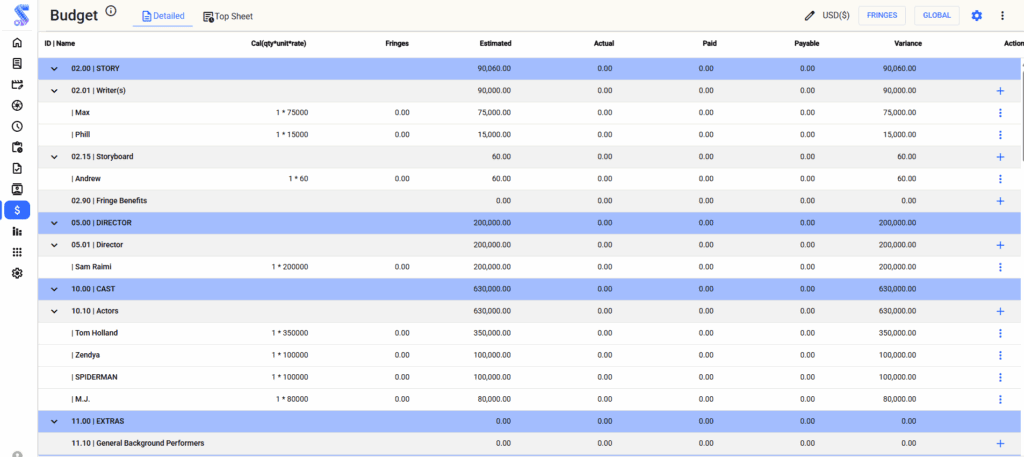
Your breakdown data directly informs your budget. If your script calls for a vintage 1970s Camaro, your budget line item must reflect that reality. Utilizing specialized Movie Budgeting tools allows you to create detailed top sheets and granular line items.
Modern platforms allow you to track “Estimated” versus “Actual” costs in real-time. Furthermore, you can manage complex financial elements like fringes, union fees, and multi-currency accounts if you are shooting internationally. Accuracy here prevents the dreaded mid-production cash flow freeze.
Phase 3: Visualizing the Narrative
Once the logistics are taking shape, you must define the visual language of your film. This is where the Director of Photography (DOP) and Director align their visions.
Creating a Shot List & Storyboard is non-negotiable. You need to decide: Is this scene a Steadicam one-r or a frantic series of handheld close-ups?
Storyboarding: Use AI tools to generate visual panels directly from your script text, visualizing camera angles and lighting moods instantly.
Shot Listing: Organize these visuals into a coherent shooting order.
This visual blueprint ensures that when you arrive on set, you are executing a plan, not searching for one.
Phase 4: Scheduling and Logistics
Time is the most expensive commodity on a film set. Therefore, an efficient schedule is the backbone of this Film Pre-Production Guide.
You must take all your broken-down scenes and arrange them into a shooting order that makes logistical sense. This is done using a digital “stripboard” in your Scheduling Software.
Group by Location: Shoot all scenes at the “Diner” location on the same day to save on unit moves.
Daybreaks: Insert digital daybreaks to define realistic 12-hour shooting days.
Cast Availability: Ensure your lead actors are only scheduled when absolutely needed.
A smart schedule saves days of production time, which translates to thousands of dollars saved in crew wages and equipment rentals.
Phase 5: Crewing and Communication
The final piece of the puzzle is communication. You have your plan; now you need to distribute it.
Your daily Call Sheets are the marching orders for your army. In a modern workflow, you should never type a call sheet manually. Instead, generate it directly from your schedule. This ensures that every prop, actor, and location tagged in Phase 1 and scheduled in Phase 4 is automatically populated onto the call sheet for the correct day.
In addition, robust Task Management keeps your department heads aligned on deadlines, while a centralized Production Calendar ensures everyone is aware of macro-level milestones.
Conclusion
Following a structured Film Pre-Production Guide is what separates amateur projects from professional productions. It reduces human error, optimizes your budget, and, most importantly, frees you up to focus on creativity when the camera starts rolling.
Don’t let logistics kill your story. Embrace a workflow that works as hard as you do.