
AI breakdown tools have changed prep. A script that once took a day or more to tag can be analyzed in minutes. But speed creates a new responsibility: someone still has to check the result before it drives the schedule, the budget and the call sheets. A quick, structured QA pass is what turns a fast breakdown into a trustworthy one. Learning how to QA an AI script breakdown is what turns that speed into a lock you can trust.
Start with the scene list
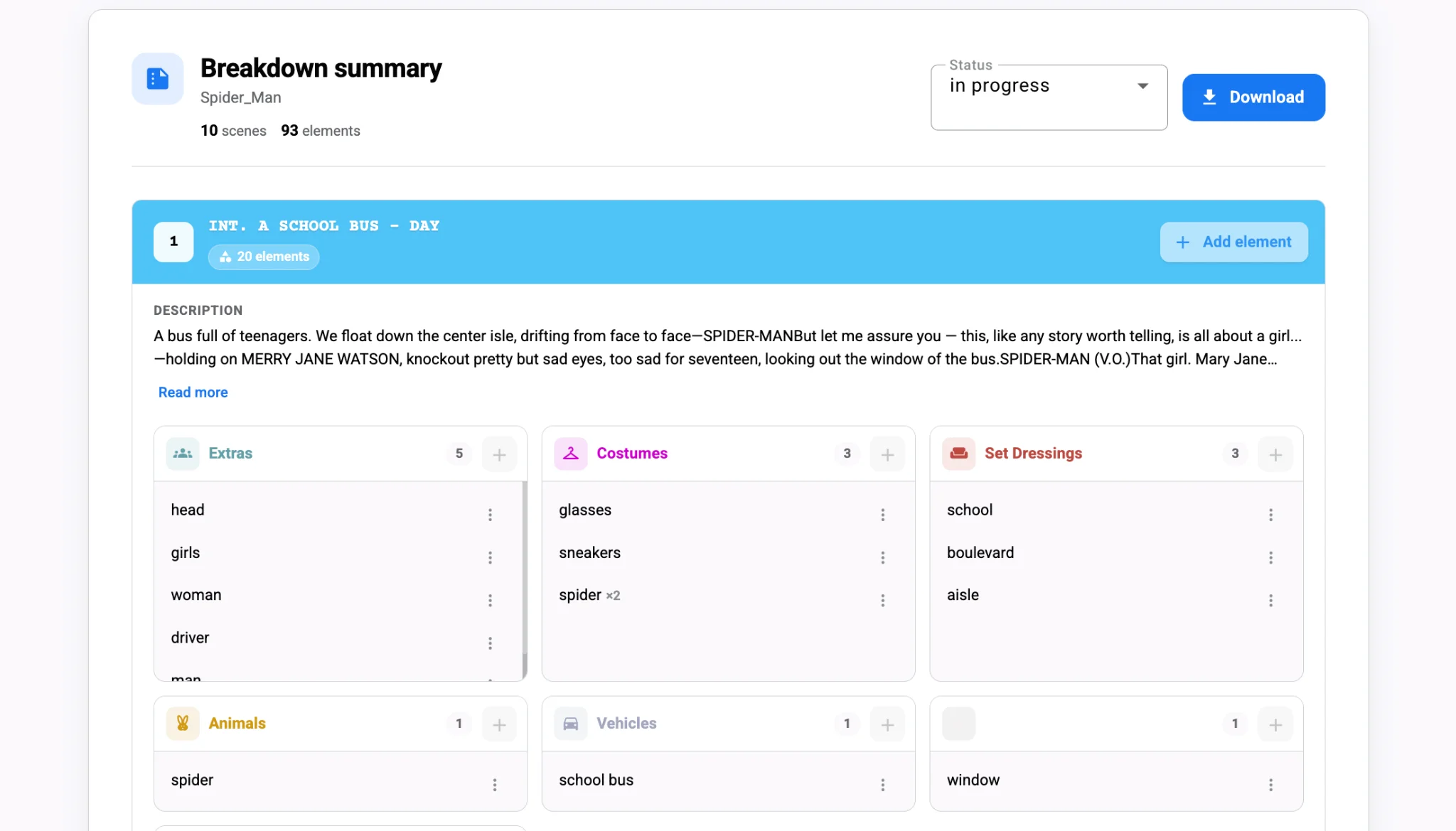
Before looking at individual tags, check the skeleton. Confirm that the scene count matches the script, that scene numbers are in order and that every heading has the correct INT or EXT and day or night. Look for set names that should be merged. If the skeleton is wrong, every report built on it will be wrong too. For the classic element inventory that sits beside this AI review, see the script breakdown checklist for film and TV.
Use the summary to scan for outliers
Studiovity’s AI script breakdown software produces a breakdown summary that lists every scene with its tagged elements and status, along with totals such as the number of scenes and elements. That overview is ideal for spotting outliers:
- Scenes with zero elements, which usually means something was missed.
- Scenes with unusually high counts, which may contain duplicates.
- Characters who appear only once, which can be typos or alternate spellings.
- Categories that are suspiciously empty across the whole script, such as no vehicles in a road movie.
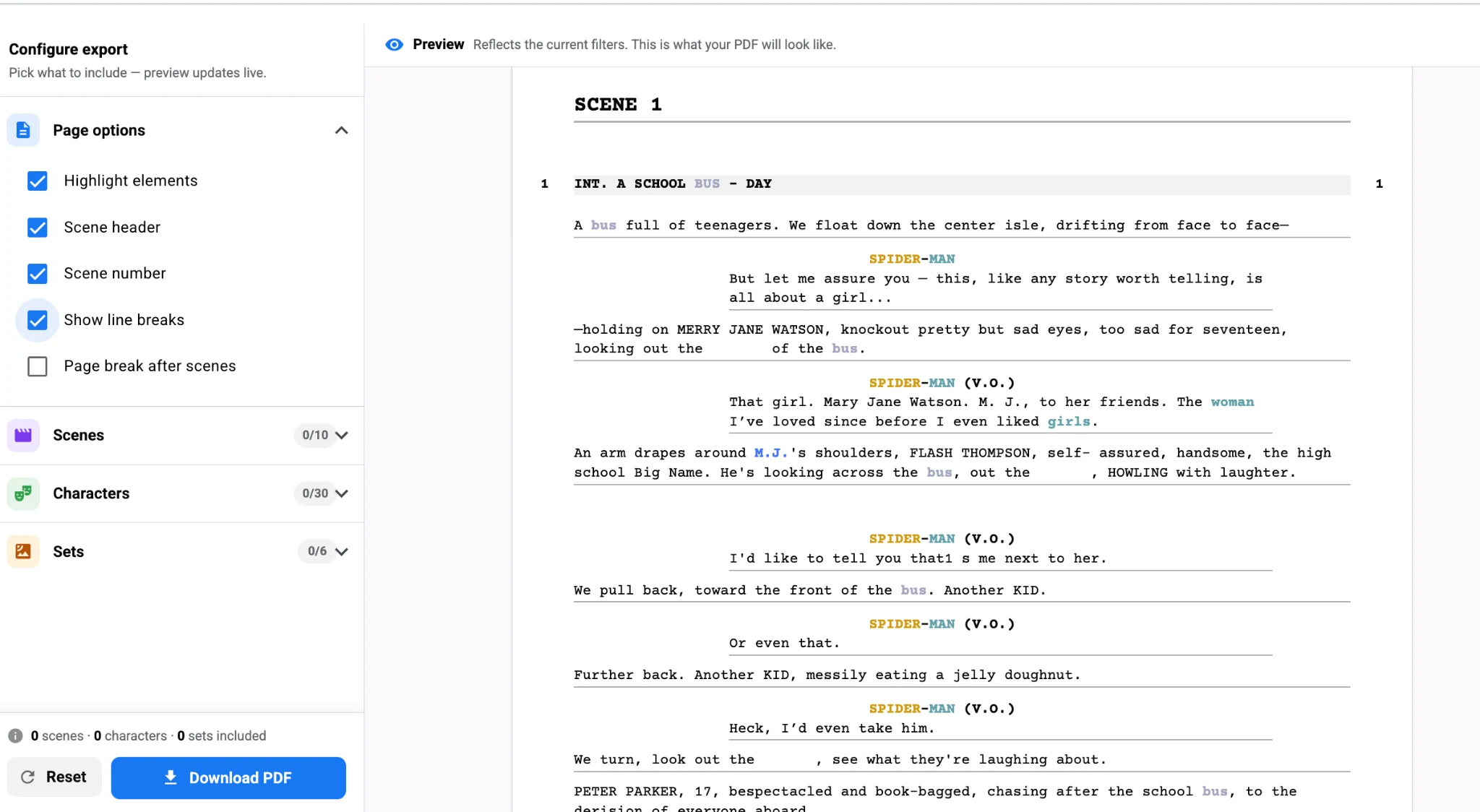
Mark each scene’s status as you review it. A clear "checked" flag lets several people share the QA work without covering the same ground twice.
Read the action lines the AI cannot see behind
AI tags what the script says. QA is about what the script implies. Re-read action-heavy scenes looking for hidden work: "they fight" implies a stunt coordinator, "the storm hits" implies rain towers and wind machines, "the party is in full swing" implies a crowd count and music playback. Add those tags manually and note what you assumed.
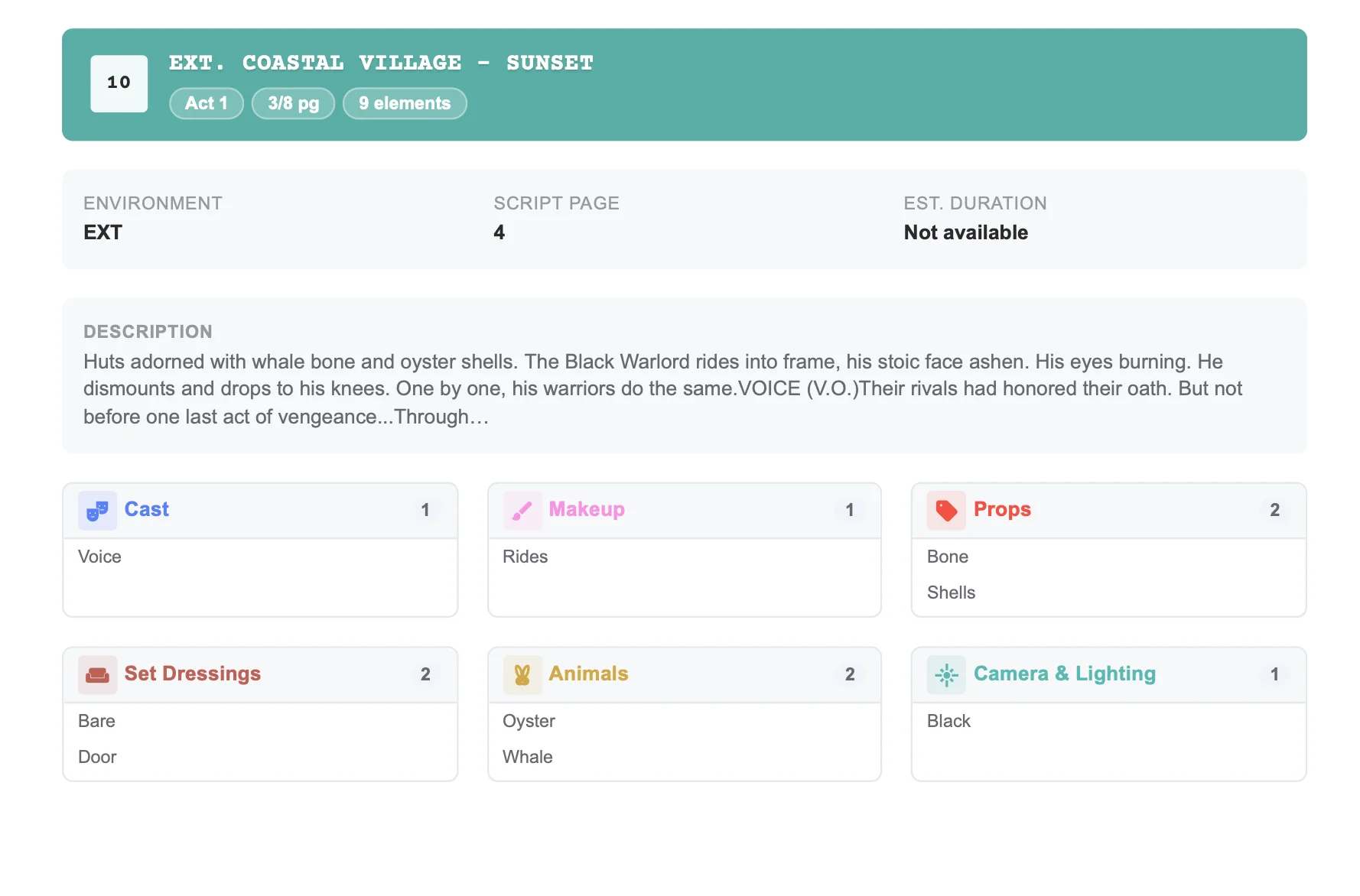
Check the high-cost categories first: stunts, effects, vehicles, animals and large crowds. A missed coffee cup is a minor fix on the day. A missed stunt is a safety issue and a budget problem.
Get department heads to sign off
The last step is outside review. Export filtered reports from the breakdown tool, one per department, and ask each head to confirm their list or send corrections. This is the cheapest way to catch gaps, because specialists notice what generalists miss. Feed their corrections back into the breakdown so there is still only one source of truth. Filtered lists for each HOD pair well with department breakdown reports so sign-off stays in one source of truth.
Once QA is complete, the elements flow into the shooting schedule and on to call sheets. If something changes later, re-run the AI on the revised pages and repeat the QA on the affected scenes only.
Keep a short checklist of these steps in the project notes so every breakdown, on every project, goes through the same review.
The payoff
AI gives you a draft breakdown in minutes. A focused QA pass gives you one you can lock. Verify the scene list, scan the summary for outliers, read for implied work, prioritize expensive categories and get department sign-off. Run your next review in Studiovity’s AI script breakdown and lock prep with confidence.