
If you have ever wondered, “How Assistant Directors Use Call Sheets to Keep Film Sets Organized,†the answer starts with one simple idea: the call sheet turns a complicated shoot day into a shared plan. Assistant directors use it to communicate
Related video: Studiovity AI mobile call sheet
where people need to be, when they need to arrive, what scenes are being filmed, and what practical details could affect the day. When it is clear, accurate, and distributed on time, the call sheet becomes the production’s daily operating system.
On a busy set, people do not have time to chase scattered messages or guess what comes next. A well-built assistant director call sheet gives cast, crew, departments, and production leadership one reference point for the day’s schedule, locations, contacts, safety notes, and workflow priorities.
What is an assistant director call sheet?
An assistant director call sheet is the daily production document prepared and managed by the AD team to organize the next filming day. It outlines call times, scenes, location details, cast requirements, crew instructions, weather notes, parking, meal timing, contact information, and any special alerts that help the company arrive prepared.
In practice, the AD call sheet is more than a schedule. It is a coordination tool that connects the shooting plan with real-world logistics. The director may be focused on performance and story, the producer may be watching resources and approvals, and department heads may be managing their teams, but the assistant director uses the call sheet to align everyone around the same operational plan.
The first assistant director usually leads the schedule and set flow, while the second assistant director often handles much of the call sheet creation, confirmation, and distribution. On smaller productions, one person may cover multiple AD responsibilities. Regardless of crew size, the goal is the same: remove uncertainty before the day begins.
The call sheet as the command center for a shoot day
Film sets involve constant movement. Actors arrive for hair, makeup, and wardrobe. Lighting teams pre-rig setups. Camera departments prepare gear. Locations teams manage access, parking, and neighborhood concerns. Production assistants guide people, move paperwork, and help keep the day flowing.
Without a centralized document, all of those moving parts can drift out of sync. Film call sheets prevent that drift by translating the production schedule into specific instructions for one day of work. They help people understand not just what is happening, but how their responsibilities fit into the larger plan.
Good production call sheets answer the questions that slow a set down when they are unclear:
- Who is needed? Cast, background, stand-ins, specialty crew, and key department contacts.
- When are they needed? General crew call, individual call times, pre-calls, rehearsals, and estimated wrap expectations.
- Where should they go? Basecamp, parking, holding, set, unit base, or department-specific locations.
- What is being filmed? Scene numbers, script pages, set descriptions, day or night notes, and production requirements.
- What could affect the day? Weather, company moves, stunts, special effects, animals, minors, road closures, or sensitive locations.
That clarity is why filmmaking call sheets are used across features, short films, commercials, music videos, television, branded content, and independent productions. The format may change, but the purpose remains consistent: give the entire team the information they need before they step onto set.
How assistant directors build order before cameras roll
The most organized shoot days are usually built the night before. Once the next day’s schedule is confirmed, the AD team gathers information from production, locations, transportation, camera, grip and electric, wardrobe, makeup, art, sound, and other departments. Then they convert that information into a call sheet that is readable under pressure.
This is where an assistant director’s judgment matters. The document cannot include every possible detail, or nobody will read it. It also cannot be too vague, or people will arrive with questions that should have been answered already. Strong ADs know how to include the details that keep the day moving while leaving deeper department-specific instructions to the right channels.
A practical call sheet workflow often includes:
- Confirm the schedule. The AD team checks the stripboard, one-liner, or shooting schedule to confirm scenes, page count, location order, and any company moves.
- Verify cast and background needs. Call times must account for prep, travel, wardrobe, hair, makeup, rehearsals, and scene order.
- Collect department notes. Departments flag gear needs, special setup time, safety concerns, or timing changes.
- Check location logistics. Parking, holding, restrooms, access windows, neighborhood restrictions, and map links must be accurate.
- Add safety and legal notes. This may include stunts, weapons, intimacy work, minors, animals, drones, weather concerns, or restricted areas.
- Review for clarity. The AD or production team checks names, times, addresses, scene information, and contact details before distribution.
- Distribute and track updates. The final call sheet is sent to cast and crew, and any changes are communicated clearly.
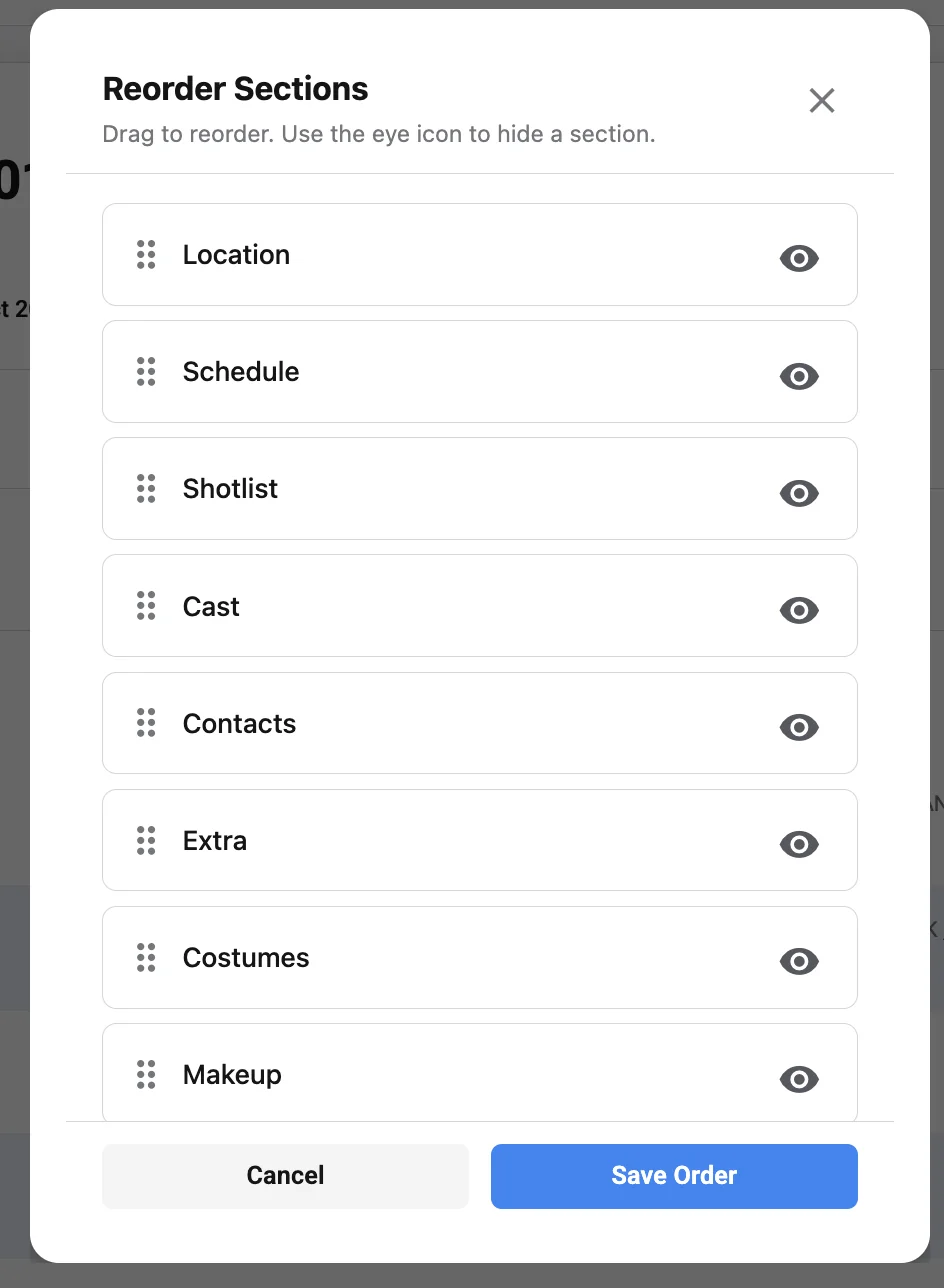
Modern tools can make this process smoother. For example, Studiovity call sheet software (https://studiovity.com/call-sheet-software/) helps productions create, manage, and share call sheets digitally, which can reduce manual formatting and make updates easier to distribute across a team.
What should be included in an AD call sheet?
An AD call sheet should include the essential information cast and crew need to arrive prepared, work safely, and follow the day’s plan. The exact layout varies by production, but the strongest call sheets organize details in a logical sequence so people can find urgent information quickly.
Many call sheet examples share a similar structure because production teams have learned what information gets used most often. The top of the document usually carries the production title, shoot date, day count, general call time, key contacts, and location summary. From there, the document breaks into schedule, cast, crew, departments, notes, and safety information.
Core production details
The top section sets the context. It should identify the project, production company or unit if relevant, shoot day, date, and location. It may also include sunrise and sunset, nearest hospital, weather, parking instructions, and the main contacts for production and the AD department.
This section is especially important when a production has multiple units, multiple locations, or a large crew. If someone opens the call sheet quickly on a phone, they should be able to confirm the date, call time, and destination without searching through the whole document.
Shooting schedule and scene information
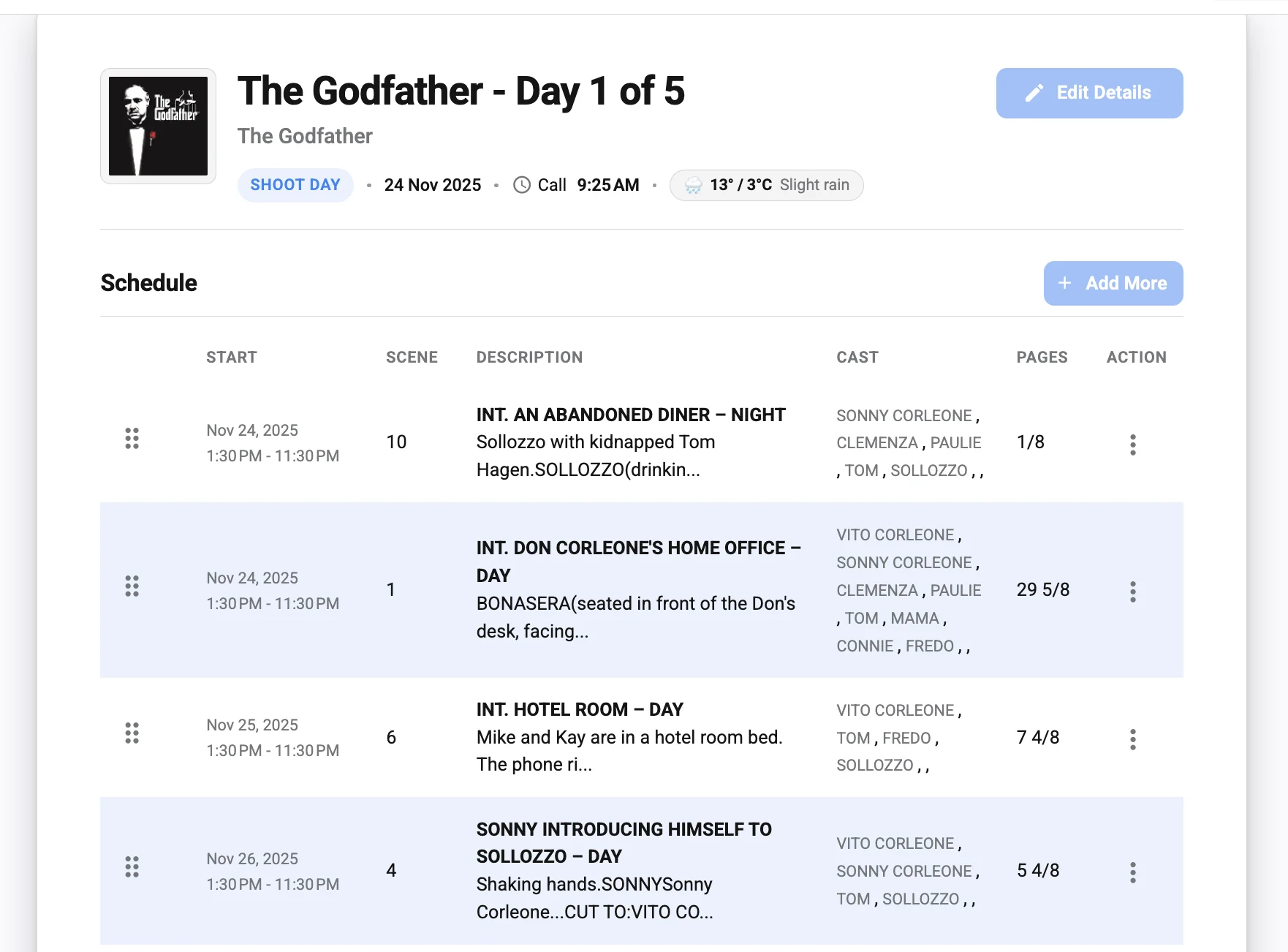
The schedule section explains what will be filmed. It usually includes scene numbers, set names, script page counts, a short description, day or night setting, cast involved, and notes about special requirements. This helps departments prepare for what is actually being captured, not just where the crew is reporting.
For the AD team, this section also supports pacing. If the day contains difficult scenes, company moves, or setups that need extra time, the call sheet helps everyone understand the shape of the day before the first setup begins.
Cast, crew, and department call times
Individual call times are one of the most important parts of movie call sheets. Not everyone should arrive at the same time. Hair and makeup may need cast early, lighting may need pre-call access, background actors may report later, and certain departments may wrap at different times depending on the schedule.
Accurate call times prevent both delays and wasted labor. If cast arrive too late, the first shot may slip. If too many people arrive too early, holding areas become crowded and departments may lose focus. The AD call sheet helps balance readiness with efficiency.
Location, parking, and movement notes
Location logistics can make or break the start of the day. A call sheet should make it clear where crew should park, where cast should report, where trucks should load in, and whether there are special access instructions. If there is a company move, the call sheet should clearly indicate when and where that move occurs.
This information is particularly valuable on productions that shoot in public spaces, private homes, remote areas, active businesses, or multi-building locations. Clear directions reduce late arrivals and avoid unnecessary calls to the production office or AD team.
Safety notes and special instructions
Safety information should never feel like filler. If the day involves stunts, weapons, vehicles, water, fire, smoke, animals, minors, intimacy work, extreme weather, or difficult terrain, the call sheet should flag it clearly. The goal is not to replace a safety meeting, but to make sure people arrive aware of the day’s risks.
A strong call sheet also includes emergency contact details and the nearest hospital. On smaller productions, these details are sometimes overlooked, but they are part of responsible planning.
A simple call sheet template structure
A call sheet template helps the AD team work faster because it provides a repeatable structure. Instead of rebuilding the document from scratch every day, the team can fill in updated details while keeping the layout familiar for the crew.
A practical template might include:
- Header: Production title, shoot day, date, general crew call, weather, sunrise, sunset.
- Key contacts: First AD, second AD, producer, production office, locations, transportation, medic, or safety contact.
- Location details: Main set address, basecamp, parking, holding, maps, access instructions.
- Schedule: Scene numbers, set descriptions, page count, cast involved, estimated order, special notes.
- Cast calls: Character, actor name, status, pickup, makeup, wardrobe, set call, and notes.
- Crew calls: Department call times, pre-calls, wrap notes, department-specific instructions.
- Background and stand-ins: Numbers, categories, reporting times, wardrobe notes, holding location.
- Special requirements: Props, vehicles, picture cars, animals, effects, stunts, playback, drones, or specialty gear.
- Meal and break information: Estimated meal timing, catering location, water access, dietary notes if provided.
- Safety and emergency: Nearest hospital, emergency procedures, hazard notes, weather precautions.
- Advance schedule: Brief look at the next shoot day if the production shares that information.
Templates are helpful, but they should not become rigid. A commercial with one location and a small cast does not need the same level of detail as a feature film with multiple units and night work. The best call sheet template is structured enough to be reliable and flexible enough to fit the day.
Film production workflows connected to call sheets
Call sheets sit near the center of film production workflows because they connect planning, communication, and execution. They are not created in isolation. They depend on the script breakdown, shooting schedule, production reports, location agreements, department notes, and the daily realities of set.
During pre-production, the team breaks down the script to identify cast, props, wardrobe, locations, vehicles, effects, and other requirements. Those details inform the shooting schedule. Once the schedule is built, each shoot day becomes a more specific plan through the call sheet.
During production, the call sheet guides the day and supports accountability. If the crew needs to know whether tomorrow includes a night shoot, a company move, or a specialty prop, the call sheet offers an approved source of information. After the day wraps, production reports and schedule updates may influence the next call sheet, creating a daily planning loop.
That loop often looks like this:
- Script breakdown identifies needs. Scenes are analyzed for cast, locations, props, wardrobe, effects, and timing.
- Scheduling organizes scenes. The team groups scenes by location, cast availability, time of day, and production priorities.
- Department planning fills gaps. Each department adds the practical details needed to make the schedule possible.
- The call sheet communicates the plan. The AD team turns the next day’s plan into a clear working document.
- Set activity tests the plan. Weather, performance needs, technical issues, or location limits may require adjustments.
- Reports update the workflow. Completed work, delays, and changes feed into future schedules and call sheets.
This is why production call sheets are so closely tied to leadership on set. They do not simply describe the day; they help shape how the day will run.
Why clarity matters more than cramming in details
A common mistake in call sheet creation is treating the document like a storage place for every note anyone might need. That can backfire. If the call sheet is overloaded, the most important details become harder to find, and crew members may miss critical instructions.
Assistant directors keep sets organized by deciding what belongs on the main call sheet and what should be handled through department memos, production emails, sides, maps, or direct conversations. The call sheet should serve the whole company, not just one department.
Clear call sheets tend to follow a few simple principles:
- Put urgent information where people expect it. Call time, location, parking, and safety notes should be easy to find.
- Use consistent formatting. Crews learn the layout quickly when each day’s document follows the same structure.
- Avoid vague labels. “Report to holding at 7:00 AM†is more useful than “Come early.â€
- Highlight changes. If a call time, location, or scene order changed from a previous plan, make the update obvious.
- Keep notes actionable. A note should tell someone what to do, where to go, what to bring, or what to expect.
This balance between completeness and readability is a major part of AD work. The document must be detailed enough to prevent confusion but simple enough to use on a phone, in a van, at basecamp, or during a fast company move.
How assistant directors use call sheets during the shoot day
A call sheet is prepared before the day begins, but assistant directors continue using it throughout production. It becomes a reference for checking arrivals, coordinating department readiness, confirming background counts, and keeping the schedule visible.
The first AD may use the call sheet to track what scene is up next and whether departments are ready. The second AD may use it to manage cast movement, background holding, paperwork, and communication with production. Production assistants may use it to direct crew, answer basic questions, and support logistics.
As the day unfolds, the call sheet helps the AD team make practical decisions. If a scene is running long, they can look ahead and understand which cast members, locations, or setups will be affected. If weather changes, they can identify scenes that may need to move or adjust. If a company move is approaching, they can start preparing departments before the schedule becomes urgent.
In this way, the call sheet is both a plan and a control tool. It gives the AD team a shared baseline for managing change.
Practical call sheet examples in different productions
Different productions use different call sheet formats, but the logic behind them is similar. Looking at broad call sheet examples can help show how the same document adapts to different working conditions.
Independent short film
A small short film may have a compact crew, one or two locations, and limited shooting days. Its call sheet might be simple, but it still needs accurate call times, location details, parking instructions, scene order, meals, contacts, and safety information. Smaller productions often benefit the most from clarity because there may be fewer people available to answer questions.
Commercial shoot
A commercial call sheet may focus heavily on client, agency, product, art department, and timing details. Cast, models, product specialists, or brand representatives may need specific arrival times. The AD team must coordinate creative approvals while still protecting the filming schedule.
Feature film or television episode
Larger productions often require more detailed film call sheets because there are more departments, cast members, background actors, vehicles, and location concerns. These call sheets may include multiple report locations, advance schedules, unit notes, and detailed department calls. The AD team uses the document to keep a larger machine moving in one direction.
Common call sheet problems and how ADs prevent them
Even experienced productions can run into call sheet issues. The difference is that strong AD teams build review habits that catch problems before they affect the shoot.
Here is a useful pre-distribution checklist:
- Confirm every time. Check general crew call, cast calls, pre-calls, makeup calls, transport times, and meal estimates.
- Verify every location. Make sure addresses, map links, parking, holding, and access notes match the actual plan.
- Review scene details. Confirm scene numbers, page counts, cast IDs, day or night notes, and set descriptions.
- Check names and contacts. Misspelled names may be minor, but wrong phone numbers can create real delays.
- Flag special work clearly. Stunts, effects, minors, animals, intimacy, weapons, drones, and vehicles should not be buried.
- Coordinate department notes. Make sure department-specific instructions do not contradict the main schedule.
- Send updates responsibly. If changes are made after distribution, communicate what changed instead of simply sending another file without context.
These checks save time because they reduce preventable questions. They also build trust. When cast and crew learn that the call sheet is reliable, they are more likely to read it carefully and follow it.
Digital tools make call sheet management easier
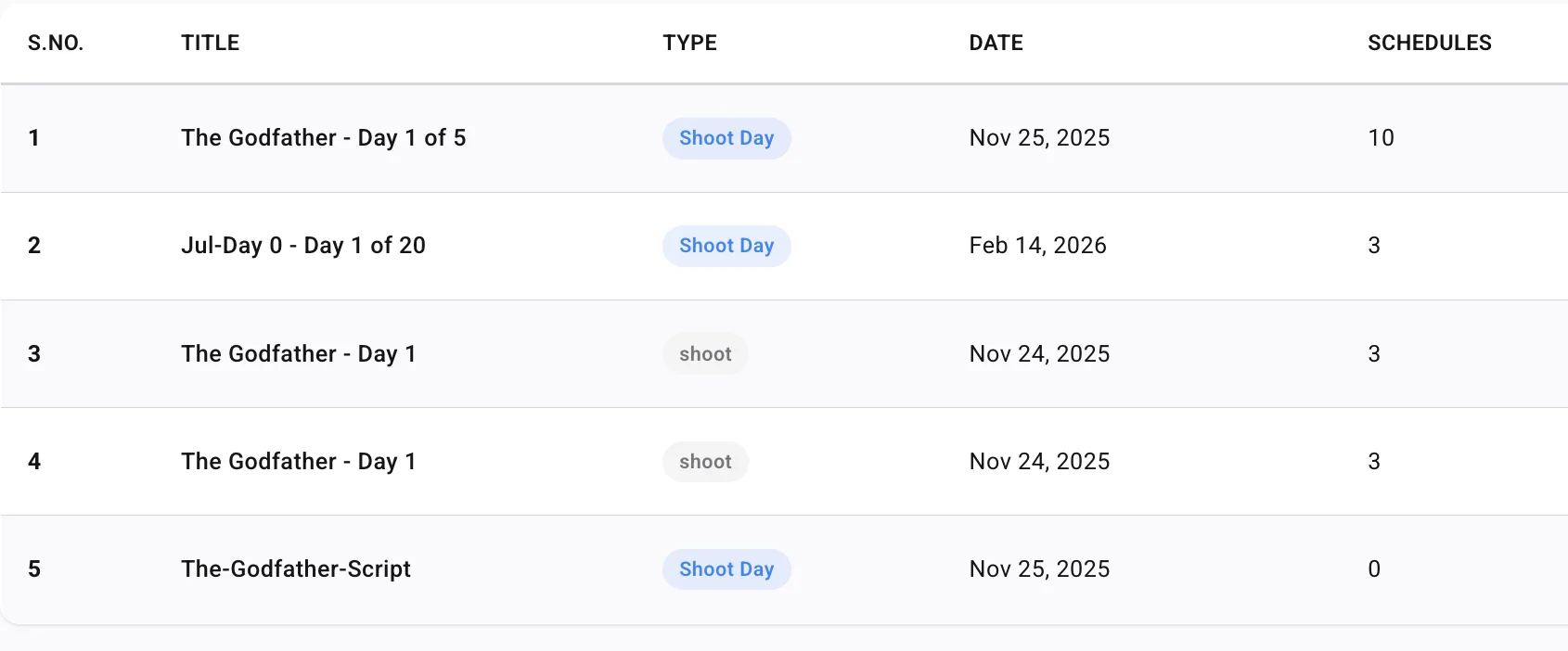
Paper call sheets and PDFs are still common, but digital workflows have changed how many productions create and distribute them. Digital systems can help teams update details, duplicate templates, manage contacts, and share revised information more efficiently.
The benefit is not only speed. A digital workflow can reduce formatting errors, help teams maintain consistency, and make it easier for people to access the latest version from their devices. This is especially useful when call times shift, locations change, or department notes arrive late.
Still, software does not replace AD judgment. The tool can organize information, but the AD team must decide what the day needs, what the crew must know, and how to communicate changes clearly. The strongest workflow combines good production planning with a reliable system for creating and sharing the call sheet.
The takeaway for better organized sets
Assistant directors use call sheets to bring structure to one of the most changeable environments in filmmaking. A good call sheet tells people where to go, when to arrive, what is being filmed, who is needed, what risks to note, and how the day is expected to flow. A great one does all of that without overwhelming the crew.
Whether you are preparing movie call sheets for a small independent shoot or managing filmmaking call sheets for a larger production, the principle stays the same: clarity creates momentum. When the AD call sheet is accurate, readable, and distributed with care, the entire production has a better chance of starting strong and staying organized.
If your team wants a more streamlined way to create, manage, and share production call sheets, explore Studiovity call sheet software (https://studiovity.com/call-sheet-software/). It can help simplify the call sheet process so your AD team can spend less time wrestling with documents and more time keeping the set moving.