
A reliable film call sheet template turns a production plan into a clear set of marching orders for the next shoot day. It tells cast, crew, producers, assistant directors, and department leads where to be, when to arrive, what scenes are scheduled, who is needed, and what practical details could affect the day. Whether you build a film call sheet template Word document, adapt a spreadsheet, or use production software, the goal is the same: remove uncertainty before anyone steps onto set.
Related video: How to generate an industry-standard call sheet in Studiovity
For filmmakers, the call sheet is more than an administrative document. It is a safety tool, a communication hub, a scheduling reference, and a daily accountability system. This guide explains what to include in a professional production call sheet, how each section works, and how producers, assistant directors, and department heads can prepare one that keeps the shoot moving.
What should a film call sheet template include?
A film call sheet template should include the production title, shoot date, call times, locations, weather, emergency details, key contacts, schedule overview, scene breakdowns, cast requirements, department notes, parking and transport information, meal timing, safety notices, and distribution instructions. A strong movie call sheet gives every person enough information to prepare for the day without overloading them with irrelevant detail.
Think of the template as a repeatable framework. Each shoot day changes, but the structure stays consistent, which helps the crew find information quickly. If your production call sheet looks different every morning, people waste time searching for basics such as parking, breakfast, scene order, or wrap expectations. Consistency is especially important on fast-moving shoots, multi-location days, and productions with rotating crew members.
A practical film production call sheet template usually contains these core sections:
- Header information: production title, company or producer name, shoot day, date, and version number.
- Daily call times: general crew call, department-specific calls, cast calls, and pre-call notes.
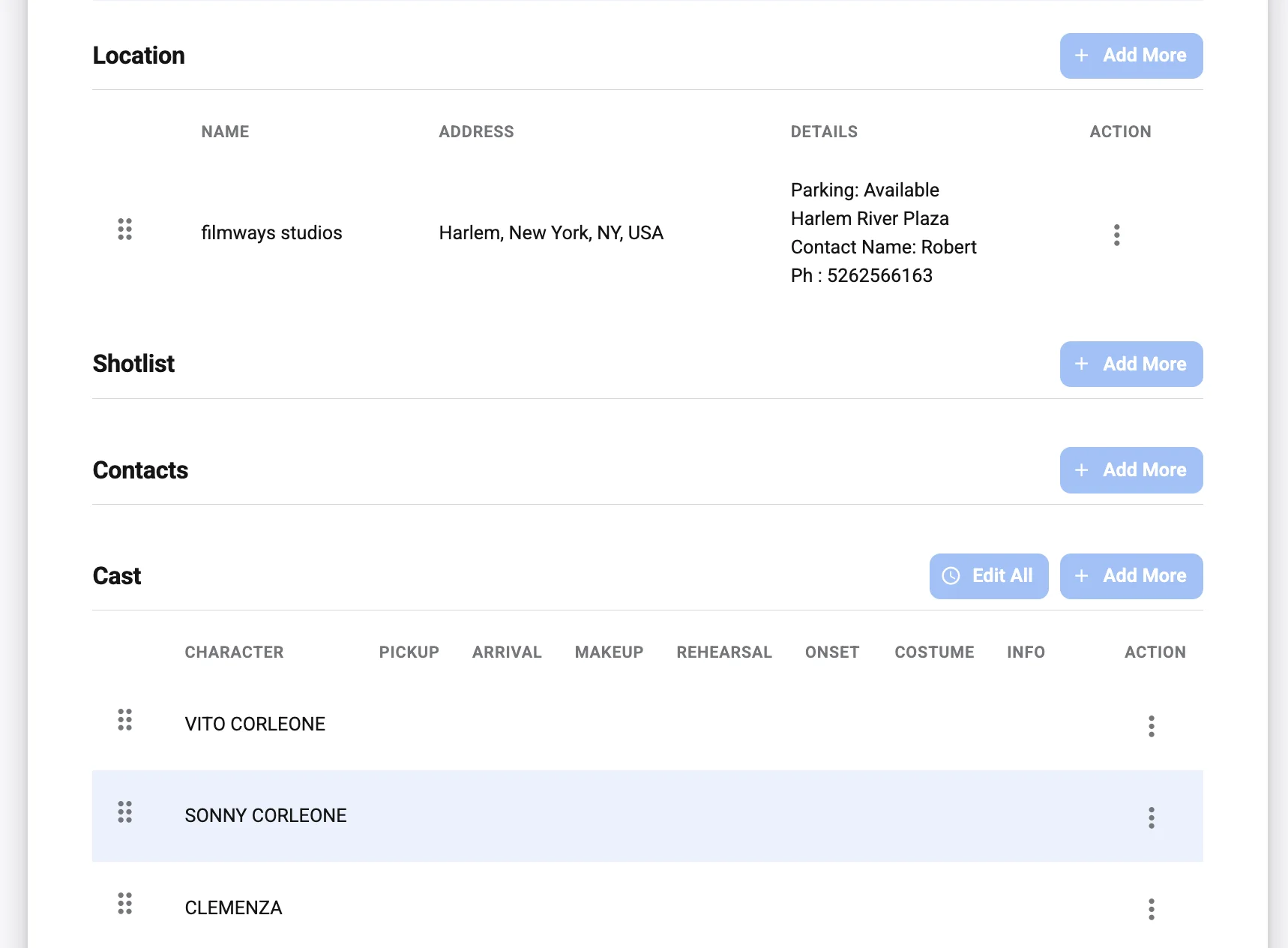
- Location details: shooting address, base camp, parking, nearest hospital, holding areas, and maps when useful.
- Contacts: producer, 1st AD, production coordinator, location manager, medic or safety lead, transportation contact, and department heads.
- Schedule: scenes, estimated times, page count, set descriptions, day or night status, and planned company moves.
- Cast list: character names, actor names, call times, pickup times, makeup or wardrobe times, and status notes.
- Background and extras: counts, arrival instructions, wardrobe notes, and holding details.
- Department notes: camera, grip, electric, art, wardrobe, hair and makeup, sound, VFX, stunts, special effects, and props requirements.
- Logistics: meals, transportation, parking, restrooms, access restrictions, Wi-Fi, and loading instructions.
- Safety and legal notes: hazards, minors, animals, weapons, intimacy, stunts, weather concerns, permits, and emergency procedures.
The header sets the official context
The top of the call sheet should immediately confirm what production the document belongs to and what day it covers. This sounds simple, but confusion often starts with unclear headers, especially when schedules change or multiple units are working at once. The header should make it obvious that the reader is looking at the latest version for the correct shoot date.
Include the production title, shoot day number, date, day of the week, and version number. If you revise the document, label the update clearly with terms such as “Revision 2†or “Updated 8:00 PM.†On larger productions, it is also useful to include the unit name, such as main unit, second unit, splinter unit, or pickup unit.
A clean header might contain:
- Production title
- Shoot day, such as “Day 12 of 24â€
- Calendar date and weekday
- Call sheet version or revision time
- Production company or producer name
- Unit designation, if applicable
Confidentiality note, if needed
This section is not where you put long notes. It should be compact and immediately readable on a phone screen. Many crew members check the call sheet while walking, unloading gear, or arriving at parking, so the most important identity details need to be visible at a glance.
Call times are the backbone of the day
Call times tell people when they are expected to report, but a good call sheet does more than list a single crew call. Different departments often need different start times. Hair and makeup may begin before general crew call, transportation may start even earlier, and cast members may have staggered arrivals depending on when they appear on camera.
At minimum, show the general crew call prominently. Then list individual or department-specific call times where needed. If the director, producers, or department heads have a production meeting before crew call, include that separately. If anyone has a pre-call, make sure it is unmistakable so they do not mistake it for the general start.
Useful call time categories include:
- Crew call: the standard report time for most crew.
- Pre-call: earlier times for setup, transport, catering, locations, or department prep.
- Cast call: actor arrival times, including pickup, HMU, wardrobe, and set-ready times.
- Background call: arrival, check-in, wardrobe, and holding times for extras.
- Meal call: planned lunch or meal break timing, when available.
- Estimated wrap: useful for planning, while making clear it is subject to change.
For assistant directors, call times require careful coordination with department heads. If lighting a set takes two hours, but cast is called too early, actors sit unnecessarily. If cast arrives too late, the company waits. The best call sheets reflect realistic prep time, not wishful thinking.
Location information must be precise
Location mistakes are expensive. A crew member who goes to the wrong entrance, parks in the wrong lot, or misses a company move can delay the entire production. Your film call sheet template should have a dedicated location section that separates the shooting address from base camp, parking, holding, and department-specific access points.
For each location, include the full address, location name, and clear arrival instructions. If the address does not map correctly, add a landmark or brief note. If there are gate codes, security check-ins, freight elevators, loading docks, or restricted entrances, place those details where the right departments can find them quickly.
Important location details include:
- Shooting location name and full address
- Base camp address, if separate
- Crew parking location
- Cast parking or drop-off area
- Truck parking and loading access
- Holding area for background
- Restrooms and changing areas
- Nearest hospital or urgent emergency location
- Company move details, including estimated time and destination
Location restrictions, such as quiet zones or areas off-limits to crew
Producers and location managers should review this section together before the call sheet goes out. If parking is limited, clarify who receives reserved spaces. If neighbors, businesses, or building management have restrictions, include only the practical instructions crew need to follow.
Weather, sunrise, and sunset affect every department
Weather information helps the team prepare, but it should be presented in a useful production context. A simple forecast is not enough if the day involves exterior work, night scenes, stunts, animals, or sensitive equipment. The call sheet should include expected temperature, precipitation risk, wind concerns, sunrise, sunset, and any weather-related safety notes.
For exterior days, sunrise and sunset matter to the director, cinematographer, AD team, locations, transportation, and every department planning prep. If you are chasing golden hour, blocking traffic, or scheduling day-for-night work, light changes can define the day. Even interiors can be affected if load-in requires rain cover, heating, cooling, or snow removal.
Keep the weather section brief but actionable. For example, instead of only writing “rain possible,†add whether crew should bring rain gear, whether equipment cover is required, or whether the company has a cover set. If extreme heat or cold is expected, the safety note should mention hydration, warming areas, shade, or other production-specific precautions.
How does a call sheet connect to the shooting schedule?
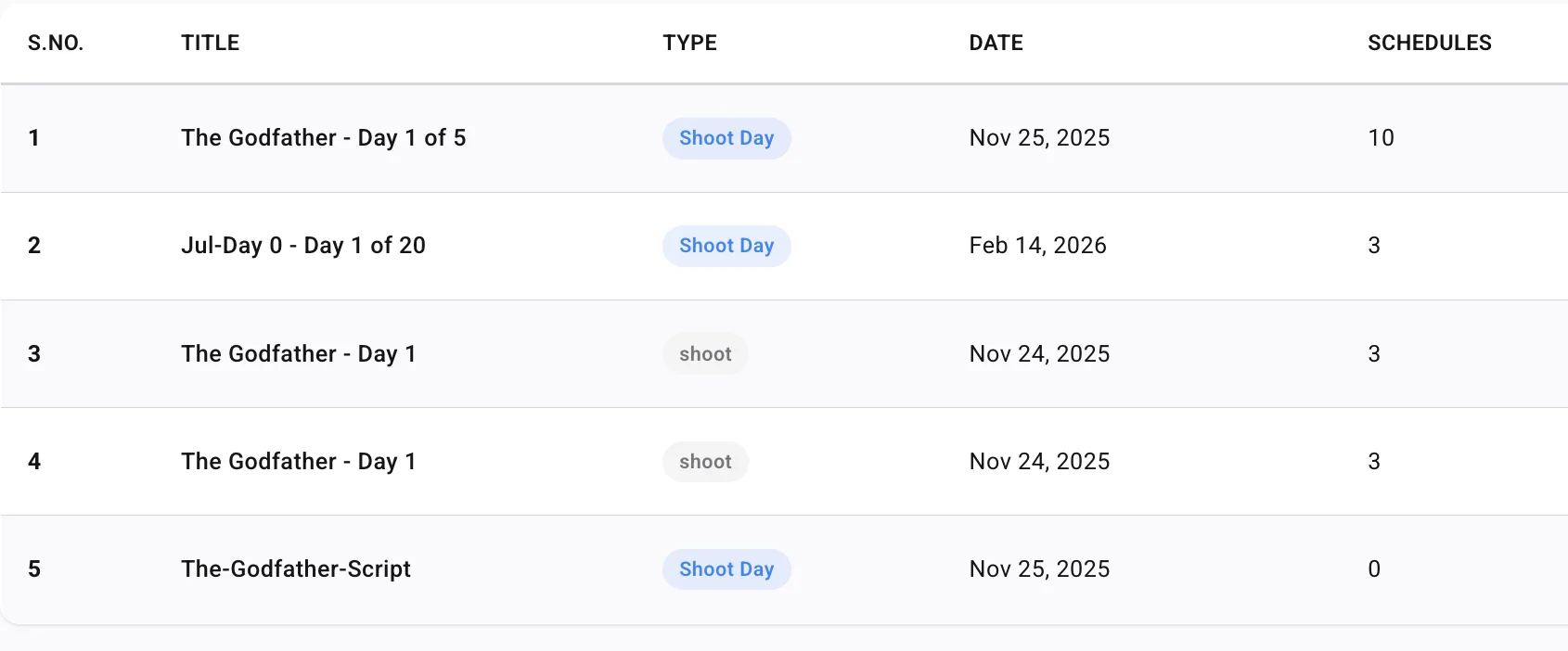
A call sheet turns the broader shooting schedule template into a day-specific operating plan. The shooting schedule shows how the production intends to complete the script over time; the call sheet explains exactly what is happening tomorrow, who is involved, and what practical details are required to make that day work.
This connection matters because call sheets should never be built in isolation. The assistant director usually works from the stripboard, one-liner, or master schedule, then translates the relevant scenes into the daily call sheet. If the schedule changes but the call sheet is not updated, departments may prep the wrong props, wardrobe, lighting package, vehicles, background, or special equipment.
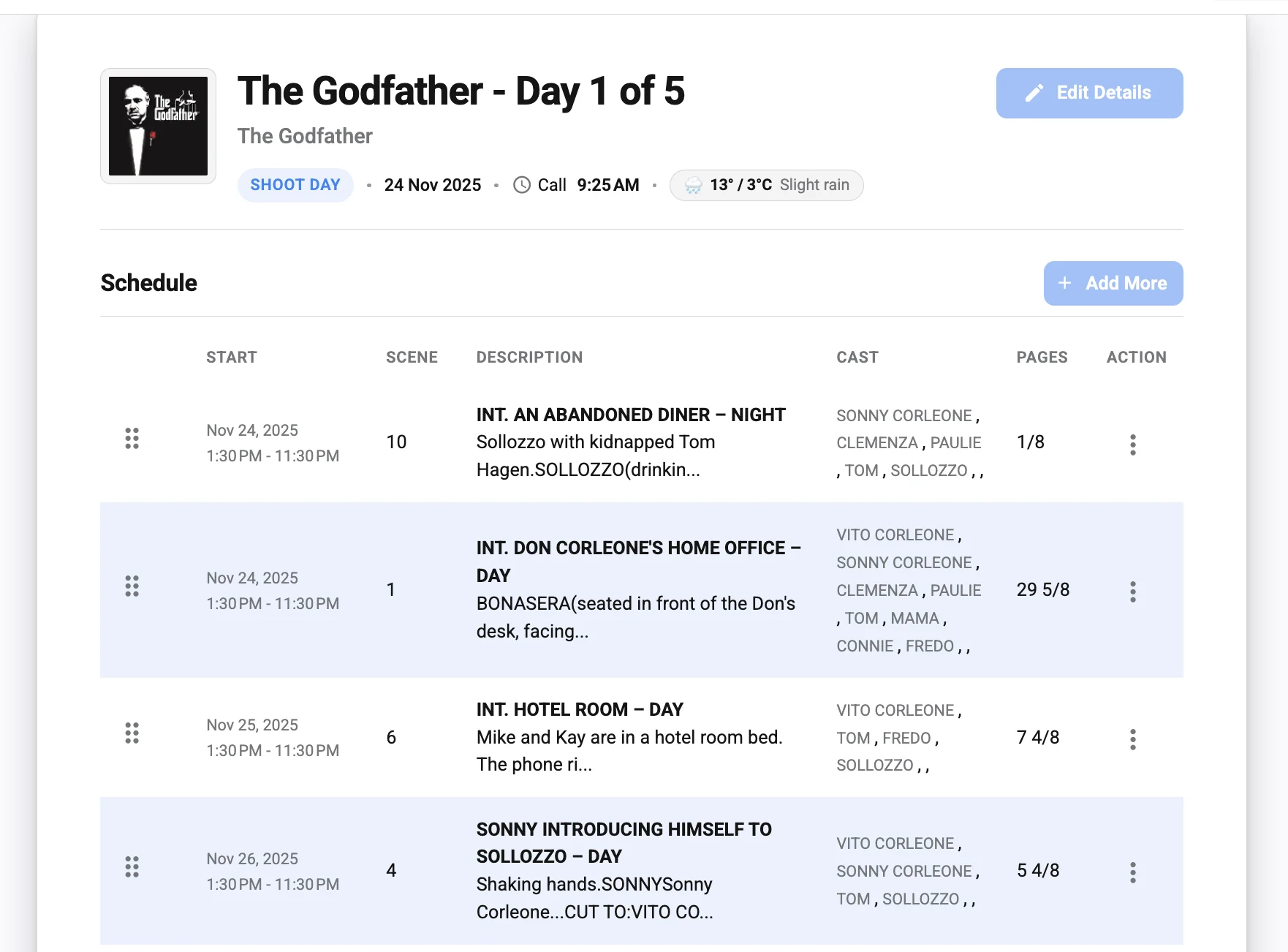
A clear daily schedule section should include:
- Scene number: matching the script and production breakdown.
- Set or location: where the scene takes place in story terms.
- Description: a short action line or scene summary.
- Cast required: character numbers or actor references.
- Pages: the page count or eighths scheduled.
- Day/night status: useful for lighting, continuity, and planning.
- Estimated time: when the production hopes to shoot or move.
- Special requirements: stunts, vehicles, picture cars, animals, weapons, effects, playback, VFX, or special props.
The call sheet is not meant to replace the full shooting schedule template. Instead, it extracts the essential information for a specific day. Producers may use the master schedule to track budget and progress, while the AD team uses the call sheet to communicate the immediate plan to the crew.
Scene breakdowns should be concise and complete
The scene section is where many call sheets become either too thin or too crowded. If you provide too little detail, departments cannot prepare properly. If you include the entire script breakdown, people stop reading. The goal is to give each department enough information to understand the day’s creative and logistical demands.
A practical scene breakdown includes scene number, set name, short description, cast IDs, page count, and special notes. For example, a call sheet example might list: “Scene 24, INT. DINER – NIGHT, Lena confronts Marco, Cast 1, 4, 7, 2/8 pages, practical rain outside window, hero prop: envelope.†That single line tells camera, lighting, art, props, wardrobe, and sound what kind of scene is coming without requiring a long paragraph.
For complex days, consider grouping scenes by setup or location rather than script order, as long as the schedule is clear. If the crew will shoot several short scenes in one room before moving outside, the layout should make that flow obvious. Company moves, meal breaks, and major resets should stand out visually.
Cast information needs more than arrival times
The cast section should help performers, ADs, hair and makeup, wardrobe, transportation, and production coordinate smoothly. Listing only an actor’s call time misses several important steps. An actor may be picked up at one time, arrive at base camp later, report to hair and makeup, then be wardrobe-approved before they are considered ready for set.
Useful cast columns include:
- Cast ID or number
- Character name
- Actor name
- Pickup time, if transportation is provided
- Arrival or call time
- Hair and makeup time
- Wardrobe time
- Set-ready time
- Scenes scheduled
Special notes, such as prosthetics, stunt rehearsal, photo double, or minor status
Be careful with sensitive information. Do not include private phone numbers, personal addresses, or unnecessary personal details in widely distributed call sheets. If production needs confidential contact information, keep it in a controlled distribution list rather than placing it in the document everyone receives.
For producers, the cast section is also a labor and budget checkpoint. Overtime, meal penalties, child performer rules, travel time, and turnaround may all be affected by how cast calls are planned. The call sheet should align with production rules and agreements that apply to your shoot.
Crew contacts and department lists keep decisions moving
Every production call sheet should identify the people who can solve problems quickly. That does not mean listing every crew member’s personal contact details. It means providing clear points of contact for urgent needs, location questions, transportation issues, safety concerns, and department decisions.
Common contacts include:
- Producer or line producer
- Unit production manager, if applicable
- 1st assistant director
- 2nd assistant director or 2nd 2nd AD
- Production coordinator
- Location manager
- Transportation captain
- Medic, set nurse, or safety lead
- Department heads
Key PA or base camp contact
Department leads should review their listings before the call sheet is finalized. If the wrong person is listed for props, wardrobe, transportation, or locations, small problems can travel through the wrong channels and slow the day down. On independent projects, one person may hold multiple responsibilities; if so, make the chain of communication clear.
It is also useful to distinguish between emergency contacts and routine contacts. A parking question should not go to the medic. A safety issue should not be buried in a group text. The call sheet can reduce confusion by showing who handles what.
Department notes turn logistics into preparation
Department notes are where the call sheet becomes especially valuable for department heads. These notes should not repeat the entire breakdown, but they should highlight what each team must be ready for. If the day includes a special prop, period wardrobe, rain tower, vehicle rig, stunt pad, green screen, playback, or practical fire effect, the department note should make that clear.
Camera, grip, and electric
Camera notes may include format reminders, specialty lenses, drone work, handheld sequences, car mounts, underwater housing, or data workflow notes. Grip and electric notes may include pre-rig details, generator placement, power restrictions, condor access, blackout needs, or weather cover. These departments often need early access, so their call times and loading instructions must match the technical demands.
Art, props, wardrobe, and HMU
Art and props notes should identify hero props, set dressing changes, resets, breakaways, food styling, graphics, signage, and continuity-sensitive items. Wardrobe should know whether cast needs changes, doubles, multiples, weather layers, blood rigs, aging, distressing, or formal approvals. Hair and makeup need special timing for prosthetics, wigs, tattoos, injuries, beauty looks, or continuity matches.
Sound, VFX, stunts, and special effects
Sound notes may call out noisy locations, playback, hidden microphones, plant mics, or dialogue-heavy scenes. VFX notes should flag tracking markers, clean plates, green screen, reference passes, witness cameras, or data capture. Stunts and special effects require especially clear safety coordination, including rehearsal times, exclusion zones, protective gear, and who has authority to pause work.
Department notes are most effective when they are specific. “Bring all gear†is not useful. “Rain cover required for exterior alley scenes; wet-down planned before Scene 18†gives the crew something to act on.
Safety and emergency details are non-negotiable
A film production call sheet template should always include emergency information. Even on a small, low-risk shoot, crew members need to know who to contact and where to go if something happens. Safety details should be easy to find, not buried at the bottom in tiny text.
Include the nearest hospital or emergency facility, the set medic or safety contact, emergency meeting point, and any known hazards. If your shoot involves stunts, weapons, vehicles, animals, water, heights, fire, smoke, intimacy, minors, extreme temperatures, or difficult terrain, the call sheet should include a direct safety note and reference the appropriate briefing.
A strong safety block may include:
- Emergency number for the production or safety lead
- Nearest hospital name and address
- On-set medic or first aid location
- Weather-related precautions
- Hazard areas and off-limits zones
- Required personal protective equipment
- Stunt, weapon, vehicle, or effects notices
- Minor performer supervision requirements
COVID, health, or illness reporting instructions, if applicable to the production
The call sheet is not the full safety plan, but it should point people toward the day’s risks. If the crew has to attend a safety meeting before work begins, include the time and location clearly.
Meals, transportation, and parking shape morale
Logistics may not feel creative, but they strongly affect the working day. A crew that cannot find parking, misses breakfast, or does not know where lunch is served starts the day frustrated. The call sheet should answer practical questions before they become radio traffic.
Meal details should include breakfast availability, planned lunch timing, catering location, dietary note process, and any special rules for remote locations. Avoid promising an exact lunch time if the schedule is uncertain, but provide the best planned window. If the production is providing coffee, water, snacks, or a second meal, list the relevant details where appropriate.
Transportation and parking instructions should include:
- Crew parking address and entrance
- Shuttle times, if parking is remote
- Cast pickup details handled privately or in a controlled section
- Truck and equipment vehicle parking
- Load-in route and elevator access
- Street parking restrictions or permits
- Public transit notes, if useful
Company move transportation plan
For producers, good logistics reduce delays and protect goodwill. For ADs, they reduce avoidable interruptions. For department leads, they help crews arrive prepared with the right carts, cases, weather gear, and manpower.
Background actors and extras need clear handling
Background performers often move through a different workflow than principal cast. They may check in at holding, receive wardrobe approval, complete paperwork, wait for long periods, and move to set in groups. The call sheet should include enough information for the AD team, wardrobe, production, and background coordinators to manage them efficiently.
List the number of background actors required, their call time, holding location, wardrobe notes, and scene numbers. If they need to bring options, wear specific colors, avoid logos, or prepare for weather, say so clearly. If the scene involves vehicles, dancing, running, rain, smoke, or crowd movement, include a note so the right people arrive prepared.
For large background days, a separate background breakdown may be attached or distributed to the relevant team. The main call sheet should still summarize the count and essential logistics so department heads understand the scale of the day.
Attachments and maps should support the call sheet
Not every detail belongs inside the main document. Maps, parking diagrams, one-line schedules, safety memos, sides, shot lists, and department breakdowns may be attached separately. The call sheet should tell readers what attachments exist and who needs to review them.
Useful attachments include:
- Parking map
- Base camp map
- Company move map
- Sides for scheduled scenes
- One-line schedule
- Advanced shooting schedule
- Safety bulletin
- Stunt or special effects plan
- Location rules
- Background breakdown
Wardrobe reference notes
Do not overload everyone with every attachment if only a few departments need them. A producer may need the full schedule, while a day player may only need the call sheet, sides, parking map, and wardrobe instructions. Smart distribution keeps communication focused.
Preparing the call sheet is a collaborative process
Although the AD department typically creates the call sheet, it should not be prepared in a vacuum. Producers, department heads, locations, transportation, and production office staff all contribute details. The best call sheets come from a repeatable review process that catches conflicts before the document is distributed.
A practical preparation workflow looks like this:
- Start from the approved schedule. Confirm the scenes, location, company moves, and estimated page count for the next shoot day.
- Check the script breakdown. Verify cast, props, wardrobe, vehicles, background, stunts, VFX, special effects, and other requirements.
- Confirm location logistics. Review addresses, parking, load-in, restrictions, permits, base camp, restrooms, and neighbor considerations.
- Coordinate with department heads. Ask what call times, prep notes, and special instructions they need added.
- Build cast timing. Work backward from set-ready needs through HMU, wardrobe, travel, pickup, and arrival.
- Add safety and weather notes. Highlight hazards, emergency details, and conditions that affect the work.
- Review for conflicts. Check turnaround, meal timing, minors, company moves, travel time, and equipment access.
- Send for approval. Producers, the 1st AD, production, and sometimes the director or UPM should review the final draft.
- Distribute consistently. Send the same approved version through the production’s chosen channels.
- Track revisions. If anything changes, issue a clearly labeled update rather than letting multiple versions circulate.
This process may seem detailed, but it saves time on set. The more questions answered the night before, the fewer delays happen the next morning.
Guidance for producers
Producers should treat the call sheet as both a communication document and a risk management tool. Before approving it, review whether the plan is achievable within the budget, agreements, permits, crew capacity, and location restrictions. A beautiful schedule that ignores travel time or meal requirements will create problems once the day begins.
Producers should check:
- Whether call times create avoidable overtime or turnaround issues
- Whether cast, minors, animals, vehicles, or stunts require special handling
- Whether the location is fully permitted and accessible
- Whether catering, transportation, and parking match the crew size
- Whether department needs are realistic for the budget and schedule
- Whether emergency and safety information is complete
Whether distribution protects confidential information
A producer does not need to rewrite the call sheet line by line, but they should challenge assumptions. If a company move is scheduled for 15 minutes when the location is across town, ask for a correction. If three complicated scenes are stacked without enough prep, discuss alternatives before the document goes out.
Guidance for assistant directors
Assistant directors are responsible for turning plans into executable days. The call sheet is one of the most important tools for doing that. A strong AD builds the call sheet around sequence, efficiency, safety, and realistic timing rather than simply copying a schedule into a template.
For ADs, the key is clarity. Every section should help someone make a decision or arrive prepared. If a note is vague, rewrite it. If a department needs information that is missing, get it before distribution. If the day is complex, use formatting to make the flow readable.
ADs should focus on:
- Scene order and realistic estimates
- Cast set-ready timing
- Department pre-calls
- Meal break planning
- Background movement and holding
- Safety meetings and rehearsals
- Company moves
- Communication with locations and transportation
Version control after changes
A good call sheet also supports the morning safety meeting and production briefing. The AD can use it to walk department heads through the day, identify pressure points, and confirm who is responsible for each move.
Guidance for department leads
Department leads should not wait until the call sheet is final to raise concerns. If your department needs extra prep, earlier access, additional labor, special equipment, or a schedule adjustment, communicate that before the sheet is approved. Once the production call sheet is distributed, changes become more disruptive.
When reviewing a draft, department heads should ask:
- Are our scenes, setups, and special requirements listed correctly?
- Do we have enough prep time before cast is needed?
- Are our crew call times accurate?
- Do we know where to park, unload, and stage gear?
- Are continuity-sensitive items identified?
- Are weather or safety conditions addressed?
- Do we need an attachment, map, or separate department note?
Department leads can also help keep the call sheet lean. Not every internal detail needs to appear in the main document. Share broad requirements on the call sheet, then distribute department-specific paperwork to the people who need it.
Is a film call sheet template Word document enough?
A film call sheet template Word document can be enough for small productions if it is organized, easy to update, and carefully version-controlled. Word templates are familiar, flexible, and simple to export as PDFs, but they require discipline because manual formatting can lead to errors when scenes, call times, or cast details change.
For short films, student films, branded content, music videos, interviews, and lean independent shoots, a Word-based film production call sheet template may work well. The key is to lock in a consistent structure and avoid rebuilding the format every day. Use tables for cast and schedule details, clear headings for departments, and a prominent revision label at the top.
However, Word templates have limitations. They can become messy on complex schedules, multiple locations, large cast lists, or frequent revisions. If a production has many moving parts, a spreadsheet or dedicated production tool may reduce manual errors.
A practical comparison:
| Format | Best for | Watch out for |
|---|---|---|
| Word document | Small shoots, simple days, PDF distribution | Manual updates, formatting shifts, version confusion |
| Spreadsheet | Multi-day tracking, sortable details, larger lists | Can look crowded or less polished if not formatted well |
| Production software | Larger teams, frequent revisions, integrated scheduling | Requires setup, access management, and team adoption |
| PDF export | Final distribution to cast and crew | Not ideal for live editing after approval |
If you use a film call sheet template Word file, save a clean master version. Duplicate it for each shoot day, update the date and version, and export a PDF for distribution. Avoid sending editable documents unless the recipient is part of the approval process.
A practical call sheet example structure
A useful call sheet example does not need to be overly designed. It needs to be easy to scan under pressure. The following structure can be adapted for many film, commercial, or video productions:
- Header
- Production title
- Shoot day and date
- Version number
- General crew call
- Key contacts
- Producer
- 1st AD
- Production coordinator
- Location manager
- Transportation
- Medic or safety contact
- Location and logistics
- Shooting address
- Base camp
- Parking
- Load-in
- Restrooms
- Nearest hospital
- Weather and light
- Forecast
- Sunrise and sunset
- Weather precautions
- Daily schedule
- Scene order
- Set descriptions
- Cast required
- Page count
- Special notes
- Company moves
- Cast section
- Actor and character
- Pickup, call, HMU, wardrobe, set-ready
- Scene numbers
- Background section
- Count
- Call time
- Holding
- Wardrobe instructions
- Department notes
- Camera, G&E, sound, art, props, wardrobe, HMU, VFX, stunts, SFX
- Meals and transportation
- Breakfast
- Lunch estimate
- Shuttles
- Parking restrictions
- Safety notes and attachments
- Hazards
- Required briefings
Maps, sides, safety bulletins, or extra breakdowns
This structure works because it follows the way crew members usually search for information. They confirm the day, check when and where to report, scan scenes, review department notes, and then look for logistics.
Common mistakes to avoid
Even experienced teams can create call sheets that cause confusion. Most mistakes come from rushing, copying old information, or failing to confirm details with the people responsible for them. A template helps, but it cannot replace careful review.
Avoid these common problems:
- Unclear version control: Crew members may follow outdated call times if revisions are not labeled clearly.
- Missing parking instructions: The address alone is not enough if parking is remote or restricted.
- Overcrowded notes: Long blocks of text make important details harder to find.
- Vague department needs: “Special equipment†should be replaced with specific requirements.
- Incorrect cast timing: Pickup, HMU, wardrobe, and set-ready times must work together.
- No emergency information: Every call sheet should include emergency and medical details.
- Unrealistic company moves: Travel, loading, parking, and reset time must be considered.
- Private information shared too widely: Limit sensitive personal details.
- No approval workflow: A call sheet should be checked before distribution, especially on complex days.
The easiest way to prevent these mistakes is to create a pre-distribution checklist. The 1st AD, 2nd AD, producer, production coordinator, and relevant department heads can each confirm their areas before the sheet is finalized.
Formatting choices make the document usable
A call sheet must be readable on paper, laptop, and phone. Design matters because the document is used in motion, often under time pressure. You do not need elaborate graphics, but you do need hierarchy, spacing, and consistent labels.
Use bold headings, tables, and clear section breaks. Keep the general crew call and location near the top. Avoid tiny fonts, dense paragraphs, and inconsistent abbreviations. If color is used, do not rely on color alone to communicate critical information because some people will print in black and white.
Good formatting practices include:
- Put the most urgent information on the first page.
- Use tables for cast, scenes, and department timing.
- Keep notes short and action-oriented.
- Repeat the shoot date and version in the header or footer.
- Use consistent abbreviations for INT., EXT., D, N, cast IDs, and page counts.
- Export as PDF for final distribution.
- Name the file clearly, such as “ProductionName_CallSheet_Day05_2026-10-01_v2.pdf.â€
Readable formatting is not cosmetic. It helps the crew find answers without calling production for every detail.
Distribution should be controlled and consistent
Once the call sheet is approved, send it through the production’s agreed distribution channels. That may include email, production management software, text links, or secure file sharing. The important thing is that everyone receives the same version and knows where to find updates.
Distribution timing depends on the production, but the call sheet should go out early enough for cast and crew to prepare. Late call sheets create avoidable stress, especially when the next day involves early calls, difficult wardrobe, long travel, or special equipment. If final details are still pending, communicate when the approved sheet will be released rather than letting unofficial drafts circulate.
When revisions are necessary, label them clearly and mention what changed. For example, “Revised call sheet: cast call for Scene 18 moved to 9:30 AM; parking unchanged.†This helps people focus on the update rather than rereading the entire document.
Final pre-send checklist
Before the call sheet goes out, run a final check. This checklist is especially helpful for producers, assistant directors, production coordinators, and department leads who are approving the day’s plan.
- The production title, date, shoot day, and version are correct.
- General crew call and department pre-calls are accurate.
- Cast call, HMU, wardrobe, pickup, and set-ready times align.
- Scene numbers, descriptions, page counts, and cast IDs match the schedule.
- Location, parking, base camp, and load-in details are complete.
- Weather, sunrise, sunset, and relevant precautions are listed.
- Department notes identify special requirements without clutter.
- Meal timing and catering location are included.
- Emergency, hospital, medic, and safety information are visible.
- Company moves include destination and timing.
- Attachments are listed and included.
- Sensitive personal information is protected.
- Producers, AD team, production, and relevant department heads have reviewed it.
- The PDF file name and revision label are clear.
A call sheet cannot guarantee a perfect shoot day, but it can prevent many avoidable problems. When the information is accurate, organized, and distributed consistently, the crew can focus on the work instead of chasing basic details.
The takeaway for production teams
A strong production call sheet is practical, specific, and easy to scan. It connects the creative plan to real-world execution by showing who is needed, where they should go, what scenes are scheduled, what each department must prepare, and how the production will handle logistics and safety.
Whether you start with a movie call sheet from a previous project, build a film call sheet template Word file, or create a more advanced system tied to your shooting schedule template, the same principle applies: clarity saves time. Producers should review feasibility, assistant directors should refine the daily plan, and department leads should confirm the details that affect their teams. When everyone works from the same accurate film production call sheet template, the set starts the day with fewer surprises and a much better chance of staying on track.