The holiday season offers more than just nostalgia; it provides a masterclass in technical filmmaking. When industry professionals discuss the Best Christmas Movies, they aren’t just talking about festive cheer. They are analyzing tight narrative structures, complex blocking, and high-stakes production design. Every classic film on this list started with a rigorous screenplay that balanced emotion with technical execution. Today, achieving this level of precision requires robust pre production software to manage the chaos before cameras even roll. Furthermore, dissecting these films reveals how meticulous planning transforms a simple holiday story into cinema history.
Consequently, we have curated a list that looks beyond the tinsel. We are examining the Best Christmas Movies through the lens of script breakdown, cinematography, and logistical mastery.
1. Die Hard (1988): The Masterclass in Spatial Geography
Director
John McTiernan
Cinematographer
Jan de Bont
While the debate continues about its genre classification, Die Hard remains a textbook example of contained action and spatial geography. McTiernan didn’t just film action; he established a clear visual language where the audience always knows exactly where John McClane is in relation to Hans Gruber.
From a production standpoint, this film is a logistical beast. The script relies heavily on planting and payoffs—the watch, the bare feet, the tape on the back. For a modern Line Producer, tracking these continuity details requires a flawless script breakdown. If the prop department misses the “tape” tag in the breakdown, the climax fails. Die Hard proves that action is only as good as the continuity that supports it.
2. It’s a Wonderful Life (1946): Noir Lighting in a Family Drama
Director
Frank Capra
Cinematographer
Joseph Walker
Frank Capra’s masterpiece is often remembered for its sentimentality, but technically, it is a film noir disguised as a holiday movie. The cinematography utilizes high-contrast lighting, deep shadows, and claustrophobic framing during the “Pottersville” sequence.
Filmmakers should study how the lighting design shifts to reflect George Bailey’s internal state. The production creates two distinct worlds—Bedford Falls and Pottersville—using the same sets but drastically different lighting setups and blocking. Managing these changeovers today would dictate the film scheduling strategy, grouping “nightmare” scenes to maximize the lighting crew’s efficiency.
3. Home Alone (1990): Stunts and Set Design Integration
Director
Chris Columbus
Cinematographer
Julio Macat
Home Alone is not just a comedy; it is a stunt coordination triumph. The entire third act is a series of complex gags that required precise marriage between the art department and the stunt team. Every paint can, micro-machine, and blowtorch had to be designed for safety and visual impact.
For a director, this film emphasizes the importance of a detailed shot list. You cannot improvise a scene where an actor is hit in the face with an iron. The precision required here mirrors the workflow of modern action films, where every beat is storyboarded to prevent injury and budget overruns.
4. Eyes Wide Shut (1999): Practical Lighting and Color Theory
Director
Stanley Kubrick
Cinematographer
Larry Smith
Kubrick’s final film uses Christmas lights as practically the sole light source for many interior scenes. This practical lighting approach creates a dreamlike, hazy aesthetic that pushes the film into a surreal reality.
Cinematographers should analyze how Kubrick pushed the film stock (and in modern terms, sensor ISO) to capture the natural glow of holiday lights without supplemental fill. It’s a bold choice that demands a rigorous camera test phase. Additionally, the color palette—contrasting warm festive lights with cold, blue night exteriors—creates a visual tension that underscores the narrative’s danger.
5. Carol (2015): The Texture of Super 16mm
Director
Todd Haynes
Cinematographer
Ed Lachman
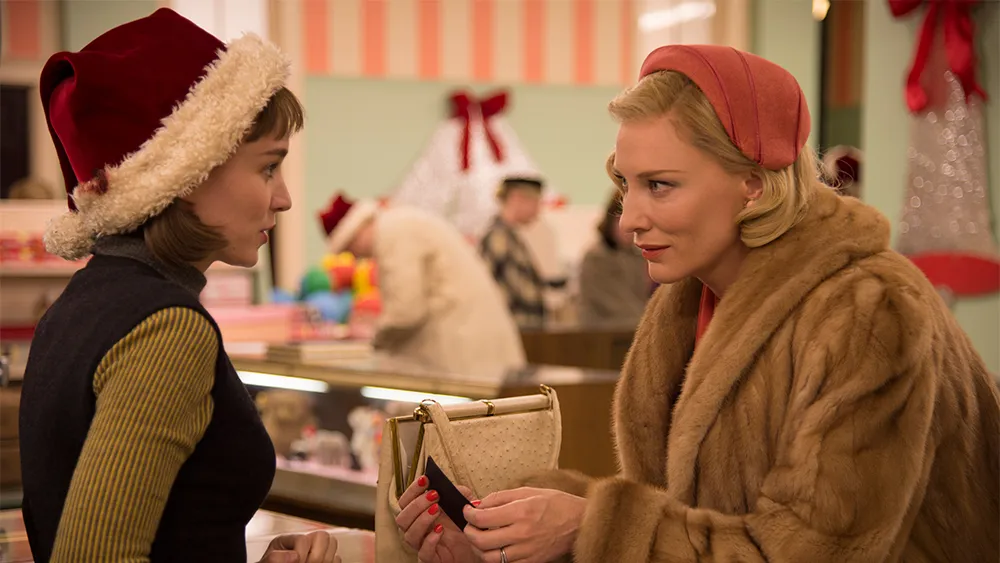
Carol stands out among the Best Christmas Movies for its tactile, grainy texture. Shot on Super 16mm, the film captures the repression and longing of the 1950s through obscured frames—shooting through rain-splattered windows, reflections, and doorways.
The lesson here is subjective camera work. The camera is rarely objective; it hides and observes, much like the characters. Production teams must note that shooting on film—or emulating it digitally—impacts the film production calendar. Magazine changes, lighting requirements for slower stock, and limited takes all factor into the daily schedule.
6. Love Actually (2003): Managing an Ensemble Cast
Director
Richard Curtis
Cinematographer
Michael Coulter
The logistical challenge of Love Actually is staggering. With over a dozen A-list leads, the scheduling matrix required to shoot this film is the stuff of nightmares for Assistant Directors.
This film is a case study for the call sheet. Coordinating the availability of Hugh Grant, Liam Neeson, Emma Thompson, and Alan Rickman required a non-linear shooting schedule that prioritized talent availability over location logic. It demonstrates that a producer’s greatest asset is flexibility and a robust scheduling tool that can adapt to sudden changes in actor availability.
7. Batman Returns (1992): Gothic Production Design
Director
Tim Burton
Cinematographer
Stefan Czapsky
Tim Burton’s Gotham City is a character in itself. The production design here rejects the cozy holiday aesthetic for something industrial, cold, and oppressive. The monumental scale of the sets, combined with matte paintings and miniatures, creates a unique German Expressionist vibe.
For art directors, Batman Returns shows how to weaponize a holiday setting. The giant ducks, the weaponized umbrellas, and the gothic Christmas tree lighting all serve the tone. Tracking these thousands of props and set dressing elements is a massive task for the cast and crew, requiring a centralized asset database to ensure nothing is lost between soundstages.
8. Tangerine (2015): The Indie Revolution
Director
Sean Baker
Cinematographer
Radium Cheung
While not a traditional classic, Tangerine is essential viewing for the modern indie filmmaker. Shot entirely on iPhone 5s prototypes with anamorphic adapters, it captures the chaotic energy of Christmas Eve in Los Angeles on a micro-budget.
It proves that gear does not define the Best Christmas Movies; story and execution do. The film utilized natural light and guerrilla filmmaking techniques. However, even with a skeleton crew, the team needed precise organization to move between locations without permits, making mobile-friendly production tools indispensable.
9. Gremlins (1984): Practical Effects Puppetry
Director
Joe Dante
Cinematographer
John Hora
Before CGI dominated the industry, Gremlins relied on complex animatronics and puppetry. The blocking of actors had to accommodate puppeteers hidden under floors and behind walls.
This creates a specific production challenge: the “clean” plate versus the “puppet” plate. Directors must learn patience. Practical effects takes are notoriously slow, often burning through the daily schedule. Therefore, accurate budgeting for extended shoot days is critical when working with practical creatures.
10. The Apartment (1960): Screenwriting Perfection
Director
Billy Wilder
Cinematographer
Joseph LaShelle
Billy Wilder’s script is arguably one of the greatest ever written. It balances cynicism, comedy, and romance perfectly against a holiday backdrop. The structure is flawless, with setups and payoffs that click into place like a Swiss watch.
For screenwriters, the lesson is in the dialogue and the efficiency of scenes. There is no wasted motion. Every line advances the plot or deepens the character. Analyzing this script reveals how to write for the edit, ensuring that the story flows logically from page to screen.
Why Tech Matters in Holiday Classics
Studying the Best Christmas Movies reveals that magic on screen is the result of discipline behind the camera. Whether it is the stunt rigging in Home Alone or the complex lighting in Eyes Wide Shut, these films succeeded because their production workflows were bulletproof.
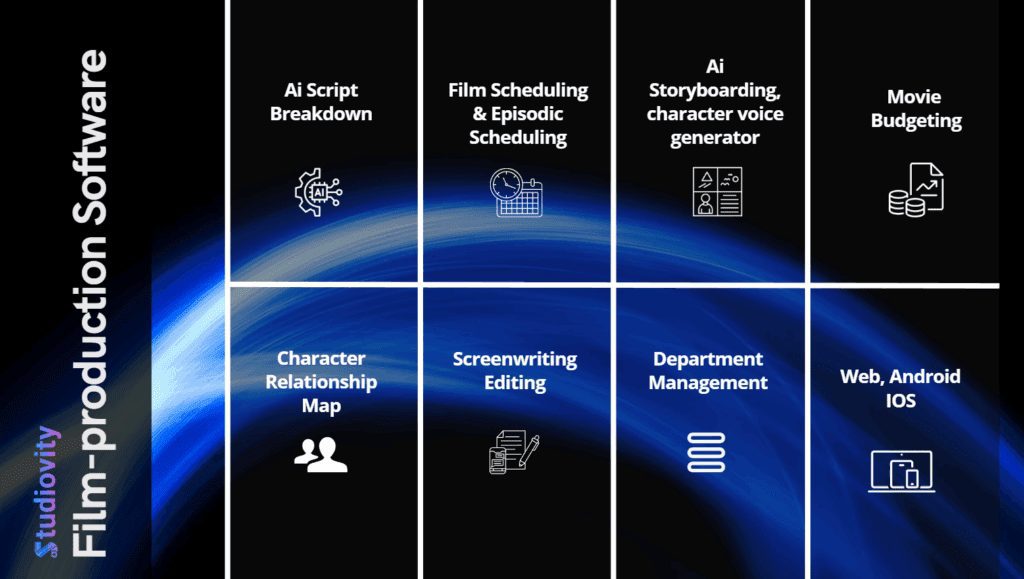
To achieve this level of quality today, you cannot rely on spreadsheets alone. You need an integrated ecosystem. From the initial screenplay to the final call sheet, Studiovity provides the AI-powered infrastructure to keep your production professional, efficient, and ready for the big screen.
Script breakdown elements are the production requirements hidden inside every scene: the characters, background actors, props, set dressing, wardrobe, makeup, locations, vehicles, animals, stunts, effects